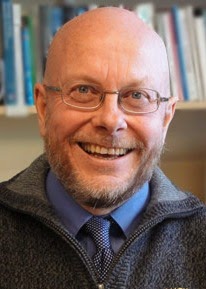
Sunday, December 14, 2014

HOW TO EXPERIENCE LIFE IN ALL ITS FULNESS AND IMMEDIACY

Do you want to live more joyously and freely? Of course you do. We all do. But how do we go about it?

Well, for starters, don’t ask how. Yes, I know, it was I who posed the ‘how’ question, but I did so deliberately to make the following point---a point I’ve made many times in my posts. When we ask ‘how’ we are asking for a method, a technique, a formula, a concept, but all such things are someone else’s version of truth or reality. 

But there is an even worse problem than asking ‘how.’ You see, in order to live joyously and freely, we need to experience life directly, that is, without conditioning, filtering, fettering, and the mediation of others. Now, in order for there to be no fettering of our experience of life, we must learn to experience life non-conceptually, that is, with the use of non-conceptual cognition.  Non-conceptualization is an important teaching in Buddhism but it can also be found elsewhere. I will try to explain. (Ha! How does one try to explain non-conceptualization except through the use of concepts. A horible dilemma!)

Have you ever eaten, say, a raisin without actually thinking about the eating of the raisin? Have you ever drunk some tea or coffee without actually forming a concept in your mind of the experience of drinking? You probably have, but I bet that you don’t do it very often. Nor do I.

To live non-conceptually is to have a pure, direct, unmediated, unfiltered, unfettered, and unconditioned ‘now’ experience of life. It is what the Zen Buddhist monk and teacher Thich Nhat Hanh [pictured right] refers to as ‘a direct and living experience of reality.’ In his book Zen Keys Nhat Hanh writes about non-conceptual experience in these words:

… It is not a concept. It is only when you think about [the experience], when you remember it, or better still, when you make a distinction between it and other former experiences that this experience becomes a concept. To be more precise, the concept of this experience is not this experience itself …

At the moment of the experience you and the taste of tea are one. You are not different from the tea. The tea is you, you are the tea. There is not the drinker of the tea, there is not the tea that is drunk, because there is no distinction between the subject and the object in the real experience. When one starts to distinguish subject and object, the experience disappears.

Please note that last sentence. ‘When one starts to distinguish subject and object, the experience disappears.’ Yes, the experience dies on you. Now, when we first become aware of something, there is an ever-so-brief (just for a couple of nanoseconds at a time) moment of pure awareness just before we begin thinking about the experience or the thing being experienced. Yes, we analyze, compare, contrast, interpret, label, judge, and discriminate---that is conceptualize. However, it is possible to have a pure, direct, non-dual, non-conceptual experience of life.

One of the many things I like about Buddhism is that all its teachings are directed toward helping us to experience life without concepts. Concepts restrict. They bind. They limit. Like beliefs, they become a barrier between us and the word around us.

I must admit that the notion of non-conceptual existence was for me not an easy notion to embrace. My philosophical and legal training as an Australian realist, which makes a rigid distinction between the person (subject) who experiences a thing (object), the thing experienced, and the act of experiencing the thing----three separate things none of which is constituted by its relations to any of the others nor dependent on any of the others---has made it hard for me to live non-conceptually.  I have 'died hard,' so to speak.

Now, don't get me wrong. The realist philosophical stance is indeed true up to a point, that is, in terms of pure, physical form. It is also true on a conceptual level, and Nhat Hanh acknowledges the truth of that proposition. He says: '[T]he distinction between the one who tastes the tea and the tea that is tasted ... are two elements basic to the experience of the tea (a single experience without subject or object) ... .' The Zen master's reference to 'a single experience without subject or object' is also an acknowledgment of the realist's epistemological principle of non-constitutive relations (aka doctrine of external relations) which says that nothing is constituted by or is dependent upon, nor can it be defined or explained by reference to, the relations it has to other things.

Be that as it may, our actual experience of life---please note that word experience---if it is to be fulsome, joyous, and free, must go beyond form. It must penetrate the substance of life. It must go beyond mechanical and mind-made notions of subject and object. You see, if we continue to live from a mindset that is forever making and perpetuating a rigid distinction between subject and object we will never know what it is like to have a pure, direct, non-conceptual experience of ‘the now.’

So, the next time you have tea or coffee, or eat a raisin, or go for a walk, enjoy the pure, direct, unmediated, unobstructed experience of the act. Yes, live non-conceptually for a change. You might even enjoy it.

One more thing. Don't try to live non-conceptually. Never try. If you try to do it, you are still locked into thinking, that is, conceptualization. Just do it---effortlessly.


RELATED POSTS


Wednesday, December 10, 2014

LEADING ATHEIST SAM HARRIS ENDORSES MINDFULNESS AS RATIONAL SPIRITUALITY

Leading ‘new atheist’ and neuroscientist Sam Harris’ latest book Waking Up: A Guide to Spirituality Without Religion presents what the author [pictured left] describes as a ‘rational approach to spirituality.’ 

Not only that, this man, who is so opposed to conventional religious faith and expression, wants us to lead ‘rich, spiritual lives.’ He says that is quite possible without religion. And there's more---indeed, much more. Harris encourages us to meditate and, especially, to practise mindfulness

Confused? Well, you shouldn’t be. Spirituality does not require religion.

Waking Up is a rare and unexpected find, and a real treasure. Drawing upon neuroscience, cognitive psychology, and empirical philosophy Dr Harris (The End of Faith, Letter to a Christian Nation, The Moral Landscape) demonstrates that there is no separate, permanent ‘self’ at the centre of our being. This is perhaps the central thesis of the book. Consciousness is real. The person that you are is real. But your sense of 'self' is illusory.

There's more. Harris says we suffer because ‘we are all prisoners of our thoughts,’ and that includes our beliefs, prejudices, biases, opinions, views, ideas, memories, and all other attachments and aversions. We have a ‘habit of being distracted by thoughts,’ says Harris, and we fail to see things-as-they-really-are, and for most of us our experience of both internal and external reality is filtered through, and distorted by, our thoughts and the other things mentioned above.

Now back to the so-called 'self.' Harris writes that our illusory sense of self can be altered and, wait for it, even ‘extinguished’ by the regular practice of mindfulness, which in Harris’ words is ‘simply a state of clear, nonjudgmental, and undistracted attention to the contents of consciousness, whether pleasant or unpleasant.’

The book describes Harris’ own meditative practices and spiritual experiences, and also has much to say about the nature of consciousness which, says Harris, gives our lives a moral dimension. 

There are some helpful exercises and instructions in sidebars throughout the book. You can also find two audio guided meditations on the blog of Harris’ website including one titled ‘Looking for the Self.’

Waking Up is a gem. It’s also a most important contribution to naturalistic, non-religious spirituality. 

I heartily endorse the book.


RELATED POSTS

YOU’RE AN ATHEIST? THAT’S GOOD!


MINDFULNESS, THE ‘SELF’ AND SERENITY


Thursday, December 4, 2014

NEW STUDY SHOWS THAT MINDFULNESS IS AS GOOD AS CBT FOR DEPRESSION AND ANXIETY

Listen. I know the reality of depression and anxiety. I no longer suffer from those conditions but I did for a considerable period of time---especially depression. I didn't use mindfulness to manage and eventually overcome those conditions, for I didn't know about it at the time. I used traditional psychotherapy combined with antidepressant drug treatment. I do not condemn those modalities, in fact I endorse them. I am, however, always interested in other forms of treatment, especially mindfulness. Hence this blog.

Now, according to a new study from Lund University in Sweden and Region Skåne, group mindfulness treatment is as effective as individual cognitive behavioural therapy (CBT) in patients suffering from depression and anxiety. As an aside, we all know that group therapy can often be more effective than individual treatment. There is an energy, and a synergy, that arises from the group. Mindfulness involves seeing things-as-they-really-are, non-judgmentally, and that can at times be quite a confronting experience for persons with mental health issues. However, a group setting can assist greatly in that regard.

The researchers, led by Professor Jan Sundquist [pictured left], ran the study at 16 primary health care centres in Skåne, a county in southern Sweden. In spring 2012 some 215 patients with depression, anxiety or reactions to severe stress were randomised to either structured group mindfulness treatment with approximately 10 patients per group, or regular treatment (mainly individual CBT). Patients also received a private training programme and were asked to record their exercises in a diary. The treatment lasted 8 weeks.

Before and after treatment, the patients in the mindfulness and regular treatment groups answered questionnaires that estimated the severity of their depression and anxiety. Self-reported symptoms of depression and anxiety decreased in both groups during the 8-week treatment period. There was no statistical difference between the two treatments.

‘The study’s results indicate that group mindfulness treatment, conducted by certified instructors in primary health care, is as effective a treatment method as individual CBT for treating depression and anxiety’, says Jan Sundquist. ‘This means that group mindfulness treatment should be considered as an alternative to individual psychotherapy, especially at primary health care centres that can’t offer everyone individual therapy’.


Resource: Sundquist J, Lilja A, Palmer K, Memon A, Wang X, and Johansson L. ‘Mindfulness group therapy in primary care patients with depression, anxiety and stress and adjustment disorders: randomized controlled trial.’ British Journal of Psychiatry, 2014. Published online ahead of print Nov 27, 2014, doi: 10.1192/bjp.bp.114.150243.


RELATED POSTS

DEPRESSION, THE WANDERING MIND AND MINDFULNESS


IMPORTANT NOTICE: See the Terms of Use and Disclaimer. The information provided on this blogspot is not a substitute for professional medical advice, diagnosis or treatment. Never delay or disregard seeking professional medical advice from your medical practitioner or other qualified health provider because of something you have read on this blogspot. For immediate advice or support call Lifeline on 13 1 1 14 or Kids Helpline on 1800 55 1800. For information, advice and referral on mental illness contact the SANE Helpline on 1800 18 SANE (7263) go online via sane.org


Sunday, November 30, 2014

FOUR MYTHS ABOUT MINDFULNESS

Despite all the information there is concerning mindfulness, many misconceptions remain concerning the 'thing' known as mindfulness. Let’s call these misconceptions myths, for that is what in truth they are.

Myth No. 1: Mindfulness is a religion

Incorrect. Mindfulness is not a religion. A religion ordinarily involves a system of beliefs or statement of doctrine, a code of conduct, prescribed forms of ritual or religious observances, and both ‘faith’ and’ worship.’ A religion is also ordinarily accompanied by a system of moral philosophy, particular doctrines of faith, and a religious community which supports the faith as well as its organization and practices. Mindfulness does not involve or require any faith at all---certainly no faith in a supernatural ‘Being,’ ‘Thing,’ or ‘Principle’---nor does mindfulness involve any worship or impose any system of beliefs or statement of doctrine, code of conduct or prescribed forms of ritual or religious observances. For more information on exactly what is a religion, or if you simply can't sleep at night, you may wish to read my doctoral thesis on the subject.


Myth No. 2: Mindfulness is Buddhist

Incorrect. Many people mistakenly believe that mindfulness is Buddhist. By the way, Buddhism is only a religion in some of its forms and manifestations. Now, true it is that the word ‘mindfulness’ can refer to a specific type or practice of meditation used as a psychological and educational tool in Theravāda Buddhism---a naturalistic form of Buddhism of which there are several schools---known as vipassanā (or insight) meditation. However, mindfulness is not restricted to Buddhism, Buddhists or Buddhist meditation. Indeed, there are several types or forms of Buddhist meditation, and Buddhists do not claim to ‘own’ or have a monopoly on mindfulness and mindfulness meditation. In short, any person can practise mindfulness, irrespective of their religion or lack of religion.

Myth No. 3: Mindfulness is a philosophy

Again, incorrect. Mindfulness is not a philosophy. A philosophy ordinarily consists of numerous teachings, ideas or principles which collectively provide an overall coherent view of the purpose or meaning of life. There certainly are certain teachings associated with the subject of mindfulness, but mindfulness as such does not seek to explain the purpose or meaning of life.


Myth No. 4: Mindfulness is a method and technique of meditation

Now, we must be careful here. Mindfulness is meditation but in a very special, indeed unique, sense. You see, mindfulness differs from all other types of meditation. Other forms of meditation involve the 'method' or ‘technique’---oh, how I hate those words---of concentration upon some image (be it physical or mental) or sound, and are designed primarily to calm the mind. As such, other forms of meditation provide little or no insight into the action of the present moment including one’s consciousness and external surroundings. Mindfulness does involve attention but not concentration as that word is ordinarily understood, although some amount of concentration in the form of a 'watchful' physical and psychological presence is certainly included in attention. Mindfulness is a means by which we can gain understanding and insight into ourselves and our behaviour. Mindfulness requires no 'method' or ‘technique’ as such, but is simply the direct, immediate, and unmediated experience of life as it unfolds from one moment to the next. Mindfulness is something which happens, all day long, as soon as we remove the barriers to its happening. Mindfulness has been described as a natural---naturalistic might be a better word---practice which ‘takes’ meditation and then applies it in a direct and most practical way to one’s whole day, indeed one’s entire life.


Whenever I mention that I'm into mindfulness some people immediately think of yellow robes, gurus, transcendental states of consciousness, mind-altering drugs, alternative medicine, alternative spirituality, out-of-body experiences, escapism, and just plain wackiness. Mindfulness is none of those things. Mindfulness is simply going about your daily, everyday life---with your eyes wide open and your mind open, curious and engaged. Got that? Then please never forget it---and pass the word around.

All you need to practise mindfulness is a purposively open mind---and, most importantly, a mind that is curious and receptive to whatever is happening in your moment-to-moment experience of daily life. And, after all, is it not self-evident that it helps to be purposefully alert, receptive, and attentive to what is going on in and about us?

So, what then is mindfulness? My short answer is this. Mindfulness is self-education. It's a school for life, where the learning is in the living.


The photos in this post were taken by the author on his
recent trip to France and are of various scenes in the city of Nantes.


RELATED POSTS


IS MINDFULNESS A RELIGION?


DALAI LAMA SAYS ‘MINDFULNESS IS NOT RELIGIOUS’


RELIGION WITHOUT SUPERNATURALISM


MINDFULNESS, SUPERNATURALISM, THEISM AND SPIRITUALITY


Friday, November 14, 2014

ALBERT CAMUS’ GOOD ADVICE ON LIVING FOR THIS PRESENT MOMENT

Ever since studying French in high school some 45 or more years ago I have loved the works of Albert Camus [pictured left] and, in particular, his novel L’Étranger (The Stranger/The Outsider).

There is a philosophical tension in Camus’ philosophy of life. On the one hand, life is absurd, irrational, futile, and manifestly unjust, but on the other hand we are rational beings—at least in potentiality—and therefore not absurd. Additionally, it is possible for us to be happy even in a world of tragedy, irrationality, manifest injustice, and suffering.

There is also a creative tension, both in Camus’ works and in life itself, between oppression, bondage and oblivion on the one hand and freedom and joy on the other. Each of us will die, and death is a process which begins the very moment that we are born. Still, we are ultimately free, and ever the more so if, paradoxically, we learn to live without hope. Yes, we must abandon hope but yet not despair.

The ‘hero’ of the book, Meursault, is condemned to death. He eventually comes to terms with his impending and inevitable death by realizing that life, indeed the entire universe, is benignly indifferent to our fate. Toward the end of the novel, just a short time before he is due to be executed, and after he has put that pesky priest in his place, Meursault soberly reflects ...

I’d passed my life in a certain way, and I might have passed it in a different way, if I’d felt like it. I’d acted thus, and I hadn’t acted otherwise; I hadn’t done x, whereas I had done y or z. And what did that mean? That, all the time, I’d been waiting for this present moment, for that dawn, tomorrow’s or another day’s, which was to justify me. Nothing, nothing had the least importance and I knew quite well why.

Now, do you have regrets about the past, perhaps about certain acts or omissions on your part? Well, let the past stay in the past. So, you could have lived that way, or this way, but what does it matter? You are here now … and that’s all that truly matters.

Do you have certain hopes and expectations for the future? What if those hopes and expectations are dashed and never fulfilled, which could well happen? Face it. You are here now … and that’s all that truly matters.

You are … herenow. Now is the only moment you truly have. Now is the portal through which we experience the present moment, indeed every moment … but only one moment at a time.

Do we have free will, or is everything a matter of fate and destiny? Or are both ideas true? Having studied philosophy deeply for many decades, I say this---we really don’t know. Those who think it is one or the other or both are really making what is only an assumption. The truth is, none of us knows for sure whether determinism is true or free will is true. But one thing we do know is this---life is short and death is inevitable and invincible.  In the words of Omar Khayyám:

Oh, threats of Hell and Hopes of Paradise!
One thing at least is certain — This Life flies;
One thing is certain and the rest is Lies;
The Flower that once has blown for ever dies.

In other words, every thing passes, withers, and dies. And that includes us. Despite what some would have you believe, we cannot change that destiny, but we can, I assert, still choose how we will spend the present moment, and each and every one of the present moments between now and death. Yes, it is in the present moment that you are 'justified'.

So, here you are … right here … in this present moment of the eternal now. Why not live mindfully---that is, in and with full and choiceless awareness and appreciation of the present moment … and for the present moment ... and the one after that … and the one after that … and the one after that ... until you come to that day when all moments cease and you are engulfed by the fulness of the enormity of eternity.


Tuesday, November 11, 2014

MINDFULNESS MAY HELP WITH MENOPAUSAL DEPRESSION

Psychotherapy and mindfulness techniques could help many women who experience depression during menopause, according to a review of existing research.
 
Too few studies have looked at whether cognitive therapies are good alternatives for women who can’t or don’t want to use pharmaceutical treatments to offset the symptoms of menopausal depression, but the handful that have done so have mostly shown positive results.

Cognitive-behavioural therapy helps patients change the way they think and feel to lead more productive lives. Behavioural therapy focuses more on modifying actions to stem self-destructive behaviour. Mindfulness meditation helps patients to better tolerate and deal with stress.
 
In 2013 Dr Sheryl M Green [pictured left], co-author of The Cognitive Behavioral Workbook for Menopause, and her colleagues searched 5,126 studies and found only two on the use of cognitive, cognitive-behavioural or mindfulness therapies for women with major depression during menopause. Both studies showed that women improved after cognitive-behavioural therapy. In the first study, half of the 169 menopausal women who had 16 sessions of individual therapy were much less depressed afterwards and 25 per cent were no longer depressed at all. Women were also much less depressed after 16 sessions of a two-hour, twice-weekly group therapy in a second study with 44 participants.
 
In 2014 Green’s team broadened its search, including studies that looked at depression as one of several menopausal symptoms and came up with 12 more.

Women tended to feel less depressed after therapy involving education, coping skills and muscle relaxation for menopausal symptoms in several of those studies. However, an educational seminar alone didn’t improve their moods. They also felt less depressed after mindfulness-based stress reduction and relaxation techniques, plus diaphragmatic breathing, according to studies on hot flashes and mood.

However, women didn’t always feel less depressed after cognitive therapies. In some cases, Green’s team writes, this might be because women need programs geared toward their specific physical issues, such as hot flashes or vaginal dryness, and feelings about going through the transition.

Some of the studies in the review were small, the authors caution, and did not include enough follow-up, didn’t have a comparison group or included only women who were mildly depressed. These limitations and the fact that there wasn’t much research to begin with mean more is needed, the authors say. 'Even though the literature is still in its infancy with establishing cognitive-behavioural therapy as an effective treatment for menopausal symptoms, and menopausal depression more specifically, cognitive-behavioural therapy has received empirical support and high acceptability for over three decades with many mental health and physical difficulties,' Dr Green says. 'With its low-risk nature, it is something that I continue to practise with menopausal patients who cannot or choose not to take medication---with suceess.'
 
 
Resource: Green SM, Key BL, and McCabe RE. ‘Cognitive-behavioral, behavioral, and mindfulness-based therapies for menopausal depression: A review.’ Maturitas. DOI: http://dx.doi.org/10.1016/j.maturitas.2014.10.004


RELATED POSTS


IMPORTANT NOTICE: See the Terms of Use and Disclaimer. The information provided on this blogspot is not a substitute for professional medical advice, diagnosis or treatment. Never delay or disregard seeking professional medical advice from your medical practitioner or other qualified health provider because of something you have read on this blogspot. For immediate advice or support call Lifeline on 13 1 1 14 or Kids Helpline on 1800 55 1800. For information, advice and referral on mental illness contact the SANE Helpline on 1800 18 SANE (7263) go online via sane.org


Monday, November 3, 2014

THE LITTLE PRINCE LIVES MINDFULLY

My favourite book is Le Petit Prince (The Little Prince) by Antoine de Saint-Exupéry [pictured left]. The book, written ostensibly for children, but also for adults (who, in the view, of the author, understand very little), is a classic of 20th century literature.

Have you ever watched a child play with a toy or a game? A child ordinarily lives attentively and mindfully ... instinctively, naturally, and spontaneously. Only after conditioning sets in does this mindfulness dissipate. Before then a child lives mindfully. At times their attention span is very brief, but whatever be the focus of their attention at any given moment, the child attends to that moment ... attentively.

In order to be free of a ‘mind of attachment’, we must observe but don’t stay, look but don’t stop, be aware but don’t analyse, judge or condemn. The mind must never be detained in one place. The mind must remain unfettered, free to move from moment-to-moment. Why? Because life is constant movement. Unless we move freely with the unceasing movement of life we stagnate. Truth dies on us.

Truth---that is, life---is never static. The little prince visits a number of planets on his way to earth. Each of those planets is a miniature ‘theatre of the absurd,’ inhabited by some solitary, self-obsessed figure who is condemned to endlessly repeat some meaningless act. The little prince moves from plant to planet in order to learn, know, understand, and grow. He knows when to move on. What about us? So often we get stuck in some place, in some relationship, and do not know how to move on. More often than not we simply refuse to move on. We think it’s safer to stay where we are. The result? Unnecessary pain and suffering. Read Le Petit Prince and you will learn how to move on.

I've said it so many times before. We simply need to see things-as-they-realy-are, in their totality, in their actuality, without opinion, judgment, interpretation, or analysis. This requires complete but bare attention and choiceless awarenes.

We always have a choice---at any given moment. We can live mindfully---or mindlessly. The choice is ours. However, know this---as truth is dynamic and never static, we are denied the comfort of fixed and absolute truth. Truth can only be known from one moment to the next.
So, if someone tells you that this person or that person is or embodies truth, or that this path or religion is the way, and perhaps the only way, to truth, shun them, ignore them, dismiss them.
Truth is something that only we can 'discover' for ourselves. Actually, truth is 'no-thing,' for it does not consist of things, but paradoxically truth can only be known and understood in the moment-to-moment experience of the content of the passing things, whether internal or external, of each moment.

RELATED POSTS