Showing posts with label God. Show all posts

Wednesday, July 12, 2017

BE STILL AND KNOW

The Bible makes it clear that stillness leads to knowledge of the Divine (that is, the sacred and holy), for it is written, ‘Be still, and know that I am God’ (Ps 46:10). They are wonderful words, especially the first two words—‘Be still.’ You see, there is really nothing to do. Just—be still. Start with the body, and the mind will become still as well.

When conducting retreats or leading group meditations I often take the abovementioned verse and progressively break it up, as follows:

‘Be still, and know that I am God.’

‘Be still, and know that I am.’  

‘Be still, and know.’  

‘Be still.’

'Be.'

Who or what is God, you may ask? Some theological construct, unconnected with reality? Well, if you think that God is a giant man or woman 'up there' or 'out there', that is, some supra-personal, supernatural person or being with a face, body, arms, legs and genitalia, then you are horribly mistaken. Here is an insightful passage from the 3rd chapter of the book of Exodus in the Bible, in which Moses enquires as to who or what God actually is:

13 Then Moses said to God, ‘Indeed, when I come to the children of Israel and say to them, ‘The God of your fathers has sent me to you,’ and they say to me, ‘What is His name?’ what shall I say to them?’ 14 And God said to Moses, ‘I AM THAT I AM.’ And He said, ‘Thus you shall say to the children of Israel, ‘I AM has sent me to you.’’

In other words, God, the Great I AM, is saying, ‘I AM pure Be-ing,' 'I AM the Great No-Thing,' 'I AM unformed, undifferentiated consciousness.' That is the name and nature of God. Being the All Being, the Great I AM is the infinite, incorporeal, self-sufficient, self-perpetuating, ever-present Being of all. I AM that which is. I AM that which I AM. The words 'I AM' refer preeminently to the subject of all existence (namely, the unlimited and ineffable, egoistically conscious Omnipresence), although the words also refer to the object. The subject and object are one. The Bible says that I AM is God. In India the I AM is called Om. God – the very essence and be-ing-ness of life itself – becomes, or rather is, what God has said that which God is. ‘I AM THAT [WHICH] I AM.’ I AM = I AM. God is. We are. We are all children of the Great I AM, the Divine Fire, the basic ALL of existence.

Mitre Peak, Milford Sound, New Zealand

I AM THAT I AM. That is the nature of God as revealed in the Hebrew Bible and expounded in metaphysics. The words describe and encapsulate the Omnipresence and Omnipotence of the Divine declaring Itself---to Itself. This is the self-knowingness and self-consciousness of God, the Great I AM. We, too, can be conscious – or rather self-conscious – of that very same I AM-ness, because each one of us is a divine spark, and that same I AM-ness is the very ground of our be-ing-ness. It is the ground of all be-ing-ness. It is the ALL-in-all ... the ALL-ness of all. 

Yes, God – pure Be-ing – is the one formless, sourceless, essenceless, unlimited, unsearchable, self-existent, self-knowing, self-giving, absolute, omnipresent, indestructible, and abundant existence that forever takes form, that is, incarnates, as you, me, and everything else, but which is never even for a moment absorbed by the innumerable objects of its self-expression. What I am trying to say is that the I AM within you, and within all living things, is the only Presence there is. That Presence, which manifests itself as the Eternal Now, is forever creating, by an endless process or renewal of the present moment, an infinite number of centres of its own consciousness. The Great I AM is the creativeness of the universe as well as being the source of own our creativeness.

God – if you choose to use the word at all, for that's up to you to decide – is the life that is the subject of true existence, the very life that lies within, and otherwise manifests itself through and as objects, being all persons and things---the very livingness, or rather self-livingness, of life itself. Put perhaps more simply, you are I AM in expression, as you. In the words of the minister and author Eric Butterworth, you are an 'eachness' within the ALL-ness of God.


Here are some words from Joseph Benner, from his book The Impersonal Life:

I AM You, that part of you who IS and KNOWS;
WHO KNOWS ALL THINGS,

And always knew, and always was.

Yes, I AM You, Your SELF; that part of you who says I AM and is I AM;

…       …       …

But I AM not your human mind, nor its child, the intellect. They are but the expression of your Being, as you are the expression of My Being; they are but phases of your human personality, as You are a phase of My Divine Impersonality.

…       …       …

… I AM because You Are. You ARE because I AM expressing My SELF.

I AM in You as the oak is in the acorn. You are a phase of Me in expression.

…       …       …

I AM the Tree of Life within you.

Each one of us is both an inlet and an outlet of life's self-expression. The ‘us’ in us – the ‘AM-ness’ of us – is not separate from life, rather it is life, or being-ness, itself unfolding from one moment to the next. Whenever we affirm ‘I am …’ we are affirming our being-ness, our I AM-ness, our true spiritual identity. We are saying, 'I AM alive. I AM here. I AM aware that I AM alive and that I AM here. I exist.' You see, the 'I AM' is both universal and individual, for whatever we attach to our I AM-ness, we become. Yes, what we put after those two words 'I am ... ' shapes our reality for better or for worse.

Now, trained as I was as a lawyer and scholar (ugh), I used to think that one could come to know God through academic study and the use of reason and the intellect. Well, that will take you some of the way, like to the end of the proverbial runway but not up into the air. After many years of suffering and self-defeat, I have learned this — the best way to know God is to be … still! 

Meditate. Get really still. Be silent. Say nothing. Let the mind go into neutral, so to speak. Let composure creep all over you. Feel your AM-ness pulsate through your arteries and veins. Breathe in more of that AM-ness. In time, you will come to know your very AM-ness as the ALL-ness of existence individualized in and as you. God is pure Be-ing, and we have our be-ing-ness in God, as the Christian mystics say. 'For in him we live and move and have our being' (Acts 17:28). There is only one way of be-ing. Call it the ALL-ness of God, if you like. Your AM-ness, which is a small part of that immense, boundless and infinite ALL-ness, enables you to say, ‘I am …’, and ‘I know … .’ 

Know this, 'I AM come that you might have life, and have it more abundantly' (Jn 10:10). What's more, this I AM-Presence within you and as you is with you always, even to the very end of the age (cf Mt 28:20). 

I AM is the Eternal Now, unbound by time and space. 'Before Abraham was, I AM' (Jn 8:58).

Be still! — and know — I AM — God.


The photographs of Mitre Peak, the lotus flower
and the cactus flower were taken by the author.

Friday, April 1, 2016

HOW WELL DO YOU KNOW YOUR REAL SELF?

Most of us live from and out of our personality as opposed to our individuality. Only our individuality—as a person among persons—is authentically real, for it is our very ‘AM-ness’, the stuff of existence itself. Let me explain.

In the Bible we read that Moses, standing before the burning bush, asked God His name, so he could tell the Israelites who sent him. God replied:

I AM THAT I AM. This is what you are to say to the Israelites: 'I AM has sent me to you.'‘ God also said to Moses, ‘Say to the Israelites, 'The LORD, the God of your fathers—the God of Abraham, the God of Isaac and the God of Jacob—has sent me to you. This is my name forever, the name you shall call me from generation to generation. (Ex 3:14-15)


Did this incident really occur? Was there really a burning bush which was not consumed? Was there actually a Moses? I don't think so. I think the Biblical Moses is a figure of myth, not history. It doesn't matter at all. The story is about one man's encounter with 'ultimate reality'—a man who finds himself in the presence of pure Being and who comes to see things-as-they-really are. The symbolism of the story is palpable and obvious. The nature of ultimate reality can be 'discovered' in any flower or bush, whether burning or not. It can also be seen in people, in fact, in every thing and everywhere ... if you look deeply and mindfully enough.

Now, I simply cannot believe in a God who is some sort of all-powerful personal, super-personal or supra-personal Person, Being or Thing ‘up there’ or ‘out there’ who supposedly takes a personal interest in each one of us and knows everything about us (even knowing how many hairs are on our head). No, I do not believe God is a Person or Being of any kind. Actually, I neither believe nor disbelieve in any God at all, but that's another matter. What I'm talking about here is something that is not a matter of belief at all. On the contrary, it is a matter of knowing and understanding what truly is. The only understanding of God that makes any sense at all to me—other than the very Biblical understanding of God as love (cf 1 Jn 4:8)—is God as pure Be-ing, God as the Great ‘I AM’—timeless, spaceless, ageless, and without face, form or figure. This Be-ing, the metaphysical name of which is ‘I AM THAT I AM’, is forever becoming, entering into time and space as each and every living thing, taking shape and form in and as each and every thing. This Be-ing is what it becomes, hence, I AM THAT I AM. You know, the ancient Hebrews, for the most part, had a very tribal concept of God, one that is often quite unattractive, but at times we find in the Hebrew Bible something much more profound ... and we have it here ... namely, an understanding of the Divine as the Great I AM. 'I AM THAT I AM.'

In Young’s Literal Translation of the Bible, which is generally closer to the Hebrew than most of the other well-known English versions of the Bible, the phrase ‘I AM THAT I AM’ is rendered 'I AM THAT WHICH I AM'. Exactly. The Great I AM—Life itself—becomes in and out of Itself the ‘I AM-ness’ (‘AM ness’) of all that it becomes. Of course, in so doing, this Great I AM never exhausts Itself, for It is much, much more than that which It becomes. It is indeed all that It becomes, but that is not all that there is of It. In other words, this inexhaustible Be-ing of which I speak is the very Be-ing-ness or livingness—self-livingness, in fact—of life itself. It is the very ground of all being … and all beings.

Life manifests itself in each of us, as us. Each one of us is both an inlet and an outlet of life's self-livingness or self-expression. God—the Great I AM—is what some Christian metaphysicians refer to as your ‘Divine Self’, the 'Christ Self', or the 'Christ within'. Others, including some psychologists, refer to it as your ‘Real Self’ or ‘True Self’. It doesn’t really matter what we call it. The word or phrase is not the thing. I am talking about the 'I AM', or 'AM-ness', of you. This AM-ness animates your body and your mind, in fact, your whole life. It causes your heart to beat and it causes you to think.

When you say, ‘I am … [this or that]’, who or what is this ‘I’ which is speaking? ‘The person that I am, that’s who,’ I hear some of you answer. Yes, that’s true up to a point, for we usually employ the word ‘I’—a pronoun—to refer to the person speaking. In truth, the ‘I’ of us is something much, much deeper. Your AM-ness—the be-ing-ness of you—manifests in your mind as a focal point or centre of consciousness and calls itself ‘I’. In fact, your AM-ness manifests in your mind and resonates throughout your whole body as ‘I-consciousness’. This ‘I’ enables you, the person that you are, to say ‘I am …’.

Your ‘I’ is your Real Self. When the Bible says that you are made in the image and likeness of God, it is saying that God, the Great I AM, becomes and is you, or at least your Real Self. The ‘I’ is the real individual made in the image and likeness of the Great I AM. Each of us is a spark of the Divine Fire. Of course, as I've said on innumerable occasions in the past, we are much, much more than those hundreds of little, false selves---all those waxing and waning ‘I’s’ and ‘me’s’---with which we tend to identify—our many likes, dislikes, prejudices, predilections, habits and personality quirks--in the mistaken belief that those things, which pertain only to the personality of us, constitute the ‘real me,’ that is, the person each one of us is. Know this—those hundreds and thousands of false selves are not even a shadow of the ‘real you’. Only the latter—the mind-body complex that is the person—is ontologically real. All of the above mentioned false selves are illusory, and the challenge for each one of us as persons is to transmute our false, illusory selves into our Real Self. You see, from a metaphysical point of view, only the ‘I’, the Real Self of each one of us, is real, for it is the ‘stuff’ of pure consciousness itself, the very ‘I AM-ness’ of life’s self-existence and self-expression. Yes, your ‘I’ is your individuality, not your personality. The ‘I’ of you is an individualized inlet and outlet of consciousness which, in its impersonal, infinite, formless, essence is pure, unindividualized Be-ing-ness. Say this to yourself several times, until the ‘inner’ meaning of the words resonates and authenticates itself to you:

I AM me, my Real Self … that part of me who says ‘I AM’ and is I AM.

When you have reached the point where, when you say 'I AM ...', you are then and there aware of your very own awareness or consciousness—which is the essence of mindfulness, by the way—you have come to know, and live from, your Real Self. 

Now, here is something very important—we think, feel, and act out of that which, in essence, we are (the AM-ness in us) whenever we use our intellect, emotions, and will. All parts of us are one with the wholeness of our being. Whenever we affirm ‘I am …’ we are affirming our be-ing-ness, our very AM-ness, as well. When we say, ‘I am tired,’ we attach our AM-ness to tiredness. When say, ‘I am strong,’ we attach our AM-ness to strength. So, at the risk of sounding Pollyanish, it is imperative that we think, speak and act from a plane of consciousness that is wholesome, loving, uplifting and positive, for as Ralph Waldo Emerson said, ‘We are what we think all day long.’ We must be careful what we attach our ‘I’ to. When we say, ‘I am weak’, we are attaching our ‘I’ to weakness. When we say, ‘I am angry’, we are attaching our ‘I’ to anger. Be careful what you do with your ‘I’, for it will make or break you!

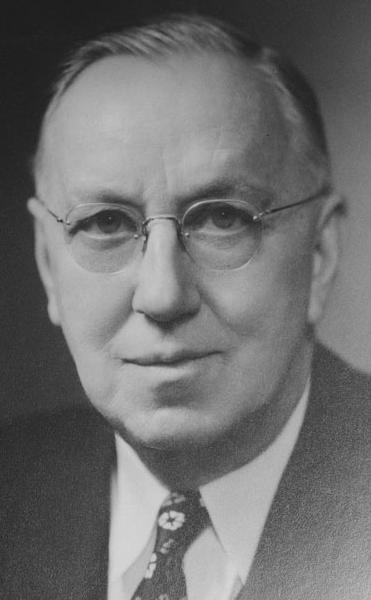
The minister, lecturer and author Dr Harry Gaze [pictured right], in his book Life, Youth and Success, wrote of the importance of living from and out of one’s Real Self as opposed to any one or more of our false selves:

As we continue to speak from this plane of consciousness, the qualities of the real ‘I’ or individual are made more and more manifest in the personality.

Take care what you do with your 'I'. For your sake ... and for the sake of others.


RELATED POSTS


WATCH WHAT YOU DO WITH YOUR ‘I’


Sunday, March 13, 2016

A POWERFUL PRAYER FOR OUR TIMES

The word ‘prayer’ troubles me a bit. I neither believe nor disbelieve in God. The belief-disbelief spectrum forms no part of my worldview or mindset, so even agnosticism is not an option for me. Besides, the traditional concept of God is contradictory, and I reject, as totally untenable, all notions of there being some all-powerful Creator to whom we can talk and who supposedly listens to, and will answer, our prayers. So, not surprisingly, I reject all forms of theistic, petitionary prayer.

However, there are many forms of prayer including affirmations of various kinds. We all pray, in our own way--even the atheist. In the words of an old hymn, ‘Prayer is the soul’s sincere desire, uttered or unexpressed.’ Thus, if you really want good health for yourself or some other person, or world peace, that is your prayer.

Does prayer work? Well, if sincere, a prayer can change the pray-er, and if he or she changes for the better, change may occur elsewhere as well. It all begins with the individual.

Here’s a prayer of sorts that was written by Dr Annie Besant [pictured above right] in 1923. I have made very slight changes to the original wording in the interests of gender inclusiveness:

O hidden Life, vibrant in every atom;
O hidden Light, shining in every creature;
O hidden Love, embracing all in Oneness;
May all who feel themselves as one with Thee,
Know they are therefore one with every other.

What powerful words!

We start with ‘life’--the fact of existence itself. Life is everywhere. It is omnipresent. In a very profound sense, life is omnipresence itself. Is it ‘hidden’? What is hidden about life? Well, we do not really see life itself. What we see is the out-picturing—the outpouring—of life. Life takes shape in innumerable forms. What we see are living things living out their livingness from one moment to the next. However, the essence of life—the very ground of being itself—is invisible to the eye. The dynamic, creative, inexhaustible and ineffable life-principle animates and sustains all living things—including you and me—but it cannot be seen. Yet it is ‘vibrant in every atom’.

And this word ‘Light’. When life becomes visible, in the form of innumerable living things living out their livingness, it is right to describe it as ‘light’. What is hidden about light? Well, as with the word life, the real light cannot be seen. It is in the nature of pure consciousness itself. Consciousness is non-physical, immaterial, and spiritual. A spiritual substance is something which, although real, is not perceptible by the senses. We only know 'it' by its effects. We cannot see electricity, but we see the light emanating from the light bulb. This inner light shines in every creature, including you and me, and it radiates outwards in a visible manner.

‘Love’. What is love but the givingness of life to itself so as to give rise to more life. The self-givingness of life. All around us we see the effects of the self-givingness of life in action, but the self-givingness itself is invisible to the eye--hence, once again, the use of the word 'hidden'. We see the phenomenon at work everywhere, whether it is in our garden or in the maternity ward of a hospital. This love does indeed embrace all in oneness. I am not advocating monism or pantheism. When I say that life is one, I am trying to say a couple of things. First, a single logic applies to all things and how they are related to other things. Secondly, all things exist on the same order or level of reality, and on the same ‘plane’ of observability. Call it the ‘interconnectedness of all life’ or, if you like, ‘InterBeing.’ The latter wonderful term comes from the Vietnamese Buddhist monk and teacher Thich Nhat Hanh [pictured above left]. I love that word ‘Interbeing.’

The bottom line is this. There is only one life manifesting itself in all things and as all things. The one is constantly becoming or giving birth to the many, but the one is inexhaustible. It is both manifest and unmanifest. Visible and invisible. Yet it embraces all multiplicity in oneness. In the words of Alan Watts, 'Every individual is an expression of the whole realm of Nature, a unique action of the total Universe.' And not just every individual, but every thing in existence.

The ‘Thee’ referred to in the invocation is not in the nature of a personal God. Annie Besant certainly did not believe in a God of that kind. She rejected all notions of an anthropomorphic God. And so do I. ‘Thee’ is not something or someone to be petitioned in the hope that He/She/It will answer our prayers. However, if you chose to believe in such a God, that is your business. The ‘Thee’ referred to in the invocation is the ‘Hidden Life’, the ‘Hidden Light’, and the ‘Hidden Love’. Those three things are a triplicity of sorts—different words for the same ‘thing’. The ‘thing’—actually, it is not a thing at all as we ordinarily understand that word—is the livingness, consciousness and self-givingness of life. When we come to feel—note that word ‘feel’—ourselves as one with that dynamic, creative life principle, in time we come to ‘know’—this is no intellectual knowing—that we are therefore ‘one with every other’. 

This ‘feeling’ is no warm and fuzzy thing. The word ‘feel’, as opposed to ‘think’, is used to denote a choiceless awareness of what is. There is no judgment, analysis or interpretation. Just choicless awareness. It’s the same with that word ‘know’. As I just said, it is not a matter on book knowledge or reasoned analysis. This knowledge is transrational. Not irrational, but transrational. As we read in The Voice of the Silence, ‘The mind is the great slayer of the Real.’ There is a place for the use of reason in our lives—a very great place—but the use of reason can never bring us to an understanding (again, not an intellectual thing) of what is truly ‘real’.

We live in a very troubled world. Has it ever been any different? We see politicians—well, some of them, at least, who are very much in the news at the present time—who seek to divide and pit one group of persons against another. That is not the way to world peace and harmony. It never was the way. I see plenty of division and conflict in our world but I also see plenty of evidence of an ever-growing group of people who, recognizing their common humanity with all other people, are working for the good of all and for the very survival of our damaged planet. They are the ones who rail against bigotry, racism, sexism and all other forms of discrimination. They are the ones who think deeply before following their nation’s call to take up arms against other peoples of the world. They are the ones who believe that climate change is real—which it damn well is—and who are advocating for climate change action at all levels. They are the ones for work for justice and equality for all, including refugees and all displaced and homeless persons. They know the truth of Dr Besant's prayer, even if they have never heard of her or the prayer the subject of this post.

Yes, these are the people who, often without any connection to formal religion of any kind, are ‘praying’ this prayer. They are praying in the only way that really matters—with their lives.


Friday, October 2, 2015

ANYONE CAN AND DOES PRAY---EVEN THE ATHEIST

No, this post is not about that rather silly aphorism, 'There are no atheists in foxholes.' The fact is, atheists are to be found in foxholes.

I do, however, want to say something about prayer. Anyone can prayer---even an atheist. Listen to the first two verses of this Christian hymn by the British poet and hymn writer James Montgomery:

Prayer is the soul’s sincere desire,
Unuttered or expressed;
The motion of a hidden fire
That trembles in the breast.

Prayer is the burden of a sigh,
The falling of a tear
The upward glancing of an eye,
When none but God is near.

‘Prayer is the soul’s sincere desire … unuttered or expressed.’ You don’t have to package or formulate your words in a Christian form. You don’t even have to verbalise your desire. Whatever be your sincere desire---whether for yourself, some other person, or our world---that is your prayer … and a prayer.

Now, there was, in what I quoted above, that pesky little word ‘God’. The word ‘God’, if one uses it at all, means different things to different people. For some, there is no objective referent at all to the word ‘God’, and I respect that position. The important thing to keep in mind is this: ‘The word is not the thing.’ That’s something the Indian spiritual teacher Jiddu Krishnamurti [pictured left] used to say over and over again, and he is right. It’s the reality behind the word that matters. In other words, don't get hung up on the word ('God'). Instead, focus on the reality behind, and beyond, the word. Well, I hear some of you say, what is that reality? What follows is my take on it.

Despite things constantly coming and going, waxing and waning, there is something unending and unceasing, something that is beyond time and space itself. It is the ever-present spirit of life---that is, the very livingness of all life, the essential oneness of all life, and the self-givingness of life to itself so as to perpetuate itself. You can call that God if you like. The New Testament says that God is love. That’s pretty good. Some also use the word ‘God’ to refer to our innate potential perfectibility as well. That makes some sense too. The really important thing, if you choose to believe in God at all, is to avoid believing in a tribal, cruel and nasty God. That sort of belief is very harmful to others. The Baptist minister and theologian Dr Harry Emerson Fosdick once famously wrote, ‘Better believe in no God than to believe in a cruel God, a tribal God, a sectarian God. Belief in God is one of the most dangerous beliefs a man can cherish.’ 

Me? These days I neither believe nor disbelieve in a traditional God. I love these words from the Jesuit priest and author Anthony de Mello SJ [pictured right]: ‘The atheist makes the mistake of denying that of which nothing may be said ... and the theist makes the mistake of affirming it.’ But, having said all that, God or no God, prayer is real.

Does prayer really change things? Well, it can change the pray-er, that is, the person praying, and when the pray-er changes other things start to change as well. That is not anything supernatural.

Having said all that, we should never see ourselves as the end and God as the means to that end. Dr Fosdick made another good point when he said, ‘God is not a cosmic bellboy for whom we can press a button to get things.’ I think these words from Venerable Fulton J Sheen are also helpful: ‘We do not pray that we may have good things; we pray rather that we may be good.’

Pray in whatever way makes sense to you, but do more than pray. There is an Indian proverb, ‘Pray to God but continue to row to the shore.’ (I have also seen that proverb expressed as, ‘Call on God, but row away from the rocks.’) There is an Arab proverb that is very similar: ‘Trust God but tie your camel.’ By all means hold on to your desires and hopes, but you---indeed, all of us humans---must do what needs to be done to bring about positive, lasting change in ourselves and our damaged world.


Friday, August 15, 2014

NOTHING’S REAL--EXCEPT REALITY ITSELF

Life, as Allen Ginsberg so powerfully put it, is ‘a question/ of realizing how real/ the world is already.' 

No matter what you believe, or don’t believe, it’s how well you live your life, and how well you cope ‘the slings and arrows of outrageous fortune,’ that determines the true measure of your success in life and the quality of your life experience. You may pride yourself on having what you think is a logical, rational philosophy of life but if it doesn’t help you deal with the problems of everyday life, it’s next to useless. If a religious or philosophical life stance is to be of any use, it must help to explain, and help you and others cope with, the ‘broken shoelaces’ as well as the bigger tragedies of everyday life. 

There’s a Zen kōan entitled ‘Nothing exists.’ I think it powerfully illustrates the point I’m trying to make.

A young student of Zen visited one master after another. He called upon Dokuon of Shokoku, a famous Rinzai rōshi who became abbot of Shōkoku-ji. Desiring to show his attainment, the student said: ‘The mind, Buddha, and sentient beings, after all, do not exist. The true nature of phenomena is emptiness. There is no realization, no delusion, no sage, no mediocrity. There is no giving and nothing to be received.’

Dokuon, who was smoking quietly, said nothing. Suddenly he whacked the student with his bamboo pipe. This made the student quite angry. ‘If nothing exists,’ inquired Dokuon, ‘where did this anger come from?’

A Christian may affirm, ‘God is light and love, and in Him there is no darkness at all’ (cf 1 Jn 1:5), and exclaim, ‘Suffer little children, and forbid them not, to come unto me’ (cf Mt 19:14; Lk 18:16), but try saying that to parents who have just lost their son or daughter to some childhood cancer after many years of pain and suffering. Now how helpful is that? Does it relieve their suffering? Does it have explanatory power? 

And the militant atheist who believes in no-god, and who has no time for those who pray to an 'imaginary friend,' may pride themself on the fact that they have, as they see it, repudiated all superstition and supernaturalism, having adopted a rational life stance, but unless they have real insight into their own behaviour and mind they know very little indeed.

Listen to these insightful words from the American spiritual leader and author Vernon Howard whose books and talks have helped me greatly over the years:

To be right, just be real. Reality is everything. Now you think about that. What is actual, what is true, what is real is right. Trueness is always right.

In nature, you can see rightness, because nature is what it is. A rose is real, a rose is right. No question about that. No rose ever goes to a psychiatrist.

In short, there is no substitute for what is. Life, reality, actuality, rightness, truth---those words refer to the same thing. If we align ourselves with what is, and don't resist or fight against it, and always speak the truth to others as well as to ourselves, we will know peace ... but not otherwise.

The truly spiritual (and I don't mean religious) person has no creed or article of faith at all, and their only liturgy is a day-to-day, moment-to-moment reverence for and acceptance of the beauty and the ugliness of life as it unfolds unceasingly yet wondrously. Their only ‘god’---if they choose to use that word---is a sincere desire to learn, know and understand as opposed to simply believe or not believe. The just-believer---as well as the mere non-believer---never knows or understands. Seek to learn. Seek to know. Seek to understand.

In the words of another master, ‘And you will know the truth, and the truth will set you free’ (Jn 8:32).


RELATED POSTS


THE MINDFUL ART OF KNOWING ONESELF