Showing posts with label True Self. Show all posts

Friday, April 1, 2016

HOW WELL DO YOU KNOW YOUR REAL SELF?

Most of us live from and out of our personality as opposed to our individuality. Only our individuality—as a person among persons—is authentically real, for it is our very ‘AM-ness’, the stuff of existence itself. Let me explain.

In the Bible we read that Moses, standing before the burning bush, asked God His name, so he could tell the Israelites who sent him. God replied:

I AM THAT I AM. This is what you are to say to the Israelites: 'I AM has sent me to you.'‘ God also said to Moses, ‘Say to the Israelites, 'The LORD, the God of your fathers—the God of Abraham, the God of Isaac and the God of Jacob—has sent me to you. This is my name forever, the name you shall call me from generation to generation. (Ex 3:14-15)


Did this incident really occur? Was there really a burning bush which was not consumed? Was there actually a Moses? I don't think so. I think the Biblical Moses is a figure of myth, not history. It doesn't matter at all. The story is about one man's encounter with 'ultimate reality'a man who finds himself in the presence of pure Being and who comes to see things-as-they-really are. The symbolism of the story is palpable and obvious. The nature of ultimate reality can be 'discovered' in any flower or bush, whether burning or not. It can also be seen in people, in fact, in every thing and everywhere ... if you look deeply and mindfully enough.

Now, I simply cannot believe in a God who is some sort of all-powerful personal, super-personal or supra-personal Person, Being or Thing ‘up there’ or ‘out there’ who supposedly takes a personal interest in each one of us and knows everything about us (even knowing how many hairs are on our head). No, I do not believe God is a Person or Being of any kind. Actually, I neither believe nor disbelieve in any God at all, but that's another matter. What I'm talking about here is something that is not a matter of belief at all. On the contrary, it is a matter of knowing and understanding what truly is. The only understanding of God that makes any sense at all to meother than the very Biblical understanding of God as love (cf 1 Jn 4:8)is God as pure Be-ing, God as the Great ‘I AM’timeless, spaceless, ageless, and without face, form or figure. This Be-ing, the metaphysical name of which is ‘I AM THAT I AM’, is forever becoming, entering into time and space as each and every living thing, taking shape and form in and as each and every thing. This Be-ing is what it becomes, hence, I AM THAT I AM. You know, the ancient Hebrews, for the most part, had a very tribal concept of God, one that is often quite unattractive, but at times we find in the Hebrew Bible something much more profound ... and we have it here ... namely, an understanding of the Divine as the Great I AM. 'I AM THAT I AM.'

In Young’s Literal Translation of the Bible, which is generally closer to the Hebrew than most of the other well-known English versions of the Bible, the phrase ‘I AM THAT I AM’ is rendered 'I AM THAT WHICH I AM'. Exactly. The Great I AM—Life itself—becomes in and out of Itself the ‘I AM-ness’ (‘AM ness’) of all that it becomes. Of course, in so doing, this Great I AM never exhausts Itself, for It is much, much more than that which It becomes. It is indeed all that It becomes, but that is not all that there is of It. In other words, this inexhaustible Be-ing of which I speak is the very Be-ing-ness or livingness—self-livingness, in fact—of life itself. It is the very ground of all being … and all beings.

Life manifests itself in each of us, as us. Each one of us is both an inlet and an outlet of life's self-livingness or self-expression. God—the Great I AM—is what some Christian metaphysicians refer to as your ‘Divine Self’, the 'Christ Self', or the 'Christ within'. Others, including some psychologists, refer to it as your ‘Real Self’ or ‘True Self’. It doesn’t really matter what we call it. The word or phrase is not the thing. I am talking about the 'I AM', or 'AM-ness', of you. This AM-ness animates your body and your mind, in fact, your whole life. It causes your heart to beat and it causes you to think.

When you say, ‘I am … [this or that]’, who or what is this ‘I’ which is speaking? ‘The person that I am, that’s who,’ I hear some of you answer. Yes, that’s true up to a point, for we usually employ the word ‘I’—a pronoun—to refer to the person speaking. In truth, the ‘I’ of us is something much, much deeper. Your AM-ness—the be-ing-ness of you—manifests in your mind as a focal point or centre of consciousness and calls itself ‘I’. In fact, your AM-ness manifests in your mind and resonates throughout your whole body as ‘I-consciousness’. This ‘I’ enables you, the person that you are, to say ‘I am …’.

Your ‘I’ is your Real Self. When the Bible says that you are made in the image and likeness of God, it is saying that God, the Great I AM, becomes and is you, or at least your Real Self. The ‘I’ is the real individual made in the image and likeness of the Great I AM. Each of us is a spark of the Divine Fire. Of course, as I've said on innumerable occasions in the past, we are much, much more than those hundreds of little, false selves---all those waxing and waning ‘I’s’ and ‘me’s’---with which we tend to identify—our many likes, dislikes, prejudices, predilections, habits and personality quirks--in the mistaken belief that those things, which pertain only to the personality of us, constitute the ‘real me,’ that is, the person each one of us is. Know this—those hundreds and thousands of false selves are not even a shadow of the ‘real you’. Only the latter—the mind-body complex that is the personis ontologically real. All of the above mentioned false selves are illusory, and the challenge for each one of us as persons is to transmute our false, illusory selves into our Real Self. You see, from a metaphysical point of view, only the ‘I’, the Real Self of each one of us, is real, for it is the ‘stuff’ of pure consciousness itself, the very ‘I AM-ness’ of life’s self-existence and self-expression. Yes, your ‘I’ is your individuality, not your personality. The ‘I’ of you is an individualized inlet and outlet of consciousness which, in its impersonal, infinite, formless, essence is pure, unindividualized Be-ing-ness. Say this to yourself several times, until the ‘inner’ meaning of the words resonates and authenticates itself to you:

I AM me, my Real Self … that part of me who says ‘I AM’ and is I AM.

When you have reached the point where, when you say 'I AM ...', you are then and there aware of your very own awareness or consciousnesswhich is the essence of mindfulness, by the way—you have come to know, and live from, your Real Self. 

Now, here is something very importantwe think, feel, and act out of that which, in essence, we are (the AM-ness in us) whenever we use our intellect, emotions, and will. All parts of us are one with the wholeness of our being. Whenever we affirm ‘I am …’ we are affirming our be-ing-ness, our very AM-ness, as well. When we say, ‘I am tired,’ we attach our AM-ness to tiredness. When say, ‘I am strong,’ we attach our AM-ness to strength. So, at the risk of sounding Pollyanish, it is imperative that we think, speak and act from a plane of consciousness that is wholesome, loving, uplifting and positive, for as Ralph Waldo Emerson said, ‘We are what we think all day long.’ We must be careful what we attach our ‘I’ to. When we say, ‘I am weak’, we are attaching our ‘I’ to weakness. When we say, ‘I am angry’, we are attaching our ‘I’ to anger. Be careful what you do with your ‘I’, for it will make or break you!
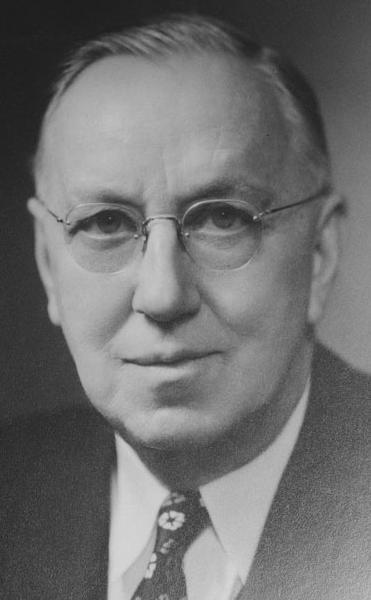
The minister, lecturer and author Dr Harry Gaze [pictured right], in his book Life, Youth and Success, wrote of the importance of living from and out of one’s Real Self as opposed to any one or more of our false selves:

As we continue to speak from this plane of consciousness, the qualities of the real ‘I’ or individual are made more and more manifest in the personality.

Take care what you do with your 'I'. For your sake ... and for the sake of others.


RELATED POSTS


WATCH WHAT YOU DO WITH YOUR ‘I’


Wednesday, February 11, 2015

WHO AM I? (A ZEN STORY)

‘Who am I?’ Have you ever asked yourself that question? What was your answer?

Here’s a famous Zen story on the point. I often use this story in my counseling work. What it says about who we really are forms the cornerstone of Buddhist psychology as well as other forms of psychotherapy such as self illusion therapy.

A distraught man approached the Zen master. ‘Please, Master, I feel lost, desperate. I don't know who I am. Please, show me my true self!’ The teacher just looked away without responding. The man began to plead and beg, but still the master gave no reply. Finally giving up in frustration, the man turned to leave. At that moment the master called out to him by name. ‘Yes!’ the man said as he spun back around. ‘There it is!’ exclaimed the master.

When someone sees you they see you, that is, the person that you are. However, when you see and experience yourself you do not see and experience the person that in truth you are. Instead, you see and experience any one or more of a number of self-images held in your mind. At one point in time you may see and experience the ‘little me’ or the ‘frightened me’ or the ‘inferior me.’ At another point in time you may see and experience the ‘confident me.’ These ‘me’s’ are nothing more than self-images in your mind. They are images felt and experienced as real, that is, as the real person that you are. Because there is a feeling component to these images many of them can be quite strong and persistent over time. (Their persistency over time only reinforces the mistaken belief that these images are really you, and also makes change seem very difficult indeed.) However, none---I repeat none---of these felt self-images are real. They are not the real person that you are. Having said that, these ‘me’s’ constitute in whole or in part your sense of who you are. Whichever image is most dominant in your mind at any point in time will constitute your sense of ‘me’ (that is, what to you, in you, is you---at least at that point in time).


At the risk of repeating myself, while you experience these ‘me’s’ as real, the truth is they are just images in your mind that you feel and experience, by choice or otherwise, as you. Now, as I’ve already said, these self-images will change over time but some are more durable than others. Take, for example, a person whose parents constantly told her, when growing up, that she was a failure. It is more probable than not that this person will grow up with self-images such as ‘little me’ and ‘useless me.’ So, what can she do in order to overcome her sense of self as a failure? First, she needs to know that it is possible to let go of these false selves (note: they are false because they are not who she really is). Secondly, she will change for the better---sometimes slowly, sometimes quickly---when she learns to live her life relying solely upon the power of her personhood, which is a power-not-oneself that we all have. Then, and only then, will she come to experience herself as a person among persons as opposed to one or more of those false and illusory selves with which she so closely identified herself for so many years in the past. In short, the woman hands over---that is, surrenders her false selves---to what she, as a person, can do.

Now, back to our Zen story. The distraught man wants to discover, that is, experience, his ‘true self.’ The teacher refuses to answer the man. The man pleads and begs, but to no avail. Finally, giving up in frustration---note those words ‘giving up,’ for they are so very important---the man turns to leave. At that moment---yes, at that exact moment---the master calls out to him by name. (The teacher was very smart, for he realized that the man had 'let go' and was therefore now ready to know and experience the truth.)  ‘Bill Taylor?’, he says.
‘Yes!’, says the man as he turns back around. ‘There it is!’ exclaimed the master.

You see, for the very first time in his life this man came to see and experience himself as he really was---as a person among persons. He experienced enlightenment. That means he---woke up! Yes, he woke up to what in truth he really was. He was not those many
false selves (‘me’s) which in the past he mistakenly believed to be the real person that he was.

This is a very powerful story. Never forget it. More importantly, never forget the ‘moral’ of the story, namely, that what to you, in you, is you is NEVER what in truth you are.

Real personal transformation come when we 
get real, that is, when we start to think, act and live from our personhood as a person among persons. And remember this---there is no human problem that is not common to other persons among persons.


RELATED POSTS


Friday, May 16, 2014

IT’S POSSIBLE TO DO THE IMPOSSIBLE!

‘The things which are impossible with men
are possible with God.’ Lk 18:27.

This post is about personal transformation and recovery, but I am not suggesting some method or technique. (I don’t believe in them.) Nor am I some fundamentalist or evangelical Christian who’s out to convert you---far from it. What I am suggesting is a transformative spiritual, and not just psychological, idea---an idea which, if accepted in your consciousness, and actualized, can and will change your life forever. Maybe that sounds too good to be true, but it’s not. So, please read on, if you’re at all interested.

Now, even though I’ve quoted a verse from the Bible, I want you to know that I am not a Biblical literalist. Indeed, I abhor those 'black letter' Christians who always interpret the Bible literally. For many decades now I have studied the Bible, as well as other sacred scriptures, with a view to ascertaining their deeper, ‘inner’ meaning. You see, I happen to think that, for the most part, sacred scripture was never intended to be interpreted literally. Take the Bible, for instance. Much of its contents are written in mythological, figurative, metaphorical, symbolical, allegorical, and spiritual language. True, there are actual, historical events recorded in many parts of the Bible but even many of them were never intended to be taken literally, or only literally. Yes, the Bible is full of myths, legends, fables, folk tales, morality tales, symbols, parables, allegories, and archetypal ideas, and must be interpreted and applied in that manner in the light of reason, contemporary knowledge, and a knowledge of metaphysics and sacred language.


Take, for example, the verse set out above. It’s from Luke’s Gospel. Now, read the verse carefully. For starters, the verse does not say, ‘God can do the impossible.’ After all, that would make no sense at all. If God---whoever or whatever God is---can do the impossible, then it’s not impossible … at least not insofar as God is concerned. No, the verse does not say that God can do the impossible. It simply says that the things that are impossible with ‘men’ are possible with God. Now, what does the word ‘men’ mean in this verse? You may think that’s a silly question, but it’s not. Yes, the word ‘men’ can be interpreted literally to mean men (and, of course, women and children as well), but the word often has a deeper, ‘inner’ meaning as well in many sacred writings. In Biblical metaphysics the word ‘men’ often means thoughts---your thoughts, my thoughts, and especially those of a conditioned, almost non-thinking kind.

There is another Old Testament (Hebrew Bible) expression worth noting---‘men of Israel.’ Now, the expression ‘men of Israel’ can and often does refer to positive and spiritual thoughts and aspirations, that is, thoughts, ideas and sentiments that are spiritually enlightened, and not materialistic or carnal (that is, negatively selfish). Spiritually enlightened thoughts, ideas and sentiments are invariably loving, kind, compassionate, generous, and uplifting. They work for the betterment and improvement of not just the person who entertains them but also others as well. The unqualified expression ‘men’ is ordinarily used in the Bible to refer to thoughts, ideas and sentiments that are negative and selfish and often highly self-destructive, an example being a thought of resentment, hostility, or jealousy toward some other person. All such ‘men’ are the result of conditioned thinking on our part. I will have more to say about what I mean by conditioned thinking in the very next paragraph.


To me, the Bible verse quoted from Luke’s Gospel is saying that there will always be things that, according to our ordinary thoughts and ordinary thinking, will be impossible, but those things are possible when we ‘plug into’ a Power-not-ourselves. Now, our ordinary thoughts and thinking entail nothing other mechanical, reflexive thinking where we react---as opposed to rationally respond---to what happens to us from our conditioned thoughts. These thoughts are sometimes referred to as our ‘false selves,’ which are all those little ‘I’s’ and ‘me’s’ in our mind and daily thinking that we have formed, acquired and molded over our whole lifetime. (Note. Don’t let the word ‘false,’ in this context mislead you. These selves do exist as image in our mind. I am not saying they are unreal. It is simply the case that these inner experiences of mind do not represent our true identity. The latter is the person we are in the world.)

There’s more to it. Our conditioned mind, from which arise our so-called conditioned thinking, consists of all of our various likes, dislikes, attachments, aversions, beliefs, opinions, prejudices, and so on. Over time, these false selves (‘men’), which lie behind every feeling and emotion, harden into mindsets such as habits, addictions (whether to drugs, people, a certain lifestyle, or whatever), obsessions, and compulsions of innumerable kinds, and most people are in bondage to one or more of these things which we experience as strong feelings and emotions. When any of these false selves are active, they are always experienced as feelings and emotions.

As I’ve often said in my posts, these false selves, many of which struggle with each other for dominance in our mind, thinking, and daily life activity, but none of which are the real person each one of us is, have no power in and of themselves. Why? Because they are nothing other than mental images in our mind. To use metaphysical language, these false selves---and we have literally hundreds and hundreds of them inside our mind---are ‘men.’ No wonder the Bible verse speaks of things being ‘impossible with [these] men’! The trouble is that as and when we choose to identify the person we are---the latter being our true identity---with one or more of these false selves, mistakenly believing them to be the real person we are, we give these ‘men’ in our mind and life activity a certain pseudo-power that is invariably negative in both nature and effect.


Now, what is this Power-not-ourselves which supposedly can do what is impossible to ‘men’? Well, your Power-not-yourself may be different from mine. Even atheists have a Power-not-themselves. It may, for example, for them be a source of inward power under the guise of the person they are, in contradistinction to all those little, and often extremely negative and self-destructive, ‘men’ (and ‘women’ and ‘children’) of which I’ve spoken. You don’t have to call this Power God or Jesus or Buddha or anything like that. You don’t have to refer to it as a ‘Higher Power’ or ‘Higher [or True] Self’ as some people do, but that sort of terminology is OK if it means something to you. All you have to do is to accept---I mean, really accept, affirm, and internalize---the following important spiritual truth:

The ‘men’ (that is, the ‘false selves’) within my mind have no power to do anything positive or beneficial … whether for me or for others. These ‘men’ cannot be changed or reformed by themselves. However, they can be dissolved by the transformative power of ‘not-self’ (that is, a Power-not-oneself) which is infinitely greater than all these ‘men’ combined.

What, exactly, do I mean by the word 'spiritual,' when I refer to a 'spiritual truth'? Something is 'spiritual' when it goes beyond both the physical and the psycholgical. Some problems can be resolved only by recourse to a 'higher' (that means, 'other than self,' or 'not-self,' as opposed to some supposed higher level or order) power or principle. For example, just try getting one of these ‘men’ to remove himself from the centre of his own endeavours. It’s impossible. As William Temple said, ‘no effort of the self can remove the self from the centre of its own endeavour.’ Now, that’s a spiritual problem. It goes beyond the physical and even beyond what is ordinarily termed the psychological as well. We need a spiritual solution to solve the problem of the false selves and their consequences---all manner of pride, selfishness, self-centredness, self-absorption, self-interest, willfulness, and self-will run riot. These all result in feelings of self-inadequacy, self-consciousness, frustration, powerlessness, separateness.

To solve a problem of the spiritual kind---the type of problem outlined above---you need a spiritual solution. To rely upon ordinary conditioned thoughts and thinking in an attempt to rid yourself (that is, the person that you are) from the problem is doomed to failure. You need to find a Power-not-oneself---for only such a Power can relieve you of the bondage of self. There is, in Christian theology, an expression for this Power---it’s called the ‘grace of God,’ and this grace is said to be sanctifying in its effect---that is, it purifies. That’s what we need---to be made pure and free from the bondage of self. Again, never mind the fancy words or expressions. As the Indian spiritual philosopher J. Krishnamurti [pictured left] used to say over and over again, ‘The word is not the thing.’ The reality behind the word or the expression is all that matters.

Christian, Jew, Buddhist, Hindu, Muslim, Humanist, atheist, or other, we all need to be set free from the bondage of our conditioned thinking which is a veritable prison-house for us. We need get out of own way by dying to self and rising to newness of life. In order for that to happen we must undergo a spiritual transformation---a psychological mutation of great depth and intensity---but no effort of ourself can remove that self from the centre of its own endeavour. We need to rely upon---and humbly surrender to---a Power-not-ourselves. Only then are we truly able to experience the necessary ego-deflation at great depth.

Yes, the things that are impossible with the ‘men-selves’ in your mind are possible with a Power-not-oneself.

Now, that’s a transformative spiritual idea!


The photos (other than that of Krishnamurti)
were taken in Japan by the author.


IMPORTANT NOTICE: See the Terms of Use and Disclaimer. The information provided on this blogspot is not a substitute for professional medical advice, diagnosis or treatment. Never delay or disregard seeking professional medical advice from your medical practitioner or other qualified health provider because of something you have read on this blogspot. For immediate advice or support call Lifeline on 13 1 1 14 or Kids Helpline on 1800 55 1800. For information, advice and referral on mental illness contact the SANE Helpline on 1800 18 SANE (7263) go online via sane.org  


RELATED POSTS


Monday, May 5, 2014

‘WHAT AM I TO DO WITH MYSELF?’

‘What am I to do with myself?’ said one of my clients to me. Let's call her Mary (not her real name). ‘I feel so helpless,’ Mary said.

My reply to Mary startled her at first, then quickly began to annoy her, and then frustrate her immensely. (I can have that sort of effect on my cIients, not to mention others as well.) I said to her, ‘That’s absolutely wonderful that you feel that way. Now we can get somewhere. I was hoping you would eventually come to feel this way.’

‘What do you mean? What are you talking about?’ Mary retorted. ‘Look,’ I said to her. ‘Feeling helpless, hopeless, and powerless is the foundation stone for real, lasting self-change. Now that you've worked out you're  beaten, you're ready to discover, and then start living from, your real power centre, which is the very ground of your being as a person among persons.’

Well, it took me quite a while to convince her, but Mary is now an entirely new person. She has peace of mind, and her old, tired, worn-out, negative ‘false selves’ have been dissolved. Well, most of them anyway. She is working progressively on the rest of them. You see, Mary is now living, one day at a time, and one moment at a time, from her ‘True Being,’ that is, as the real person that she is.

Pathway in ornamental garden,
Greater Tokyo Area, Japan.
Photo taken by the author.

We use the word ‘self’ in two different senses. Firstly, we use the word to describe the ‘person’ each one of us is---the ‘real you,’ so to speak---and that is a most legitimate use of the word. However, we also use the word to refer to what we mistakenly perceive to be our real identity. Let me explain. We perceive life through our senses and our conscious mind. Over time, beginning from the very moment of our birth, sensory perceptions harden into memories formed out of aggregates of thought and feeling. In time, the illusion of a separate 'witnessing self' emerges. However, the truth is that our mental continuity and sense of identity and existence are simply the result  of habit, memory and conditioning. Also, genetics has a bit to do with it as well. Hundreds and thousands of separate, ever-changing and ever-so-transient mental occurrences harden into a fairly persistent mental construct of sorts which is no more than a confluence of impermanent components (‘I-moments’ or ‘selves’) cleverly synthesized by the mind in a way which appears to give them a singularity and a separate and independent existence and life of their own. The result is a 'self'---or, as we will see, lots and lots of 'selves'---that are little more than bundles of memories from and out of which thought arises, or rather reacts to stimuli whether internal (eg other such bundles of memories, that is, 'I's' and 'me's') or external.

Now, it is through this perception of an internally generated sense of 'self' that most of us ordinarily experience, process and interpret all external reality. For example, if you see yourself as inferior to others, you will invariably find that life takes you at your own estimation of yourself, so don’t be surprised if you find yourself being treated as a doormat. Your every experience will tend to confirm what you fear most---‘I am indeed inferior to others, and others think so, too.’ Ditto if you perceive yourself as full of fear. Your life experience will be one long self-fulfilling prophecy, and you will find yourself identifying with Job in the Bible who uttered those immortal words, ‘For the thing that I fear comes upon me, and what I dread befalls me’ (Job 3:25). In other words, we tend to become the embodiment of all the negative self-images we have of ourselves. 

Lake Ashi, Hakone, Japan.
Photo taken by the author.

These negative self-images and misbeliefs, when we identify with them, dominate our daily lives, thoughts, feelings, and actions, operating as some sort of unseen enemy. They haunt and hound us, and rob us of peace of mind and emotional equanimity. The funny thing is these self-images have no power in and of themselves except the power we, the persons that we are, give them by, firstly, our belief in them, and secondly, the attention and time we give them in our mental and emotional life. Who or what is this 'I' or 'me' that is inferior or fearful? Call out to 'it.' Does it answer back? If it does it's more than likely it's another 'I' or 'me' doing the answering. It's all quite tragic ... and silly ... and unnecessary. There is a much better way to live. There is a way out!

Unfortunately, the mental construct of ‘self’---indeed, hundreds of ‘selves,' that is, 'I's' and 'me's,' in the form of our (often negative and destructive) likes, dislikes, attachments, aversions, cravings, habits of thought, prejudices, beliefs, opinions, and so on---which we have each built up over many years by thought and habit, and then reinforced by words spoken as well as memories of the past, imposes severe limitations on how we see life. All too often, life’s experiences are filtered through a distorted lens comprised of the totality of our various self-images. We fail to see things as they really are because of this distorted lens. You see, how you experience what happens to you in life will be determined very largely by your self-image, that is, how you see yourself.

Now, this is the really important part of what I have to say. Your self-image---actually, you have a multitude of self-images in your mind---is not the real person that you are. These self-images, although quite persistent because we choose to identify with them and hold onto them, and mistakenly believe that they are the ‘real me,’ are false and illusory. That doesn’t mean these mental images don’t exist in your mind. No, not at all. It simply means that these images are brought about by memory, and thus thought, and therefore have no separate, independent, and permanent existence in and of themselves from the real person that you are . Get the picture?

Well, I almost hear you ask, as my client did indeed ask as well, 'What can I do about this state of affairs?' The answer is---a lot. 

The first thing to do is to accept that you are a ‘person’---a vital and integral part of life's self-expression. That is what you are. You are not that 'I' or 'me,' whether under the guise of your so-called 'witnessing self,' ‘transcendental self,’ or ‘ego-self’---all of which are essentially the same thing---that are nothing more than the aggregation of the hundreds and thousands of ‘I-moments’ you have manufactured in your lifetime. Nor are you any of the other false selves with which you habitually identify (and thereby perptuate) and which you mistakenly believe to be the ‘real you.’ However, the reality is that this supposed 'real you' is nothing but (to use the words of the Indian spiritual philosopher Jiddu Krishnamurti [pictured above left]) 'self-centred activity, the self that is always asserting, the self that demands fulfilment, the self that perpetuates itself through identification, the self that is constantly in action and creating its own centre and therefore isolating itself.'

The second thing to do is to recognize that you are always in direct and immediate contact with internal and external reality---that is, with what is---except when you put barriers between yourself---that is, the person that in truth you are---and reality.

Once you have fully accepted that fact, you can start to live differently. To do that, you need to observe life as if there were no observer. A familiar theme of the Indian spiritual philosopher Krishnamurti was the need for observation 'without the observer.' Why? Because where there is an 'observer' there is a conditioned mind and a conditioned point of view. In other words, where there is an observer, there is a distorting lens which experiences, processes and interprets---and distorts---all that happens in our lives through an amalgam of thoughts, feelings, images, memories, beliefs, opinions, prejudices and biases---all of which is the past and for the most part conditioning. And for goodness’ sake never, never, never try to ‘throw out the window’ or directly expel your ‘false selves.’ That will only drive them more deeply into your mind. ‘What you resist, persists,’ as the saying goes.

I offer no methods or techniques (heaven forbid) for getting rid of your false selves, except to say that self-observation is the key to successful living. It is the ‘handle’ by which you become and live from the reality of your ‘True Being,’ that is, the person that you are. I love these oft-cited words from author P D Ouspensky (In Search of the Miraculous), who is quoting his teacher George Gurdjieff [pictured below right]:

'Self-observation brings man to the realization of the necessity for self-change. And in observing himself a man notices that self-observation itself brings about certain changes in his inner processes, He begins to understand that self-observation is an instrument of self-change, a means of awakening. By observing himself he throws, as it were, a ray of light onto his inner processes which have hitherto worked in complete darkness. And under the influence of this light the processes themselves begin to change.'

You cannot change or reform your false selves, but there is no need to do so in any event. What needs to be done is to ‘dissolve’ your false selves. The first thing to do is to understand the process (an unfortunate word, for it makes it all sound far too mechanical) of formation of the false self/selves. The next thing to do, and keep on doing, that is, practising each day and throughout each day, is self-observation---letting it (whatever it may be) be as it is in you, but being willing for it to move and change.

Self-observation of your thoughts, feelings, and actions as they arise or occur---if undertaken with passive detachment and choiceless awareness (that is, with no judgment, justification, analysis, attitude, comment, interpretation, interference, criticism, or condemnation) of what unfolds as your inner and outer reality from one moment to the next---will in time break down your identification with your false selves as a result of the insight gained from the process of self-observation itself. When you truly observe the process of your thinking, and cease being ‘an observer apart from the observed’ (to use Krishnamurti’s words), which means you see the whole movement of your thoughts, and your feelings, as well as your actions, choicelessly in the sense explained above, then the very act of self-observation puts an end to thought. The result? The false selves are dissolved because they are simply the creation of thought, habits of thought, and conditioning---all of them thought. No thought, no false selves---and over time a psychological mutation occurs that is of tremendous depth and profundity. You have become a light unto yourself. Yes, it’s a wondrous thing to behold. Self-change from self-knowledge from self-observation. (Note. The reference to 'self' in the expressions 'self-change' and 'self-knowledge' is a reference to what we actually are as persons among persons. As to the expression 'self-observation,' the word 'self' has an expanded meaning as described above.)


In some spiritual traditions this whole process is referred to as ‘surrender’ or ‘letting go,’ with the idea that there needs to be a re-surrender and further letting-go whenever one becomes aware of something---in particular, some false self---that is holding us back from fully being the real person that we are. It doesn’t matter what you call it. The only important thing is that you dissolve your false selves through ongoing---yes, it must be undertaken on a progressive basis---self-observation.

I suggest there is no better place to begin than … now! So, start right where you are. Now.


RELATED POSTS


YOUR MIND IS ITS OWN PRISON


Tuesday, April 29, 2014

YOU ARE THE PROBLEM!


‘To escape the self-trap, to be sane and decent and awake
and whole — that is all that matters.’ Vernon Howard.


You are the problem---on every occasion. Yes, you---and me for that matter. So, what is the problem, you may ask? Well, it can be any problem whatsoever, but the real problem is what the American spiritual teacher Vernon Howard [pictured left] referred to as the ‘self-trap.’ Please read this piece of wisdom from Mr Howard:

‘The attempt to escape a problem is the problem. There is logic in this. When a man tries to escape, when he moves away from the problem, he divides himself into one man with a problem, and another man who will escape the problem. In reality, there is no such division, so the escape must always fail, as the man sadly experiences. But, when seeing he is the problem itself, that he and his problem are one, he stops trying to escape because he sees there is no other course. In this state of intelligent acknowledgement of reality, he will not have the problem.’

I often explain it this way. In each of us there are many selves, and they are all false—false in the sense that they are not the real person each one of us is. When we ‘have’ (an unfortunate word in this context) a problem, there is the ‘self that wants to escape the problem,’ and there are many other selves in our mind as well, including the ‘self that doesn’t want to escape the problem,’ as well as the ‘self that thinks it will escape the problem,’ and the ‘self that thinks it knows how to escape the problem.’ None of these selves have any power in and of themselves, none of them can rise above their own level, and many of the selves militate, and even fight, against other selves in our mind. You need to understand that all of these selves are simply mental images in our brains. They wax and wane, they come and go, they vary in felt intensity from moment to moment, but they are all transitory, temporary and for that reason illusory. None of these selves are separate or independent from the real person each one of us is. In his book Esoteric Mind Power Vernon Howard writes about what he calls the ‘self-divided man’ who ‘consists of dozens of "selves" which fight each other in taking him over for a few minutes at a time.’ Howard writes:

'Living in a state of psychic riot, he is thrilled one minute and dejected the next. One part of him is a danger to another part. So what can be trusted? Nothing. The self-knowing man has cleared his mental streets of these rioters, leaving him with a whole and healthy mind, which can be trusted completely.'


Let’s say you have an anger problem. There is anger in you, so to speak, but the reality is you are angry because you have so identified yourself with the ‘self that is angry’ and the ‘self that wants to be [and stay] angry’ that you have become at-one with the anger. You and the problem are one in that special sense and, as the onetime Archbishop of Canterbury William Temple pointed out, ‘no effort of the self can remove the self from the centre of its own endeavour.’ Many others have said more-or-less the same thing. A couple of centuries earlier the French Roman Catholic archbishop, theologian, poet and writer François FĂŠnelon wrote, 'The entire root of your problem is that you cannot get out of yourself,' and many more centuries earlier Jesus said, 'I can of mine own self do nothing' (Jn 5:30). Truth is truth. It never changes. It cannot change. If it could it wouldn't be truth. 

The reason 'self can't change self' (and therefore can't solve the fundamental problem of self) is simple---the ‘self that wants to escape an unwanted self’ is the same thing as the ‘self that thinks it will escape the unwanted self,’ the ‘self that thinks it knows how to escape the unwanted self,’ and the ‘self that doesn’t want to escape the unwanted self,’ and all the other damn selves as well. All of these selves are false and powerless---they're just mere images in our mind. The trouble is, we believe in them and act as if they were real. Now read what Krishnamurti [pictured below right], the Indian spiritual philosopher, has to say about this dilemma:

'I am angry, is that anger different from me? Me, the observer, who says "I am angry." Or that anger is part of me. It seems so simple. No? And when I realize that, that the observer is the observed, that the anger which I recognize is part of me, not something apart, then what am I to do with that anger? I am not separate from that anger. I am anger.'

Dr Norman Vincent Peale wrote, 'There needs to be a shift in emphasis from self to non-self,' but how is that to be achieved given that self can't change self? Clearly, a major paradigm shift is needed---but how? (First, don't ask 'how.') The good news is that you, the person that you are, has power to change---when you see yourself as you really are, when you make a decision that you really want to live differently, and when you are prepared to ‘drop,’ so to speak, your strong identification with your false self or selves. Krishnamurti would often say, ‘Stop trying to escape from the fact of yourself.’ You can’t do it, but when you drop the false, that is, see the false as false, and stop hanging onto and identifying with the false, the real is revealed. In the case of anger, for example, you need to observe the anger without recognition---without even using the word anger, which is a form of recognition.

Self-observation is the answer. You need to see yourself as you really are, without identifying in any way with any of your multitude of selves, thoughts, feelings, bodily sensations, or actions. Do not judge or condemn yourself. Be impartial and objective, and simply observe without reaction and identification. Only in this way will you, the person that you are, be able to deliver the person that you are from the bondage or burden of the problem of the false self. You, the person who has chosen to be at-one with the ‘self that is [and wants to stay] angry,’ and various other mischievous selves as well, must come to see clearly that all such selves are false… no matter how much attention, identification, and recognition you have given them in the past.

Vernon Howard would often say, ‘You don’t have to create your deliverance, your freedom. You can have it, right now. It’s there for you, right now. Who has bound you? Claim your deliverance and freedom, right now!’ All that is needed, on your part, is what Mr Howard refers to as a ‘state of intelligent acknowledgement of reality.’

I will finish with this. 'No self. No problem,' said the Zen master when asked to explain the deeper meaning of Buddhism


RELATED POSTS