Showing posts with label Zen and Mindfulness. Show all posts

Monday, April 28, 2014

‘ENTER ZEN FROM THERE,’ SAID THE MASTER

There is a Zen story that goes like this. ‘Master, how do I enter Zen?’ asked the pupil. ‘Do you hear the sound of that little mountain steam?’ asked the master. ‘Yes, I do,’ replied the pupil. ‘Enter Zen from there,’ said the master. 

The pupil then thought for a while about what the master had said to him, before eventually saying to the master, ‘Master, I’ve been thinking … What if I had said I couldn’t hear the mountain stream? … What would you have said then?’ 

‘Disciple?’ said the master. ‘Yes, master?’ said the pupil. ‘Enter Zen from there,’ replied the master.

‘Enter Zen from there.’ What wisdom there is in those four English words!


If you ask, ‘What is Zen,’ you should not expect an answer---certainly not an answer that says something definite and intelligible to the conscious, rational intellect. You see, Zen is something inherently indescribable. Words fail to explain it or exhaust its meaning. However, if the Zen story set forth above says anything, it says this---Zen is to be experienced in the real and the ‘concrete’ as opposed to the abstract. 

In Western religion the Ultimate ('God,' if you wish) is sometimes referred to as Pure Being or something like that---a very abstract idea. In Eastern religion the Ultimate---Zen, the Tao---is more like Pure Be-ing-ness/Living-ness of life itself experienced as real, living things---something (actually, 'no-thing') much more concrete. Get the idea? (If you do, you can explain it to me. Just kidding.) In Western religion the Ultimate creates by making. In Eastern religion the Ultimate creates (not quite the right word here) by 'not-making.' The Tao, the very essence of life, is something growing and evolving. It is forever dynamic and not static. It must be found in the everyday things of life---for example, in the sound of a mountain stream, or in the absence of any such sound, or in those inexplicable and gratuitously unfair things of life such as the death of one of your children.

The Chinese refer to this Ultimate as wu-wei---wu (mu in Japanese) meaning ‘not’ or ‘non-’ and wei action, doing, striving, making, and busyness. So, wu-wei refers to a state of mind that is characterized by ‘non-graspingness’ or ‘non-strivingness.’ It is not so much non-action, non-doing, or not-doing, but the ‘action of non-action.’ It is a mindset that is totally and openly accepting of what is, of what unfolds from one moment to the next. It is a mind which is constantly moving, both spontaneously and effortlessly, with and in response to changes that occur both inside and outside the mind. It is a mindset that is not fixed on any particular object.

Both Zen and mindfulness have each been described as the ‘method of no method.’ Each is the ‘technique of no technique.’ (All so-called methods or techniques are forms of brainwashing by some other person. They are means of control and subjugation, as Krishnamurti [pictured below] often said. Avoid them. Eschew them.) Living mindfully requires no method or technique as such. You just do ‘it,’ whatever the ‘it’ may be … mindfully. You just drop your attachments---and look and observe choicelessly.

Do you want to know the 'secret to life'? Well, start with this. There is no secret to life, and no ‘way’ or ‘path’ to Truth other than the moment-to-moment direct and immediate and unmediated experience of life itself as it unfolds from one moment to the next. 

Yes, the so-called ‘meaning’ (such an ugly word!) of life is to be found in the living of your days, in the very livingness of life itself. You will not find true meaning in anything or anyone other than in the real and concrete things of life. Those things include, of course, human relationships which can be quite meaningful. The intangible is to be found in the tangible. Indeed, the intangible and the tangible are one and the same. The extraordinary is to be found in the ordinary. Again, they are one and the same.

So, look for the Ultimate in the so-called ordinary things of life and nature---yes, in the everyday things of life, whatever they may be. Forget all about striving, straining, doing, and making. Most importantly, forget all about grasping and clinging. Instead, live mindfully, spontaneously, and effortlessly.


Calligraphy: (top left) mu [not, nothing, no-thing]; (below) mindfulness.


RELATED POSTS


Tuesday, January 1, 2013

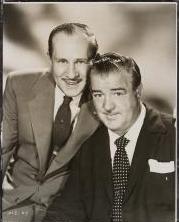
ABBOTT AND COSTELLO ON MINDFULNESS

With more than a little nod to
who filled the void for decades and
who continue to help make my life worth living


Lou Costello
[LC]: Heeeyyy A-bbott!  
Bud Abbott [BA]: What d’ya want, Costello?
LC: I want to know how your mindfulness class went.
BA: The mindfulness class went all day. And I’m very pleased to say---I now have no-mind.

LC: Is that good?

BA: Good? It’s wonderful! Having no-mind is something I've always wanted. Mind you, there is so much I've had to stop doing in order to achieve this state of no-mindedness.

LC: You keep saying to me that I have no mind, Abbott.

BA: That’s true. You have absolutely no mind at all. You’re just a lazy, stupid idiot, Costello. 

LC: Thanks, Abbott. But at least I didn’t need to go to mindfulness class to learn that.

BA: You don’t understand, Costello. There’s a whole world of difference between having no-mind and being stupid. I have no-mind. You’re just plain stupid.

LC: You have no mind but you’re not stupid?


BA: Exactly.

LC: How can you have no mind and not be stupid?

BA: It’s easy. Having no-mind means you have attained wisdom and enlightenment. When you have no-mind you are a whole person.

LC: A hole what? How can a person be a hole?

BA: Look, Costello, a person is not a hole, but a person can be whole, if they have, er, no-mind.

LC: A person is, er, hole if they have no mind?

BA: Exactly.

LC: I don’t even know what I’m talking about!

BA: That’s all there is to it. Having no-mind is being whole---and empty. Then it’s full.

LC: How can it be both empty and full at the same time?

BA: Easy. It just happens---when there’s no thought.


LC: No thought of what?

BA: What's on second---we're not talking about him. Costello, I have no thought of anything. I have no-mind because my mind is mindfully empty---that’s why it’s full.

LC: You just said you have no mind, so how can something that doesn’t exist be both full and empty at the same time?

BA: A mindful mind is a mind of no-mind, Costello.  That’s the only sort of mind worth having---mindful and empty.

LC: Mind full---and empty?

BA: Exactly. Full of no-thing.
LC: Here we go again!
BA: Don’t get excited, Costello. You have no mind, which is why you’re stupid. I, on the other hand, have no-mind, which is why I’m not stupid.
LC: How is it that you’re not stupid, even though you have no mind?
BA: It’s simple. My mind has gone.

LC: You’re telling me! Gone where?
BA: Just gone.
LC: If it’s gone, it must have gone some place, Abbott!
BA: Look, Costello, a mind is gone when it’s fully present.
LC: How can it be gone and fully present at the same time?
BA: That’s how it happens. A mind is gone when it stays fully present in the now. Then it’s an empty mind of no-mind.
LC: How can a mind be a mind and no mind at the same time?
BA: It’s simple. A mind is no-minded when it’s gone, that is, when it is fully engaged in being here and now.

LC: Engaged to who?

BA: Just engaged. Who is on first---we're not talking about him.

LC: If you’re engaged, you got to be engaged to somebody, Abbott!


BA: Look, Costello. I am not engaged, it’s just my mind that’s engaged.

LC: How can a mind be engaged?

BA: A mind is engaged when it is … ah … present.

LC: An engagement present?

BA: Talk sense, Costello!

LC: How can a mind be a present?

BA: Look, Costello. A mind is not a present. It is just … ah … present, but only when it is gone.

LC: Here we go again!

BA: I don’t know what I’m going to do with you, Costello. We talk and talk but it gets us nowhere. You just have no mind at all.

LC: Then I’m exactly like you.

BA: You’re nothing of the kind. I have no-mind, but you’re just mindless---and stupid.


LC: But you’re not?

BA: Exactly. I have no-mind because I’m mindful.

LC: Listen, Abbott, how can your mind be full if you have no mind?

BA: Get outa here, Costello!


RELATED POSTS


Important Note---and Grateful Acknowledgments
The licensable images of Abbott and Costello, the routine ‘Who's on First’ and other routines and materials of and by Abbott and Costello are controlled material of the Estates of the Late Bud Abbott and the Late Lou Costello. All rights reserved. The routine presented in this post has been written by Ian Ellis-Jones as a homage to Abbott and Costello and is presented here for entertainment, nonprofit and non-commercial purposes only. There is no intention to infringe copyright or any other controlled material. This post, and the blog site itself, are solely for informational and educational purposes that are entirely nonprofit and non-commercial in nature, intent and actuality.


Monday, October 8, 2012

BE NOT DETAINED: DON’T LET YOUR MIND STOP

In my most recent post I quoted from The Unfettered Mind: Writings of the Zen Master to the Sword Master, by the Japanese Zen monk, calligrapher, painter, poet and master of the tea ceremony Takuan Sōhō (pictured left, as well as below right).

Sōhō is remembered for a number of good reasons, one of the more important ones being this---he fused the art of swordsmanship with Zen ritual, inspiring many swordsmen of the Tokugawa (or Edo) period (1603–1868). Most importantly, Sōhō had a number of Samurai students to whom he taught the art of swordsmanship primarily through the means of meditation. In particular, he taught swordsmen how to enter into a seemingly timeless state where they could be aware of what was happening in more-or-less slow motion such that they could then respond to any exigency with complete and unerring accuracy.


I urge you to read the The Unfettered Mind, copies of which can be found online on various sites. You may not have any interest in martial arts, Zen, or Eastern spirituality generally, but if you are in any way interested in self-development and self-improvement you will find much that is valuable in the book.

Now, much of the book is devoted to stressing the importance of what is referred to by Sōhō as a ‘non-stopping’, ‘correct’, ‘right’, ‘immovable’ mind of ‘No-Mind’. Such a mind is clear and tranquil, and moves about anywhere. It is a flexible, mindful mind.

The opposite type of mind---a mind which is 'afflicted' and 'lost'---is an ‘existent’, ‘confused’ ‘abiding’, ‘stopping’, ‘occupied’, ‘one-sided’, 'arrested' and ‘lost’ mind. Such a mind suffers from 'bias in one place,' having congealed and settled in one place. It is a rigid, mindless mind.

Here are some gems of wisdom from the book:

‘It is essential that the mind not be detained.’

'In not remaining in one place, the Right mind is like water. The Confused Mind is like ice, and ice is unable to wash hands or head. When ice is melted, it becomes water and flows everywhere, and it can wash the hands, the feet or anything else.'

‘The Right Mind is the mind that does not remain in one place. It is the mind that stretches throughout the entire body and self.’

‘The mind that becomes fixed and stops in one place does not function freely.’

‘Glancing at something and not stopping the mind is called immovable. This is because when the mind stops at something, as the breast is filled with various judgments, there are various movements within it. When its movements cease, the stopping mind moves, but does not move at all.’

‘The non-stopping mind is moved by neither colour nor smell.’

‘The mind that stops or is moved by something and sent into confusion---this is the affliction of the abiding place, and this is the common man.’

‘Therefore, one should engender the mind without a place for it to stop.’

‘The mind of attachment arises from the stopping mind.’

‘The mind that thinks about removing what is within it will by the very act be occupied. If one will not think about it, the mind will remove these thoughts by itself and of itself become No-Mind.’

Calligraphy by Takuan Sōhō


Sōhō gives several illuminating examples of a ‘correct’ mind.

Take this one for example. ‘It is like a ball riding a swift-moving current: we respect the mind that flows on like this and does not stop for an instant in any place.’

Then, there’s this graphic illustration:

To speak in terms of your own martial art, when you first notice the sword that is moving to strike you, if you think of meeting that sword just as it is, your mind will stop at the sword in just that position, your own movements will be undone, and you will be cut down by your opponent. This is what stopping means.

Although you see the sword that moves to strike you, if your mind is not detained by it and you meet the rhythm of the advancing sword; if  you do not think of striking your opponent and no thoughts or judgments remain; if the instant you see the swinging sword your mind is not the least bit detained and you move straight in and wrench the sword away from him; the sword that was going to cut you down will become your own, and, contrarily, will be the sword that cuts down your opponent.

What about this one?

The meaning of the word seriousness is in holding the mind in check and not sending it off somewhere, thinking that if one did let it go, it would become confused. At this level there is a tightening up of the mind and not an iota of negligence is allowed.

This is like a baby sparrow being caught by a cat. To prevent a recurrence, a string is then always tightened around the cat, and it is never let go.

If my mind is treated like a tied-up cat, it will not be free and will likely not be able to function as it should. If the cat is well-trained, the string is untied, and it is allowed to go wherever it pleases. Then, even if the two are together, the cat will not seize the sparrow. Acting along these lines is the meaning of the phrase "engendering the mind with no place for it to abide."

Letting go of my mind and ignoring it like the cat, though it may go where it pleases, this will be using the mind in the way of not having it stop.

And this ...

To make a scarecrow for the mountain fields, one fashions a human figure and puts in its hands a bow and arrow. The birds and beasts see this and flee. Although this figure has absolutely no mind, if the deer become frightened and run away, insofar as it has fulfilled its function, it has not been created in vain.

This is an example of the behaviour of the people who have reached the depths of any Way. While hands, feet and body may move, the mind does not stop any place at all, and one does not know where it is. Being in a state of No-Thought-No-Mind, one has come to the level of the scarecrow of the mountain fields.

Sōhō quotes an ‘old poem’:

To think, 'I will not think'--
This, too, is something in one's thoughts.
Simply do not think
About not thinking at all.

So, in order to be free of a ‘mind of attachment’, observe but don’t stay, look but don’t stop, be aware but don’t analyse, judge or condemn. In the words of Sōhō, ‘Make it a secret principle in either seeing or hearing not to detain the mind in one place.’

We always have a choice---at any moment. We can act mindfully---or mindlessly. One ‘way’ is correct. The other ‘way’ is not. The rightness and wrongness of each ‘way’ can be empirically tested by its consequences. It is as simple as that.

And the one thing that, more than any other thing, results in a 'stopping' or 'confused' mind is this---a misbelief that we are the innumerable false selves (the hundreds and thousands of 'I's' and 'me's') that wax and wane in our consciousness. Until we let go completely of this false self---and recognise that 'it' is not the real person each of us is---our mind will continue to 'stop' and be 'occupied' in useless, self-defeating ways.

There are many ‘ways’ but only one ‘Way’ as such, according to Sōhō:

While hands, feet and body may move, the mind does not stop any place at all, and one does not know where it is. Being in a state of No-Thought-No-Mind, one has come to the level of the scarecrow of the mountain fields.

There is no 'way' to that Way of No-Thought-No-Mind. The Way itself happens of its own accord---effortlessly---when we just let it happen.

Let it happen---now!


Note. I am Zen-ing off to Japan in a few hours for a week or so. I will be back with you soon. In gassho, IEJ.


RELATED POSTS


Monday, September 5, 2011

ABBOTT AND COSTELLO MEET THE ZEN MASTERS

'Heeeyyy A-bbott!!'

I have always loved Abbott and Costello (pictured right, and below), and I especially enjoy their old burlesque routines. The films and television shows of Abbott and Costello have preserved those precious comedy routines. Unless we had those films and shows most of those routines would have been lost forever. That is why Jerry Seinfeld has rightly said that Abbott and Costello ‘are the only ones who preserved an entire era of American entertainment’ – namely, burlesque. In the words of Seinfeld, A&C were 'giants of their time, who truly immortalized burlesque forever,' and, as Abbott and Costello Quarterly has written, the showbiz team of A&C was 'the greatest comedy team to ever come out of burlesque.'

I also love Zen, and although I prize reason and logic above almost everything else I will readily admit that truth – that is, reality – cannot be grasped by rational analysis. Truth, and the experience of truth, are entirely a matter of direct experience. Once you start analysing truth, you are in the realm of ideas and opinions – you have ceased to be in direct contact with truth itself!

Now, back to A&C. I don’t want to make the boys out to be more cerebral or learned than they were – or weren’t – but their old burlesque routines have a Zen-like quality to them. That’s undeniable. Take Bud Abbott. He would lay out before Lou Costello a set of propositions that seemed logical – I say, ‘seemed’ logical ... in an illogical sort of way. Of course, on close examination and analysis – indeed, often at first glance – these propositions were demonstrably and self-evidently fallacious, even foolish ... just like Zen kōans.

These comedic kōans of A&C – just like their Zen counterparts – are not to be subjected to rational analysis. Those who find A&C unfunny tend to do just that. They listen to, say, Who's on First?’ and say, ‘That’s silly!’ ‘Indeed,’ I retort, ‘but you miss the point.’


Take, for example, this brief portion of an old A&C burlesque routine:

BA: I bet you ten dollars you’re not here.
LC: Huh? Prove it!
BA: Well, are you in New York?
LC: No.
BA: Are you in Boston?
LC: No.
BA: Are you in Philadelphia?
LC: No.
BA: Well, if you are not in New York ... and you're not in Boston ... and you're not in Philadelphia ... then you must be some place else. Right?
LC: Right!
BA: So, if you are some place else, you can't be here!

That’s very reminiscent of the old Buddhist story, ‘You are on the other side.’ I did a previous blog on that one.

Then there’s this A&C old chestnut:

BA: Now I am going to ask you one more question. Say you’re in the Grand Central depot [sic] in New York City. You buy a ticket. Where are you going?
LC: I’m not going anywhere.
BA: Then what are you buying a ticket for?
LC: I’m not buying any ticket!
BA: Then why are you in the depot?
LC: You put me in there!

After a few more frustrating moments, the routine continues along these lines ...

BA: You’re in the depot. Where are you going?
LC: [in exasperation] I’m going away.
BA: Where? Where? Where are you going?
LC: Over that way.
BA: What’s over that way? ... Answer my question please! You’re in the depot. Where are you going?
LC: [saying anything] I’m going bye-bye ... I’m going to Paterson, New Jersey!
BA: What’s wrong with Philadelphia?

Then there's the 'Hole in the Wall' routine---written and copyrighted by the boys themselves---part of which goes like this:


BA: Take a good look at this wall. Suppose, you walk over there and for no reason at all, you bore a hole in that wall.

LC: Alright, I'll go over there and I'll bore a hole in that wall.
BA: Why should you go over and bore a hole in that wall?
LC: I'm not boring a hole in the wall. You said suppose I go over there and bore a hole in the wall.
BA: That's not the argument. What I want to know is, why should you go over there and bore a hole in that wall?
...

You can almost hear Zen Master Abbott say, 'And while you're at it, show me your original face before you were born.'


Silly? Yes. Corny? Yes, that too. But I still think they are very clever ... and very funny. Like Zen kōans these old comedy routines have a way of breaking through everyday consciousness. In defying both logic and rational analysis, they afford a new insight into ... truth!


Never forget this. Truth defies both logic and rational analysis. Truth just is ... and we are in direct contact with it at all times. It’s just that all too often we are mindlessly unaware of that fact. So, don’t be like Lou Costello. Stop struggling. Stop trying to understand. There is nothing to understand. Just be choicelessly aware of whatever unfolds from one moment to the next. You can do no better than that!

In June 1955 Bud Abbott and Lou Costello toured Australia (program cover pictured above left)---for their first and only time---performing in stadiums in Newcastle and Sydney, New South Wales and Brisbane, Queensland, and at the beautiful Palais Theatre in St Kilda, Melbourne, Victoria. (I've read that a man---most likely the legendary American-born promoter Lee Gordon---had turned up in the office of A&C's manager with $100,000 in cash tucked in a briefcase, which was the boys if they'd agree to doing 5 shows down under. Now, how could the boys refuse paying Australia a visit? I've also read that the boys supposedly lost the equivalent of their entire tour fee as a result of paying poker with the equally legendary radio personality Jack Davey. So wrote Max Moore, Gordon's sometime business associate, and the tour manager, in his 2003 autobiography Some Days are Diamonds.)


The boys arriving at the airport in Sydney, Australia in 1955


I wish my parents had taken me to see the boys perform at the old Sydney Stadium at Rushcutters Bay, but as I was then only 3 months old, I guess my parents knew best. The well-known Australian actor, comedian, writer and director Grahame Bond AM has written in his autobiography Jack of All Trades: Mistress of One about his fond memories of his parents taking him (at age 11) to see A&C perform at the old Sydney Stadium:


Even today I can visualise them standing on that tatty old stage with two microphones and no props, performing one of the most exquisitely written routines of all time, 'Who’s on First?'


(Clive James has different memories of A&C performing in Sydney. Each to his own.)

Earlier this year The Courier Mail ran a story on the team's adventures in Brisbane and dragged some old photos out of the archives which they presented, with narration, in this video format:


Not only did ragging students give the boys a bad time in Brisbane, forcing them to have to cancel some engagements to give themselves a chance to recover, but they also made headlines offstage in Sydney as well, when the car in which they were passengers hit a concrete-mixing truck on Sydney's Pyrmont Bridge. A&C were only slightly injured. Here's another small piece of memorabilia trivia from the boys' 1955 down under tour. When they were just about to board a flight back for the States at Sydney Airport some Aussie presented them with a real, live baby kangaroo to take home with them. Naturally, the boys were unable to do so, and they were quite disappointed.

The boys' two Brisbane Stadium shows each had an audience of 3,000-plus, which was very good for those days. Their shows at the Sydney Stadium were less successful. The Newcastle show---a tryout, so to speak, for the capital city shows---went well and has been labelled a hit. Melbourne was okay, all things considered. The bottom line---the boys' Australian tour was not a great financial success for promoter Lee Gordon, who also lost money that year bringing out to Australia other American entertainers including Betty Hutton and Bob Hope. One of the main reasons for A&C not drawing really big crowds related to timing---and demographics. It would not be until after television came to Australia---that happened in September the following year---that a whole new generation of fans (mainly kids) would discover A&C. By 1955 the boys' more mature (and largely young adult) fan base was more interested in setting up home in suburbia and starting a family. Still, A&C did manage to attract a large amount of media attention when they were in Australia, and a number of major newspapers ran feature stories on the boys and their careers.


As I see it, A&C were comedic Zen masters. Take this famous routine, '
You're 40, She's 10', which has all the paradoxical elements of the best Zen kōan:


BA: You’re 40 years-old and you’re in love with this little girl that’s 10 years-old. You’re four times as old as that girl and you couldn’t marry her, could you?

LC: Not unless I come from the mountains.

BA: All right----you’re 40 years-old, you’re four times as old as this girl, and you can’t marry her, so you wait five years. By that time the little girl’s 15 and you’re 45. You’re only three times as old as that little girl. So you wait 15 years and when the girl is 30, you’re at 60. You’re only twice as old as that little girl.

LC: She’s catching up.

BA: Yes, yes. Now here’s the question. How long do you have to wait until you and that little girl are the same age?

LC: Now what kinda question is that? That’s ridiculous!

BA: Ridiculous or not, answer the question.

LC: If I wait for that girl she’ll pass me up. She’ll wind up older than I am.

BA: What are you talking about?

LC: She’ll have to wait for me!

BA: Why should she wait for you?

LC: I was nice enough to wait for her!


Now, if you’re still with me, here are A&C performing their most famous routine, '
Who's on First?– a routine which in 1999 was declared by Time magazine to be not only the '20th Century's Best Comedy Routine' but also the 'Routine of the Millennium', and which has been translated into nearly 30 languages, some of them even done and recorded by A&C themselves:


RELATED POSTS


Grateful Acknowledgments
Acknowledgments are made to the Estates of the Late Bud Abbott and the Late Lou Costello in respect of copyrighted, trademarked and other controlled material of the Estates. All rights reserved. The licensable images of Abbott and Costello, the routine ‘Who's on First’ and other routines and materials of and by Abbott and Costello are controlled material of the above mentioned Estates. The video clip (courtesy YouTube) and the excerpted routines as presented in this blog are for entertainment, nonprofit and non-commercial purposes only. There is no intention to infringe copyright or any other controlled material. This blog, and the blog site itself, are solely for informational and educational purposes that are entirely nonprofit and non-commercial in nature, intent and actuality.