Showing posts with label Mindfulness and Spirituality. Show all posts

Saturday, March 2, 2019

WHAT’S SO GOOD ABOUT MINDFULNESS ANYWAY?

Mindfulness is no longer the flavour of the month. I’m not entirely sure why that is the case but, as the Bible says, ‘To everything there is a season’ (Ec 3:1).

Now, don’t get me wrong. Mindfulness is still very popular and it’s taught and practised everywhere. Anyway, to get to the point, some people say to me, ‘What’s so good about mindfulness anyway?’ Hence, this post.

Mindfulness is really nothing extraordinary. It is certainly nothing mystical or otherwordly, whatever the latter means. Mindfulness is simply living with awareness—and with the awareness of one’s awareness. How often do we get in our car and drive from place A to place B. We drive along certain roads. However, is it not the case that all too often, when we get to our destination, we have no recollection of going down Road X or Road Y. Our awareness while driving was intermittent and there was little or no actual awareness of our awareness.

Mindfulness is being grounded in the here-and-now.
Golden Jubilee Bridges over the Thames. London, United Kingdom. December 2018.
Photo taken by the author.

Mindfulness is the direct, immediate and unmediated perception of what is. By ‘direct, immediate, and unmediated’, I mean that our perception of both internal and external reality is no longer filtered (‘mediated’)—and in the process distorted—through such things as our beliefs, conditioning, analysis, interpretation, and judgment. Mindfulness helps us to not identify with, or build up a resistance to, those mental images in our brain that deflect us from the task of being and remaining in direct, immediate and unmediated contact and relationship with what is happening in us and outside of us.

Mindfulness is being grounded in the here-and-now, in what is. Mindfulness has nothing to do with ‘expanded consciousness’, so-called higher orders or levels of reality, and supposed notions of transcendence. Mindfulness is grounded firmly in everyday reality—the only reality that there is—that is, in the one order or level of reality in which we all live and move and have our be-ing-ness. I am sure you have heard of the words, the ‘eternal now’. We have our presence, our very be-ing-ness, in the eternal now. The eternal now is that ‘present’ which is forever renewing itself in and as each new moment. The regular practice of mindfulness enables us to live more fully—and, yes, more mindfully—in the eternal now.

Mindfulness is a journey in self-discovery.
Rovaniemi, Lapland, Finland. December 2018.

Photo taken by the author.

To the extent that the practice of mindfulness is concerned with knowing and understanding what is, and observing (among other things) the content of one’s consciousness—that is, our thoughts, feelings, desires, and so on—the practice is a spiritual one. By ‘spiritual’, I mean non-material or non-physical. The English word ‘spirit’ comes from the Latin spiritus meaning, among other things, breath, breathing, air, inspiration, character, spirit, life, vigour, and courage. Spirituality does not require or depend upon notions of ‘supernaturalism’. On the contrary, spirituality is all about the development of the mind, the emotions and the will.

Mindfulness is not a religion or even a philosophy but rather a way of being, a way of life, a journey in self-discovery, and an education. Mindfulness, being devoid of all notions of religiosity, is entirely experiential and unlike most if not all religions it is empirically based. When the Dalai Lama addressed the concluding session of the International Congress on Mindfulness in 2011, he reiterated that mindfulness is not a religious practice. He also made the point that all of us, whether religious or non-religious, needs to practise mindfulness every day. In saying that, the Dalai Lama is simply urging us to live with non-judgmental, choiceless awareness, from one moment to the next.

Of course, there are many tangible benefits in the regular practice of mindfulness. Changes in the body associated with the practice of mindfulness include but are not limited to a reduced heart rate, reduced blood pressure,  lowered cholesterol, reduced muscle tension, increased cardiovascular efficiency, improved circulation of blood and lymph, improved gastrointestinal functioning, reduced sensitivity to pain, an enhanced immune system, improved posture, and an overall relaxation of the body and sleep. Changes in the mind include an increased cortical thickness in the grey matter of the brain, a calmer, more patient, stable and steady mind, overall relaxation of the mind, an enhanced feeling of wellbeing, an improved ability to cope with and release stress, enhanced cognitive functioning and performance, improved concentration and attention to detail, faster sensory processing and increased capacity for focus and memory, increased learning and consciousness, increased openness to new ideas, greater responsiveness in the moment, reduced mental distractedness, increased verbal creativity, and delayed ageing of the brain.

Mindfulness is the choiceless awareness of what is.
Easter cactus (Hatiora gaertneri). Bilgola Plateau NSW Australia. November 2016.
Photo taken by the author.

As a spiritual practice, living mindfully makes us more aware of who we really are. By self-observation we gain invaluable insight into our thoughts, feelings, and actions. We become more directly aligned to the flow of life of which each one of us is a part. That can only be a good thing. Let me read these words from Sayadaw U Janakābhivasa, a Theravada Buddhist monk from Myanmar and a leading authority on meditation and mindfulness:

Why should we observe or watch physical and mental processes as they are? Because we want to realise their true nature. [That] leads us to the right understanding of natural processes as just natural process. ... When our body feels hot, we should observe that feeling of heat as it is. When the body feels cold, we should observe it as cold. When we feel pain, we should observe it as it is—pain. When we feel happy, we should watch that happiness as it is—as happiness. When we feel angry, we should observe that anger as it really is—as anger. When we feel sorry, we should be mindful of it as it is—as sorry. When we feel sad or disappointed, then we must be aware of our emotional state of sadness or disappointment as it is. 

In short, mindfulness is simply living naturally and realistically—and with choiceless awareness of what is … from one moment to the next. The influential Indian teacher and lecturer J. Krishnamurti spoke of 'meeting everything anew, from moment to moment, without the conditioning reaction of the past, so that there is not the cumulative effect which acts as a barrier between oneself and that which is'. That, my friends, is what living mindfully is all about. So, if you're not into mindfulness, you're not truly living from one moment to the next.


RELATED POSTS


Thursday, May 17, 2012

YOUR GLORIOUS DESTINY


The Biblical story of Jacob and Esau---like so many other Bible stories---contains some wonderful 'advice' on how we can overcome problems and difficulties and realise our true potential. What a shame that so many Christians fail to understand that these stories were never meant to be taken literally---or only literally. Most of the stories in the Bible have an 'inner', metaphysical meaning.

The Bible says that the struggle between Jacob and Esau began right from their conception and birth:

Now Isaac pleaded with the Lord for his wife, because she was barren; and the Lord granted his plea, and Rebekah his wife conceived. But the children struggled together within her; and she said, ‘If all is well, why am I like this?’ So she went to inquire of the Lord. And the Lord said to her: ‘Two nations are in your womb, Two peoples shall be separated from your body; One people shall be stronger than the other, And the older shall serve the younger.’ So when her days were fulfilled for her to give birth, indeed there were twins in her womb. And the first came out red. He was like a hairy garment all over; so they called his name Esau. Afterward his brother came out, and his hand took hold of Esau’s heel; so his name was called Jacob. Isaac was sixty years old when she bore them. (Gen 25:21-26 [NKJV])

Although fraternal twins, Jacob (the younger brother) and Esau were very different in appearance and personality. Esau (meaning ‘red’, ‘hairy’, ‘rough’, ‘shaggy’) was a ‘hairy man’ while Jacob was a ‘smooth-skinned man’ (Gen 27:11 [NKJV]). Jacob (meaning ‘one who takes by the heel’, ‘one who leaves behind’, ‘supplanter’), who God later renamed as Israel (meaning one who struggles with God’), was the second-born of the twin sons of Isaac and Rebekah (see Gen 25:24-26), and the grandson of Abraham and Sarah. Jacob, who was a quiet and peaceful man, a ‘thinker,’ a shepherd, in stark contrast to his slightly older brother Esau, was born quickly after Esau, who was often irresponsible and foolhardy. We are told that his hand clutched his brother’s foot, meaning that the mind is meant to control the body, to exercise dominion over the physical (Esau).

Allegorically, and metaphysically, Jacob and Esau are the ‘twins’---or opposing ‘forces,’ ‘elements’ or ‘tendencies’---struggling within each one of us. Jacob [Hebrew ‘Yakub,’ name derived from the root ‘Yak’ or ‘One’, cf the monotheistic idea of the oneness of God or Life] represents our higher nature, our intellect, as well as book knowledge (as opposed to true ‘wisdom’), whereas Esau represents our physical nature, material power, materialistic thinking, that is, worldly things.

When 'Esau' is dominant in our life, the body, and the things of the body, prevail over the mind. However, when 'Jacob' is dominant in our life, the mind is dominant over the body, but there is still a long way to go as respects our inner development.  The mental or intellectual (‘Jacob’) must still become the spiritual (‘Israel’). That is why Jacob must depart on his (inner, spiritual) journey for Haran (which represents an exalted state of consciousness).

Esau foolishly sold his birthright to Jacob for a pottage of lentils (see Gen 25:29-34). The Esau part of us is only concerned with physical things---the body, lust, material possessions, and so forth. The physical side of us is depicted as a glutton, interested primarily in filling one’s stomach. Esau didn’t care about his birthright; he said it made no difference anyway, as he was about to die of hunger anyway. The symbolism is pretty clear. In addition, by means of a deceptive scheme set up by Rebekah, Jacob next managed to get Esau's blessing from the nearly-blind Isaac, then completing the transfer of the rights of the firstborn from Esau to Jacob (Gen 27:1-40). 

Esau's response was a plan to kill Jacob. That is the world’s typical response to any opposition or difficulty. That is the way of the gangster---and the ‘bankster.’ It is the way of the so-called ‘big end of town.’ Don’t mess with us, or we will fix you up ‘nice and proper.’ (I hear those words said---in various ways---quite often. I hear those words, or similar words, spoken by the 'biggies' in law firms, insurance companies, banks, and so forth. Yes, I really do.) The 'Esau consciousness'---so prevalent in our materialistic, consumeristic world today---knows only how to destroy that which threatens it.  That’s why we have endless wars and violence as well as many other social and economic problems (such as the 'Global Financial Crisis')---and also problems in our own personal lives. Yes, we---including me---act from an Esau consciousness more often than we care to think. Let’s not be self-righteous about all of this.

The Esau consciousness or mindset must be supplanted by the Jacob consciousness (that is, mental or intellectual dominion). However, the 'Jacob consciousness' is not the end-of-it. It will not bring us any lasting peace of mind. No, not at all. The Bible---indeed, all sacred scripture---depicts another, more exalted state of consciousness---namely, the 'Israel consciousness.' This state of mind or mindset is one of spiritual consciousness and spiritual dominion. What do I mean by that? By ‘spiritual’, I mean non-material, non-physical. I am speaking of wisdom as opposed to book knowledge---the wisdom that ‘knows’ that you are one with all other life, that you are life, and that you can never be less than life, the wisdom that ‘knows’ that you can overcome any problems and difficulties life presents provided you are prepared to be relieved of the bondage of self.

One of the most well-known stories of the Bible is Jacob's ‘stairway to heaven’ dream (also known as ‘Jacob's ladder’).  It occurred while Jacob was fleeing the wrath of Esau, his brother.  He had a dream in which he saw a stairway resting on the earth, with its top reaching to heaven, and the angels of God were ascending and descending on it.  There above the ladder stood the Lord, who said, ‘I Am the Lord, the God of your father Abraham and the God of Isaac.’

Jacob’s ladder symbolises the Jacob mentality ascending step by step to an exalted spiritual consciousness, in which there is a conscious awareness of the Omnipresence and Allness of God---that is, that there is only life, and all life is one, divine, sacred and holy. You can call 'It' the 'Eternal Now,' if you like.

The Jacob mentality is still to become ‘Israel’ but it is well on its way. The great hymn, ‘Nearer, My God, to Thee’, by Sarah Flower Adams---a Unitarian---was inspired by the story of Jacob’s ladder. Whether we know it or not, we are all seeking some kind of ladder to lead us to ‘God,’ whatever we understand ‘God’ to be. (May I suggest that you simply see ‘It’ as the ‘Other,’ as the ‘Power-not-oneself.’) Yes, no matter what our circumstances may be, no matter how many mistakes we’ve made in our lives, we can still ‘ascend’ Jacob’s ladder, with us at one end and God, as we understand God, at the 'top'---although I am not referering to higher and lower levels of reality. What is that ladder?  It is the thing we call meditation or prayer.

Perhaps the most mysterious incident in the Bible’s account of Jacob's life is the nightlong battle described in the closing verses of the 32nd chapter of Genesis.  Jacob is preparing for his encounter with Esau the next day.  We are told that ‘a man wrestled with him until dawn.’ Jacob is injured in the struggle, but is undefeated. At daybreak, Jacob's combatant pleads with him to let him go. Jacob says: ‘I will not let you until you bless me.’ The man accedes and confers upon him the name Israel, ‘because you have struggled with the divine and with men, and you have prevailed.’ (Israel---yisrael in the Hebrew---means ‘the one who prevails over the divine’).

Ultimately, when Jacob fully lets go and surrenders to the will of God---that is, accepts life on life’s own terms with the calm acceptance and knowledge that whatever is, is best---God (or the ‘Power-not-oneself’) takes over and Israel makes peace between Esau and Jacob.

Jacob becomes lame after his spiritual overcoming. He could never walk in earthly things with the same step again. So it is with each of us when we grow spiritually and move away from the earthly and material things of life. Yes, we will walk with a 'limp' of sorts---the proof that we have fought and overcome a mighty battle against the 'self' and all that would hold us in bondage and captivity. Yes, there is a 'price' to be paid for true freedom from the bondage of self and the silly but dangerous things of the world.

It was---and will be for each of us as well---a long and difficult struggle till dawn, but in the end we can indeed triumph over our lower selves, indeed over the very notion of ‘self’ itself.  The result---if we really want it, more than anything else? Well, for one thing, fear---even if it be present---will lose its grip and power over us, and we will come to know peace and serenity, and we will be able to accept life on its terms … and be happy! And, in the words of an old hymn, 'the things of earth will grow strangely dim.' Amen.


Thursday, August 11, 2011

A SPIRITUAL GUIDE TO MINDFUL LIVING


No, I am not talking about a so-called spirit guide, but a 'spiritual guide' ... that is, a guide which makes reference to certain 'spiritual' [see below] principles.

The meaning of the word ‘spirituality’

First, what do I mean by the word ‘spirituality’?

The English word ‘spirit’ comes from the Latin spiritus meaning, among other things, breath, breathing, air, inspiration, character, spirit, life, vigour, and courage.

Spirituality does not require nor depend upon any notions of ‘supernaturalism’ but refers to non-physical and non-transient things such as faith, hope and charity as well as states of affairs or human consciousness which, going ‘beyond words’, are only partially (if at all) graspable by human concepts ... things that cannot be seen but which are otherwise capable of being apprehended, if not fully understood. 

Spirituality is thus a composite word referring to the ‘domain where mind, personality, purpose, ideals, values and meanings dwell’ (Rabbi Mordecai Kaplan). In a similar vein, Father Joe Martin (pictured left), an acknowledged authority on spirituality and addictive disease, would always make it clear that spirituality, in the first instance, had little or nothing to do with God, but everything to do with the development of the mind, the emotions and the will.

Similarly, another Catholic priest, the Redemptorist Father Gerard H Chylko, wrote that spirituality is ‘made up of all those qualities of mind and character that make us who we are: our values, our desires, our feelings, and our dreams’.

All of the above makes perfect good sense to me.

Finally (at least on this point), Quaker writer Parker J Palmer has described spirituality as a ‘longing to be connected with the largeness of life’, that is, to something larger than one’s ego or 'self' (that is, some ‘power-not-oneself’). I like that.

Many people say, 'I am spiritual, but not religious,' as if the two things were worlds apart. Mind you, it does seem that way far too often! Never forget that religion is concerned with spirituality but, sadly, it is also concerned with other things as well ... such as power, wealth, control, dependency and, even at times, abuse.

Perhaps the main difference between spirituality and religion is that the former gives one complete freedom to choose one’s own individual path towards wholeness, recovery and ‘enlightenment’. Religion is the institutionalised, organised formal practice of a particular spiritual tradition's beliefs (ugh!), ethics, and rituals, whereas spirituality, doesn’t necessarily entail any adherence to a religious tradition.

Seven principles for mindful living

I have referred to these working ‘principles’ in many different blogs but I thought it might be helpful to bring them altogether ... for present purposes and otherwise.

These ‘principles’ are NOT articles of faith. They are NOT beliefs. I will have more to say about ‘beliefs’ shortly. At best, these principles are to be ‘accepted’ as working hypotheses ... and as guideposts to mindful living. They have served me well.

First principle: Life is one

Now, I must be careful here. I am not advocating monism or pantheism. When I say that life is one, I am trying to say a couple of things.

First, a single logic applies to all things and how they are related. All things exist in the same order or level of reality ... and on the same ‘plane’ of observability. If that were not the case, it would be impossible for us to be attentive to, and otherwise aware of, what happens from one moment to the next. Just think about that for a few seconds, and it will be obvious to you that such is the case.

Secondly, nothing is simple, indeed all things are complex, have internal differentiation, and interact with other things ... but, once again, all on the same level or order of reality and observability. Yes, all things are constituent members of wider systems and exchanges of things. The forms of things are constantly being transmuted.

Call it the ‘interconnectedness of all life’ or, if you like, ‘InterBeing’ (the latter wonderful term comes from Thich Nhat Hanh [pictured right]; see also the 'InterBeing' calligraphy, above left). In that sense, there is only one life manifesting itself in all things and as all things.

You don’t have to be a monist to know, intuitively, that life forever ‘gives’ of itself to itself in order to perpetuate itself. In that sense, we can rightly say that the ‘One [referring to ‘life’ itself, not some supposed transcendent Being] becomes the many.’

Also, when we look around us, what do we see? Living things, all living out their livingness, in and as themselves.

I also think it is self-evident and intuitively obvious that the ‘life’ flowing through your veins – and through and in all other living things as well – is, in a metaphysical (if not also in a physical) sense the same ‘life’ flowing through me. That’s as strong as I can put it without plunging into subjective idealism or monism.

Second principle: There is nothing ‘supernatural’

This second principle flows logically from the first.

As I have said many times, how can we conceive of there being any existence, or other order or level of reality, other than our ordinary ‘natural’ existence, that is, the way in which ordinary things exist in space and time. Any notion of there being different orders or levels of reality or truth is contrary to the very nature and possibility of discourse ... that is, unspeakable ... not to mention meaningless.

In short, we can have no conception of any such existence, nor any conception of what it might possibly be like.

Further, as already mentioned, if there were 'higher' and 'lower' orders or levels of reality, it would be impossible for us to be attentive to, and otherwise aware of, what happens from one moment to the next. The 'observer', the thing 'observed', and the 'act of observing' itself, must all be located on the one order of level of reality.

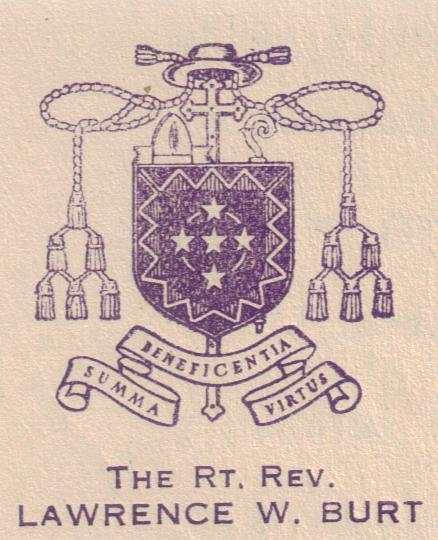
Listen to these words from the late Australian bishop Lawrence W Burt (pictured left):

'In a universe of LAW there can be no supernatural. There may be the super-physical, or super-normal, but there can be no super-natural. You cannot transcend Natural law, nor suspend it.' [Original emphasis]

So, if someone says to you, ‘There is a supernatural dimension to life, I’ve experienced it, but the reason you haven't experienced it is because you don't believe like me,’ just smile benignly, and say, ‘Have a cup of tea.’ (That's pure Zen. See the other piece of calligraphy, below, which reads, 'Go and have some tea.')

Having said all of the above, if you choose to believe [see below] in the 'supernatural', that does not prevent you from practising mindfulness. You see, mindfulness doesn't require any beliefs at all, nor will any beliefs prevent mindfulness from 'working' ... except, perhaps, a negative belief pertaining to the nature of mindfulness itself (eg that it is 'demonic' or something similarly silly). Further, as mindfulness, being entirely naturalistic, operates on the one so-called 'ordinary' order or level of reality in which all things live and move and have their being, mindfulness can and will work irrespective of the existence or non-existence of other supposed orders or levels of reality.

Third principle: Reject the unobservable as the cause of the observable

This third principle flows logically from both the first and the second principles.

One of the reasons I like Buddhism, and am a Buddhist, is that Buddhism, at least in its simplest and most ‘uncluttered’ forms, is almost entirely empirically-based. (Not so with most other religions, especially the monotheistic ones which, at their fundamentalist irrational worst, become quite toxic.)

Now, whether you are a Buddhist or not, it pays to be an empiricist. Buddha Shakyamuni was one ... indeed, one of the greatest empirical philosophers of all times. He refused to affirm that which was unobservable. He relied solely on the observable. Not a bad way to proceed. The 'answer' to any problem can only be found on the same order or level of reality as the 'problem.' Obvious, isn't it?

Unfortunately, many people still seek 'answers' to their problems from 'outside' or otherwise 'beyond' this spatiotemporal world, and they even believe [sic] that they receive answers. It's only a matter of time before this sort of problem is categorised by the American Psychiatric Association or some similar body as a 'mental illness.' Indeed, as belief in the so-called 'supernatural' wanes – particularly in Western societies – then it will no longer be able to be asserted by religionists of the kind in question that their false and fixed, and otherwise irrational, belief [sic] is one 'normally held by others of the same culture or subculture.' At that point in time, belief in the so-called supernatural will be seen to be what, in truth, it really is – a clinical delusion. Even at this point in time, it's a very fine line, for as the noted psychiatrist Dr Thomas Szasz has said, 'If you talk to God, you are praying; if God talks to you, you have schizophrenia.' It's not funny. It's serious.

Nothing – I repeat nothing – is more important than, or superior to, facts ... that is, occurrences in space and time. Nothing! Indeed, there are only facts.

So, discard forever the idea that there are entities beyond space and time which yet work out their supposed purposes within space and time. Both science and logic compel us to reject the unobservable as the cause of the observable.

In all things, draw your conclusions and inferences from objective facts, based on observation and the use of unaided reason, and without appeal to any supposed ‘supernatural’ causes ... and NEVER accept anything that offends against your sensibilities or is otherwise contrary to reason.

So, if some person says to you, ‘You will never understand God [or Super-person X or whoever] unless you get beyond or abandon reason,’ again, just smile benignly, and say, ‘Have a cup of tea.’ (More Zen! The only sensible response to people of that kind. If they mention so-called 'revelation', tell them that reason is the only form of 'revelation', for the reasons previously given.)

Once again, there is only one order or level of reality. That is why we speak of the practice of mindfulness in terms of the presence of bare and curious attention to, and choiceless and non-judgmental awareness of, the action of the present moment ... from one moment to the next.

Fourth principle: Don’t ‘believe’

People ordinarily believe when they don't know or understand something. There is no need to believe anything ... and nothing to believe. Strange as it may seem, there is also no need to disbelieve anything ... and nothing to disbelieve. Whether or not something is the case does not depend upon belief or disbelief. That is why Buddha Skakyamuni said, 'Do not believe, for if you believe, you will never know. If you really want to know, don't believe.'

So, forget about belief-systems. Beliefs are for ‘spiritual cripples’ ... for those who can’t, or won’t, think for themselves. Beliefs, by their very nature, take the form of prejudices, or biases, of various kinds. The Buddha referred to beliefs as being in the nature of thought coverings or veils (āvarnas).

Choose a religion or, if you don’t like religion, a philosophy or a ‘way of life’ that doesn’t require you to believe or disbelieve anything. Life is Truth, and life is forever open-ended. We, as part of life's self-expression, are always in direct 'contact' with, and can always be choicelessly aware of, Truth. No doctrine or dogma, and no priest, guru or saviour, is needed for you to know and experience Truth. Beliefs actually get in the way of things. They are a barrier to Truth. In the words of Krishnamurti, 'Truth is a pathless land.' He also said, 'To find truth, or God, there must be neither belief nor disbelief. ... To seek God without understanding oneself has very little meaning.'

So, that is another reason I like Buddhism. Buddhists don’t ‘believe’. They know (well, obviously not everything, or even most things, but some things at least) ... and they try to understand.

Avoid, like the plague, those who say things like, ‘Super-person X is the only way to God,’ or ‘You must believe this [or "Super-person X"] in order to be saved.’ As I have said many times, if people are rewarded for believing such things, then I wouldn't want to believe [sic] in or worship such a god.

We, in the West, live in an age of crass materialism. Is it because most Westerners have given up on so-called 'orthodox' Christianity? The mainstream Christian churches would have you believe [sic] that is the cause of Western materialism ... that, along with human greed. No, I tend to agree with Bishop Burt (referred to and quoted above), who, after accusing the Christian Church of having 'lost the chart of man's spiritual origin and destiny,' went on to say:

'Western materialism is the product of certain orthodox Church doctrines which have been the substance of Christian thought for centuries. If modern civilisation is to be saved from the suicidal doom to which it is drifting, materialistic doctrines, even though invested with a halo of sanctity, must be expunged from Christian teaching.'

'Orthodox Christianity has lost its appeal to thoughtful people because its primitive doctrines are divorced from reason, from logic and commonsense.'

Those words were spoken in Sydney, Australia, over 70 years ago. Ever since then, Australians and most other Westerners – who, like me, are not prepared to believe that which offends against one's sensibilities or which is otherwise contrary to reason – have been leaving the churches in droves. For the most part, I don't blame them.

So, dear friends, whatever you do ... don't 'believe'.

Fifth principle: There is no ‘self’

That's right, there is no such thing as ‘self’. Now, I know that is a hard concept for many to grasp, but it is the considered view of most leading philosophers and neuroscientists.

If you stop and think about it for a moment, there is something intrinsically wrong with the notion of the ‘self’. So-called ‘consciousness’ – for there really is no such thing (except in a ‘relational’ sense) – is neither a fixed quantity or quality nor of fixed duration, but simply ‘something’ quite intermittent in nature that undergoes change moment by moment.

The truth is our ‘stream of consciousness’ (awareness-ing) goes through continuous fluctuations from moment to moment. As such, there is nothing to constitute, let alone sustain, a separate, transcendent ’I’ structure or entity. Yes, we have a sense of continuity of ‘self’, but it is really an illusion. It has no ‘substance’ in psychological reality. It is simply a mental construct composed of a continuous ever-changing process or confluence of impermanent components (‘I-moments’) which are cleverly synthesized by the mind in a way which appears to give them a singularity and a separate and independent existence and life of their own.

Sixth principle: Obey the ‘law of indirectness’

The metaphysical ‘law of indirectness’ is easy to explain because it is self-evident and intuitively obvious. It is also empirically based.

The ‘law’ says this – don't attempt to put a negative or otherwise troublesome thought or problem out of one's mind directly but rather let the thought or problem slip from the sphere of conscious analysis.

That is the ‘right’ ... indeed, the only ... way to proceed.

Don't try ... instead, let.

Seventh principle: Resist not!

There is another metaphysical or spiritual ‘law’ which is very closely related to the one mentioned above – the ‘law of non-resistance.’

Put simply, this ‘law’ says, ‘Whatever you resist, persists.’

Even Jesus is reported to have told his followers, 'Resist not evil' (Mt 5:39). The American spiritual teacher Vernon Howard, whose writings and lectures have had a big impact on my life, said this: 'Resistance to the disturbance is the disturbance.' Get the picture?

So, when it comes to your mindfulness practice, don’t try to actively bring thoughts or feelings up to the surface. Instead, be with the moment. Indeed, remain embodied in the moment. Whenever a body sensation, sense perception, thought, feeling, emotion, image, plan, memory, reflection or commentary arises, do not resist it or try to expel, drive it away or change it. Simply observe and notice, with passive detachment, and without attitude, comment or judgment.


RELATED POSTS


Saturday, March 19, 2011

THE AMORAL SELF-INTEREST OF THE RULING UNELECTED PLUTOCRACY

Here is a fascinating, illuminating article from the January-February 2011 edition of The Atlantic entitled “The Rise of the New Global Elite”.
There is no doubt that modern Western nations are governed, not by the elected few, but by a ruling unelected plutocracy whose members think only of their own self-interest. This is especially true of Australia and the United States of America.

Essentially, there are two blocs – the plutonomy and the rest. If you’re reading this blog it is almost certain that you, like me, are among “the rest” ... for a member of the plutonomy would not be interested in reading anything spiritual, assuming they can read. Naughty me, they can read, but their reading rarely extends beyond The Wall Street Journal, The Australian Financial Review and similar publications.
I love, although I derive little comfort from, these words of the iconoclastic American humorist and provocateur H L Mencken (pictured above):
“The plutocracy, in a democratic state, tends to take the place of the missing aristocracy, and even to be mistaken for it. It is, of course, something quite different. It lacks all the essential character of a true aristocracy: a clean tradition, culture, public spirit, honesty, courage – above all, courage. It stands under no bond of obligation to the state; it has no public duty; it is transient and lacks a goal … Its main character is its incurable timorousness; it is forever grasping at straws held out by demagogues … its dreams are of banshees, hobgloblins, bugaboos.”

Mencken was wrong. The members of the new global elite do not lack a goal, they are certainly not timid, and they do not grasp at straws. (It's the rest of us who grasp at straws.) They love money and all that it can buy, and they are prepared to go to any length to get what they want ... and woe betide anyone who stands in their way. "Don't mess with us!" is their war cry.

In today’s world there are indeed two blocs, but I think they are as follows – those who have committed themselves to leading a spiritual life (with the emphasis on “not-self” and others) ... and the rest.
I say that quite matter-of-factly, and without any sense of superiority.
Mindfulness is for those who seek a “power-not-oneself” ... even if that power and presence resides within us.