Showing posts with label Mindful Living. Show all posts

Monday, August 24, 2015

LIVING MINDFULLY IS THE ANSWER TO THE ABSURD


‘If sub specie aeternitatis there is no reason to believe that anything matters, then that doesn't matter either, and we can approach our absurd lives with irony instead of heroism or despair.’
Thomas Nagel.


Life is absurd---and I will hear nothing to the contrary.

The Christian, as well as others with religious faith of one kind or another, will tell you that life, although at times unfair or seemingly unfair, is ultimately just and meaningful because, so they assert, there is a Supreme Being in charge who will, so it goes, ensure that all things are ‘squared up’ in the fulness of time. Thus, it is said that those who appear to have suffered unfairly in this lifetime will be compensated in the supposed life-to-come, and those who appear to get away with their wrongdoings in this life will be punished in the life-to-come.

Well, that is a nice myth, and quite comforting to some. I must say that I derived some comfort from it for many years. I no longer do. The myth ‘died’ on me not so much when I came to the view that there were not only no good reasons for believing in the existence of an all-powerful and all-loving God but also good reasons for not believing in the existence of such a Being. No, the myth really died on me when I saw, in all its horror, the presence everywhere of what is known as gratuitous evil and suffering. Evil or suffering is gratuitous (that is, pointless or unnecessary) if, in the view of reasonable persons, the world would be improved by its absence and when no greater good can result from its existence as opposed to non-existence. True, some people do appear to be ennobled by suffering but I hardly think that makes the suffering right or necessary. You see, all too often too high a price is paid for the experience, and all too often the experience happens at the terrible expense of the innocent, the helpless and the powerless such as children or mere bystanders.


Actually, it is virtually impossible to provide a totally satisfactory definition of gratuitous evil and suffering. Many Christian theologians seize upon that in an attempt to show that there really is no such thing as gratuitous evil and suffering. They will stop at nothing to avoid blaming or otherwise implicating God for or as respects the existence of evil and suffering of whatever kind. As I see it, the difficulties encountered by reasonable persons only serve to highlight the absurdity and irrationality of the phenomenon --- as well as its terribleness and unacceptability.

Here’s just one example of the phenomenon of gratuitous evil and suffering. I could give you many. A cousin of mine died at the age of ten from incurable brain cancer. That is as good an example of gratuitous evil and suffering as any. What did my cousin do to ‘deserve’ that? Now, I know that question is perhaps not the ‘right’ one to ask, and maybe not even a ‘good’ question to ask. For starters, the question implies that disease or suffering is the result of wrongoing on the part of the sufferer. However, the very fact that we ask such a question, as most if not all of us will do at some point or other in our lives, points to the very existence of ‘the absurd.’ We ask the question---but we get no satisfactory answer at all. None whatsoever. No 'voice' answers back. Not even the voice of reason. There is just a huge void before us. (The Christian theologian's 'answer', namely, that God suffers in and with His creation, is far from satisfying. That may satisfy some but, I suspect, not most people.)

The philosophy of absurdism, together with its first cousin existentialism, is closely associated with the writings of the French philosopher and novelist Albert Camus [pictured right]. His writings have played an important part in the development of my own philosophy of life. Camus wrote that, on the one hand, we have this insatiable yearning for life to make sense, that is, have purpose and meaning, yet on the other hand we find, if we are rigorously honest with ourselves, that life does not have any innate or intrinsic purpose or meaning. ‘The absurd,’ wrote Camus, ‘is born of this confrontation between the human need and the unreasonable silence of the world.’

We must be careful here. The human being is not absurd, nor is life itself absurd if we see it as it really is---the natural and inevitable outworking of a sometimes orderly but at other times quite disorderly and even chaotic interplay of forces and events most of which are outside our conscious or personal control. Life is what it is. Terrible though it is, children dying of brain or bone cancer is precisely what one would expect to find in a world that has no innate or intrinsic meaning or purpose. However, when we place our desire for meaning and purpose and all our other hopes and expectations alongside this world which is totally oblivious to all our desires and even to our very existence, well, that’s when we get the absurd. Says Camus, ‘The absurd is not in man or in the world but in their presence together … it is the bond uniting them.’

Camus’ answer to the existence of the absurd is this---rebellion … revolt. Yes, we must rebel, even revolt, against the absurd. That will not make the absurd go away but we must live as if there were meaning in our every act, thought and word. Yes, we will ultimately die and in a very real sense all that we did will come to naught, but we can invest life with a certain meaning and purpose if we live fully, are true to ourselves, and commit ourselves to some noble cause beyond ourselves. ‘One must imagine Sisyphus happy,’ Camus wrote in his philosophical essay The Myth of Sisyphus(Sisyphus, a figure of Greek mythology, was condemned to an eternity of rolling a boulder uphill, only to have to watch it roll back down again. Camus compared what he saw as the absurdity of our lives here on earth with the fate of Sisyphus.) We must open ourselves to ‘the gentle indifference of the world’ (Camus' words) and be able to say, as did Meursault, the anti-hero in Camus' great philosophical novel The Stranger, near the very end of his life, ‘I felt that I had been happy and that I was happy again.’

We do have choices in life. Perhaps they are not ‘real’ choices, for I think there is much to be said for the view that the choices that we make are necessarily determined by matters (eg our genes) that are beyond our personal or conscious control. Even our seemingly 'free' choices are largely determined by our temperament, our likes and dislikes, and the choices we've made previously. Be that as it may, we can still choose to be happy---no matter what. We can still choose to live mindfully. And we can still choose to make every moment of our finite existence here on earth count.

Yes, living mindfully, one moment at a time, is the 'answer'---in the sense of being the most appropriate response in all the circumstances---to the existence of the absurd. No, mindfulness cannot make the absurd disappear. Nothing can accomplish that feat. However, living mindfully can invest every moment of our wakeful and at times fitful existence with purpose and meaning. The purpose and meaning is in the doing, that is, in the living of our days … mindfully.

The great Persian philosopher, astronomer and poet Omar Khayyám wrote, ‘Be happy for this moment. This moment is your life.’ How true that is! This present moment, which as I write those words has become the next moment and the one after that, is all that we have. Our life here on earth is a succession of life-moments each one of which is an instant of time in which we live, move and have our being. The choice which is yours and mine is this---will we choose to live each life-moment mindfully or mindlessly?

Rebel against the absurd. Revolt. Choose to be happy. Act as if your every act, thought and word had meaning and purpose. Embrace the delicious irony that in the overall scheme of things nothing truly matters at all in the sense of having any eternal lasting significance. But I urge you to do more---live nobly and, above all, mindfully … in the face of an otherwise meaningless and indifferent world.


RELATED POSTS


LIVING IN THE NOW WITH FRENCH POET JACQUES PRÉVERT


Wednesday, February 25, 2015

ZEN, MOTORCYCLE MAINTENANCE AND MINDFULNESS

‘The only Zen you find on tops of mountains
is the Zen you bring there.’ Robert M Pirsig.

We all want to live life more fully. We are told constantly that we must live in the moment, that is, in the eternal now. However, all too often we live either in the past or in the not-as-yet future. At one moment in time we can be living ‘in the moment,’ so to speak, and then ... wham ... within less than a nanosecond we are either back in the past or we have projected our consciousness into an imaginary future. Is that not the case? And before we even realize it, we have lost all direct and immediate contact with the action of the present moment.

The last few days I have been re-reading, for the umpteenth time, a book which was one of the monumental bestsellers of the 1970s. The book is Zen and the Art of Motorcycle Maintenance by Robert M Pirsig [pictured right]. I well remember when I first read this book. At the time I was aged 19 or 20 and was an arts/law student at the University of Sydney. The 1970s were a good time to be alive.

As for Pirsig’s book, which combines some thinly veiled autobiography, fiction and philosophy, I must admit that I did not understand it at all. I am not sure I do today. However, I enjoyed, as I still do, the author’s freeform romp through Eastern and Western philosophy and religion. The book details the search for the meaning and concept of ‘Quality,’ whatever that may be, and we get a review of the ‘classical’ and ‘romantic’ approaches to life. The classical approach is objective and rational, ordered and methodical. It seeks to explain. The romantic approach can be found in such things as Zen and the ever-popular idea of ‘living in the moment.’ It seeks to know and understand in a supra-rational, direct, immediate and intuitive way. The author seeks to arrive at a synthesis of these two approaches. Read the book and decide for yourself whether the author has succeeded in his aim.

Upon re-reading the book I found many felicitous phrases as well as a great deal of insight into life. Here are some lines from chapter 20 that I think are extremely relevant to the subject of mindfulness:

The past exists only in our memories, the future only in our plans. The present is our only reality. The tree that you are aware of intellectually, because of that small time lag, is always in the past and therefore is always unreal. Any intellectually conceived object is always in the past and therefore unreal. Reality is always the moment of vision before the intellectualization takes place. There is no other reality. ...


Did you get that? The present is our only reality. However, as soon as---that means the very nanosecond---we start analysing or in any way thinking intellectually about the action of the present moment, that of which we were just aware ‘becomes,’ so to speak, the past---and we ourselves are now in the past. Reality has moved on. It always does, you know. Unceasingly. Remorselessly. However, Pirsig makes the point that the ‘past’ to which we have retreated is an ‘unreal’ one. What does he mean by that? Well, I think he is saying that the ‘past’ to which we have retreated is not one that actually occurred in spacetime. It is ‘past’ in the sense that it is not ‘in synch’ with what is otherwise the action of the ever-present moment. Things have moved on but we are locked into some prior, but now gone, momentary experience of life. The same phenomenon occurs when, upon experiencing some experience of the moment, we project our consciousness---in particular, our imagination---into the supposed but actually non-existent future.

Don’t let reality die on you. Don’t experience it as a past event. Let your mind penetrate sensation, not by anticipating it. No, that is not the way to go. Nor should you constantly reflect upon or evaluate sensations as they arise and vanish. That is also not the way to go. Let each sensation arise and vanish of its own accord. Watch it closely, without analysis, judgment, evaluation or condemnation---indeed, watch it, without thinking any thought associated or connected with the sensation. Otherwise, you will instantly lose the immediacydirectness and actuality of the experience.

Now, at the risk of stating the obvious, there are many occasions when we must intellectualize and seek to solve problems in a rational and analytical manner. Indeed, that is, in my view, the only respectable way to solve problems pertaining to such matters as one’s finances, career, property, and even relationships. However, in the moment-to-moment and in-the-moment experience of the content of the action of the flow of life as it unfolds from one moment to the next, there needs to be a directness and immediately of our experience lest we find ourselves either in the past or in the future.

Shakyamuni Buddha advised us to observe and watch closely---that is, mindfully---whatever is occurring in time and space in the here-and-now, in the moment, from one moment to the next. Not only watch, but the Buddha went on to say, ‘and firmly and steadily pierce it.’ Pierce the reality of each here-and-now moment-to-moment experience. And do so firmly and steadily. Only then can you truly say you are alive and no longer living in the past.

‘Reality is always the moment of vision before the intellectualization takes place,’ writes Pirsig. ‘There is no other reality.

One more thing. Reality---that is, life and truth---is to be found everywhere. You need not go to some mountaintop or ashram to find it. And you don't need a guru or swami. All you have to do is---live mindfully from one moment to the next.


RELATED POSTS

PIERCING THE MOMENT WITH MINDFULNESS


THE AWARENESS OF AWARENESS

CONTINUOUS MINDFULNESS AND AWARENESS OF REALITY

Friday, November 18, 2011

PIERCING THE MOMENT WITH MINDFULNESS

Whatever arises is impermanent (anicca). Sensations (in the form of thoughts, images, ideas, feelings, bodily sensations, external physical sensations, and so forth) come and go. They wax and wane. They arise and vanish. Reality – what is – is that which comes and goes, waxes and wanes, arises and vanishes. Mindfulness enables, indeed empowers, us to live in the immediacy and directness of the arising and vanishing of that which is truly present in the now.

In order for there to be an immediacy and directness about our moment-to-moment experience of life, three events need to occur more-or-less simultaneously. Those three events are ... touch (or sensation), awareness, and mindfulness. If those three events are not simultaneously experienced, then the chances are that what will be experienced will be nothing but ... the past! Yes, the reality of the immediate experience will subside. Indeed, it will die! Any consciousness of it will be in the form of an after-thought or a memory, as we glance back to re-experience, and (sadly, yes) evaluate, a past experience.

No wonder we talk about people who live in the past! However, we all do it when we are not mindful of events in the immediacy and directness of their arising and vanishing. There is one thing – more than all others – which keeps alive and reinforces that false, illusory sense of ‘self’, and that is when moment-to-moment sensation is experienced not as something which is happening, of which we are mindfully aware, but as something which is happening to ‘me,’ or which ‘I’ am suffering ... that is, as something being ‘inflicted’ upon us.

Don’t let reality die on you. Don’t experience it as a past event. Let your mind penetrate sensation, not by anticipating it. No, that is not the way to go. Nor should you constantly reflect upon or evaluate sensations as they arise and vanish. That is also not the way to go. Let each sensation arise and vanish of its own accord. Watch it closely, without analysis, judgment, evaluation or condemnation – indeed, watch it, without thinking any thought associated or connected with the sensation. Otherwise, you will instantly lose the immediacy, directness and actuality of the experience.

Shakyamuni Buddha advised us to observe and watch closely ... that is, mindfully ... whatever is occurring in time and space in the here-and-now, in the moment, from one moment to the next. Not only watch, but the Buddha went on to say, ‘and firmly and steadily pierce it.’ Pierce the reality of each here-and-now moment-to-moment experience. Only then can you truly say you are alive and no longer living in the past.

You may ask, ‘How am I to have any insight into what is happening if I don’t reflect upon, analyse, evaluate and judge what is happening?’ I say to you, ‘How will you ever have any insight while you continue to do those things?’ The piercing of reality of which the Buddha spoke is itself a penetration into the core and nature of reality, that is, into the arising and vanishing of each moment-to-moment spatio-temporal occurrence. That penetration is itself moment-to-moment ... but it is insight into the nature of reality as and when it unfolds from one moment to the next. You can do no better than that! We are told to ‘seize the day’ (carpe diem), and that is not bad advice, but you can still do better than that. I say to you, seize the moment ... pierce it!

So, stay mindfully aware, in order for you to have immediate and direct access to the real. Observe. Watch closely. Pierce the moment!


Calligraphy
‘Open one's eyes and penetrate the heart of matters,
like the monkey's golden eyes did.’
Signed in Japanese, ink [inscribed], Kôju Sokuhi Sho [written by Kôju Sokuhi]
[with two artists’ seals]. Not dated.
Edo (Tokugawa) period 1615–1868.


RELATED POSTS


YOU SHALL CEASE TO BE NEVER!

THE MINDFUL ART OF KNOWING ONESELF

MINDFULNESS---A VERY PRESENT HELP IN TROUBLE

MINDFULNESS---THIS IS THE REFRESHING!


Thursday, August 11, 2011

A SPIRITUAL GUIDE TO MINDFUL LIVING


No, I am not talking about a so-called spirit guide, but a 'spiritual guide' ... that is, a guide which makes reference to certain 'spiritual' [see below] principles.

The meaning of the word ‘spirituality’

First, what do I mean by the word ‘spirituality’?

The English word ‘spirit’ comes from the Latin spiritus meaning, among other things, breath, breathing, air, inspiration, character, spirit, life, vigour, and courage.

Spirituality does not require nor depend upon any notions of ‘supernaturalism’ but refers to non-physical and non-transient things such as faith, hope and charity as well as states of affairs or human consciousness which, going ‘beyond words’, are only partially (if at all) graspable by human concepts ... things that cannot be seen but which are otherwise capable of being apprehended, if not fully understood. 

Spirituality is thus a composite word referring to the ‘domain where mind, personality, purpose, ideals, values and meanings dwell’ (Rabbi Mordecai Kaplan). In a similar vein, Father Joe Martin (pictured left), an acknowledged authority on spirituality and addictive disease, would always make it clear that spirituality, in the first instance, had little or nothing to do with God, but everything to do with the development of the mind, the emotions and the will.

Similarly, another Catholic priest, the Redemptorist Father Gerard H Chylko, wrote that spirituality is ‘made up of all those qualities of mind and character that make us who we are: our values, our desires, our feelings, and our dreams’.

All of the above makes perfect good sense to me.

Finally (at least on this point), Quaker writer Parker J Palmer has described spirituality as a ‘longing to be connected with the largeness of life’, that is, to something larger than one’s ego or 'self' (that is, some ‘power-not-oneself’). I like that.

Many people say, 'I am spiritual, but not religious,' as if the two things were worlds apart. Mind you, it does seem that way far too often! Never forget that religion is concerned with spirituality but, sadly, it is also concerned with other things as well ... such as power, wealth, control, dependency and, even at times, abuse.

Perhaps the main difference between spirituality and religion is that the former gives one complete freedom to choose one’s own individual path towards wholeness, recovery and ‘enlightenment’. Religion is the institutionalised, organised formal practice of a particular spiritual tradition's beliefs (ugh!), ethics, and rituals, whereas spirituality, doesn’t necessarily entail any adherence to a religious tradition.

Seven principles for mindful living

I have referred to these working ‘principles’ in many different blogs but I thought it might be helpful to bring them altogether ... for present purposes and otherwise.

These ‘principles’ are NOT articles of faith. They are NOT beliefs. I will have more to say about ‘beliefs’ shortly. At best, these principles are to be ‘accepted’ as working hypotheses ... and as guideposts to mindful living. They have served me well.

First principle: Life is one

Now, I must be careful here. I am not advocating monism or pantheism. When I say that life is one, I am trying to say a couple of things.

First, a single logic applies to all things and how they are related. All things exist in the same order or level of reality ... and on the same ‘plane’ of observability. If that were not the case, it would be impossible for us to be attentive to, and otherwise aware of, what happens from one moment to the next. Just think about that for a few seconds, and it will be obvious to you that such is the case.

Secondly, nothing is simple, indeed all things are complex, have internal differentiation, and interact with other things ... but, once again, all on the same level or order of reality and observability. Yes, all things are constituent members of wider systems and exchanges of things. The forms of things are constantly being transmuted.

Call it the ‘interconnectedness of all life’ or, if you like, ‘InterBeing’ (the latter wonderful term comes from Thich Nhat Hanh [pictured right]; see also the 'InterBeing' calligraphy, above left). In that sense, there is only one life manifesting itself in all things and as all things.

You don’t have to be a monist to know, intuitively, that life forever ‘gives’ of itself to itself in order to perpetuate itself. In that sense, we can rightly say that the ‘One [referring to ‘life’ itself, not some supposed transcendent Being] becomes the many.’

Also, when we look around us, what do we see? Living things, all living out their livingness, in and as themselves.

I also think it is self-evident and intuitively obvious that the ‘life’ flowing through your veins – and through and in all other living things as well – is, in a metaphysical (if not also in a physical) sense the same ‘life’ flowing through me. That’s as strong as I can put it without plunging into subjective idealism or monism.

Second principle: There is nothing ‘supernatural’

This second principle flows logically from the first.

As I have said many times, how can we conceive of there being any existence, or other order or level of reality, other than our ordinary ‘natural’ existence, that is, the way in which ordinary things exist in space and time. Any notion of there being different orders or levels of reality or truth is contrary to the very nature and possibility of discourse ... that is, unspeakable ... not to mention meaningless.

In short, we can have no conception of any such existence, nor any conception of what it might possibly be like.

Further, as already mentioned, if there were 'higher' and 'lower' orders or levels of reality, it would be impossible for us to be attentive to, and otherwise aware of, what happens from one moment to the next. The 'observer', the thing 'observed', and the 'act of observing' itself, must all be located on the one order of level of reality.

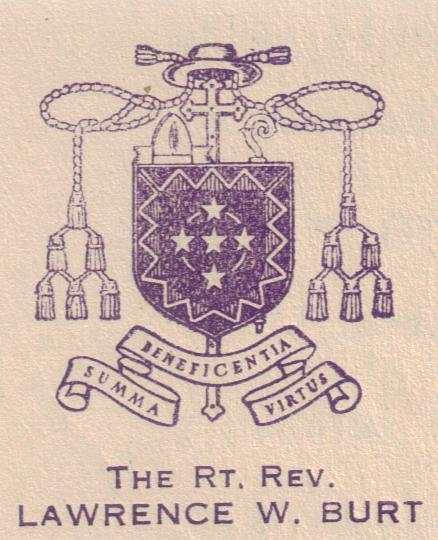
Listen to these words from the late Australian bishop Lawrence W Burt (pictured left):

'In a universe of LAW there can be no supernatural. There may be the super-physical, or super-normal, but there can be no super-natural. You cannot transcend Natural law, nor suspend it.' [Original emphasis]

So, if someone says to you, ‘There is a supernatural dimension to life, I’ve experienced it, but the reason you haven't experienced it is because you don't believe like me,’ just smile benignly, and say, ‘Have a cup of tea.’ (That's pure Zen. See the other piece of calligraphy, below, which reads, 'Go and have some tea.')

Having said all of the above, if you choose to believe [see below] in the 'supernatural', that does not prevent you from practising mindfulness. You see, mindfulness doesn't require any beliefs at all, nor will any beliefs prevent mindfulness from 'working' ... except, perhaps, a negative belief pertaining to the nature of mindfulness itself (eg that it is 'demonic' or something similarly silly). Further, as mindfulness, being entirely naturalistic, operates on the one so-called 'ordinary' order or level of reality in which all things live and move and have their being, mindfulness can and will work irrespective of the existence or non-existence of other supposed orders or levels of reality.

Third principle: Reject the unobservable as the cause of the observable

This third principle flows logically from both the first and the second principles.

One of the reasons I like Buddhism, and am a Buddhist, is that Buddhism, at least in its simplest and most ‘uncluttered’ forms, is almost entirely empirically-based. (Not so with most other religions, especially the monotheistic ones which, at their fundamentalist irrational worst, become quite toxic.)

Now, whether you are a Buddhist or not, it pays to be an empiricist. Buddha Shakyamuni was one ... indeed, one of the greatest empirical philosophers of all times. He refused to affirm that which was unobservable. He relied solely on the observable. Not a bad way to proceed. The 'answer' to any problem can only be found on the same order or level of reality as the 'problem.' Obvious, isn't it?

Unfortunately, many people still seek 'answers' to their problems from 'outside' or otherwise 'beyond' this spatiotemporal world, and they even believe [sic] that they receive answers. It's only a matter of time before this sort of problem is categorised by the American Psychiatric Association or some similar body as a 'mental illness.' Indeed, as belief in the so-called 'supernatural' wanes – particularly in Western societies – then it will no longer be able to be asserted by religionists of the kind in question that their false and fixed, and otherwise irrational, belief [sic] is one 'normally held by others of the same culture or subculture.' At that point in time, belief in the so-called supernatural will be seen to be what, in truth, it really is – a clinical delusion. Even at this point in time, it's a very fine line, for as the noted psychiatrist Dr Thomas Szasz has said, 'If you talk to God, you are praying; if God talks to you, you have schizophrenia.' It's not funny. It's serious.

Nothing – I repeat nothing – is more important than, or superior to, facts ... that is, occurrences in space and time. Nothing! Indeed, there are only facts.

So, discard forever the idea that there are entities beyond space and time which yet work out their supposed purposes within space and time. Both science and logic compel us to reject the unobservable as the cause of the observable.

In all things, draw your conclusions and inferences from objective facts, based on observation and the use of unaided reason, and without appeal to any supposed ‘supernatural’ causes ... and NEVER accept anything that offends against your sensibilities or is otherwise contrary to reason.

So, if some person says to you, ‘You will never understand God [or Super-person X or whoever] unless you get beyond or abandon reason,’ again, just smile benignly, and say, ‘Have a cup of tea.’ (More Zen! The only sensible response to people of that kind. If they mention so-called 'revelation', tell them that reason is the only form of 'revelation', for the reasons previously given.)

Once again, there is only one order or level of reality. That is why we speak of the practice of mindfulness in terms of the presence of bare and curious attention to, and choiceless and non-judgmental awareness of, the action of the present moment ... from one moment to the next.

Fourth principle: Don’t ‘believe’

People ordinarily believe when they don't know or understand something. There is no need to believe anything ... and nothing to believe. Strange as it may seem, there is also no need to disbelieve anything ... and nothing to disbelieve. Whether or not something is the case does not depend upon belief or disbelief. That is why Buddha Skakyamuni said, 'Do not believe, for if you believe, you will never know. If you really want to know, don't believe.'

So, forget about belief-systems. Beliefs are for ‘spiritual cripples’ ... for those who can’t, or won’t, think for themselves. Beliefs, by their very nature, take the form of prejudices, or biases, of various kinds. The Buddha referred to beliefs as being in the nature of thought coverings or veils (āvarnas).

Choose a religion or, if you don’t like religion, a philosophy or a ‘way of life’ that doesn’t require you to believe or disbelieve anything. Life is Truth, and life is forever open-ended. We, as part of life's self-expression, are always in direct 'contact' with, and can always be choicelessly aware of, Truth. No doctrine or dogma, and no priest, guru or saviour, is needed for you to know and experience Truth. Beliefs actually get in the way of things. They are a barrier to Truth. In the words of Krishnamurti, 'Truth is a pathless land.' He also said, 'To find truth, or God, there must be neither belief nor disbelief. ... To seek God without understanding oneself has very little meaning.'

So, that is another reason I like Buddhism. Buddhists don’t ‘believe’. They know (well, obviously not everything, or even most things, but some things at least) ... and they try to understand.

Avoid, like the plague, those who say things like, ‘Super-person X is the only way to God,’ or ‘You must believe this [or "Super-person X"] in order to be saved.’ As I have said many times, if people are rewarded for believing such things, then I wouldn't want to believe [sic] in or worship such a god.

We, in the West, live in an age of crass materialism. Is it because most Westerners have given up on so-called 'orthodox' Christianity? The mainstream Christian churches would have you believe [sic] that is the cause of Western materialism ... that, along with human greed. No, I tend to agree with Bishop Burt (referred to and quoted above), who, after accusing the Christian Church of having 'lost the chart of man's spiritual origin and destiny,' went on to say:

'Western materialism is the product of certain orthodox Church doctrines which have been the substance of Christian thought for centuries. If modern civilisation is to be saved from the suicidal doom to which it is drifting, materialistic doctrines, even though invested with a halo of sanctity, must be expunged from Christian teaching.'

'Orthodox Christianity has lost its appeal to thoughtful people because its primitive doctrines are divorced from reason, from logic and commonsense.'

Those words were spoken in Sydney, Australia, over 70 years ago. Ever since then, Australians and most other Westerners – who, like me, are not prepared to believe that which offends against one's sensibilities or which is otherwise contrary to reason – have been leaving the churches in droves. For the most part, I don't blame them.

So, dear friends, whatever you do ... don't 'believe'.

Fifth principle: There is no ‘self’

That's right, there is no such thing as ‘self’. Now, I know that is a hard concept for many to grasp, but it is the considered view of most leading philosophers and neuroscientists.

If you stop and think about it for a moment, there is something intrinsically wrong with the notion of the ‘self’. So-called ‘consciousness’ – for there really is no such thing (except in a ‘relational’ sense) – is neither a fixed quantity or quality nor of fixed duration, but simply ‘something’ quite intermittent in nature that undergoes change moment by moment.

The truth is our ‘stream of consciousness’ (awareness-ing) goes through continuous fluctuations from moment to moment. As such, there is nothing to constitute, let alone sustain, a separate, transcendent ’I’ structure or entity. Yes, we have a sense of continuity of ‘self’, but it is really an illusion. It has no ‘substance’ in psychological reality. It is simply a mental construct composed of a continuous ever-changing process or confluence of impermanent components (‘I-moments’) which are cleverly synthesized by the mind in a way which appears to give them a singularity and a separate and independent existence and life of their own.

Sixth principle: Obey the ‘law of indirectness’

The metaphysical ‘law of indirectness’ is easy to explain because it is self-evident and intuitively obvious. It is also empirically based.

The ‘law’ says this – don't attempt to put a negative or otherwise troublesome thought or problem out of one's mind directly but rather let the thought or problem slip from the sphere of conscious analysis.

That is the ‘right’ ... indeed, the only ... way to proceed.

Don't try ... instead, let.

Seventh principle: Resist not!

There is another metaphysical or spiritual ‘law’ which is very closely related to the one mentioned above – the ‘law of non-resistance.’

Put simply, this ‘law’ says, ‘Whatever you resist, persists.’

Even Jesus is reported to have told his followers, 'Resist not evil' (Mt 5:39). The American spiritual teacher Vernon Howard, whose writings and lectures have had a big impact on my life, said this: 'Resistance to the disturbance is the disturbance.' Get the picture?

So, when it comes to your mindfulness practice, don’t try to actively bring thoughts or feelings up to the surface. Instead, be with the moment. Indeed, remain embodied in the moment. Whenever a body sensation, sense perception, thought, feeling, emotion, image, plan, memory, reflection or commentary arises, do not resist it or try to expel, drive it away or change it. Simply observe and notice, with passive detachment, and without attitude, comment or judgment.


RELATED POSTS