Friday, September 16, 2011

FORGET ALL ABOUT IQ AND DISCOVER THE TRUE NATURE OF INTELLIGENCE

Phyllis May Ellis-Jones (1922-1981)
to whom this post is dedicated in loving memory


I don’t know what my IQ is these days, and I don’t really care. I am sure it has gone down over the years [see note 1 below], but, as I say, I don’t really care.

Here's a secret. I don’t care who knows this. Back in 1964, when I was in the fourth grade at Gordon West Public School the then headmaster of that school, Mr Kenneth MacKinnon – who is deceased so I can’t legally defame him (sorry, sir) – told my mother [pictured above] (so she told me, some 8 years later) that, based on the results of one or more IQ tests which I had sat that past year or so, I was not ‘high school material.’ Here’s a school photo from that year. I’m in the second front row, fifth from the left, looking very awkward (which I was).


I 'm so glad my mother didn't tell me what the headmaster had said, because I'm sure that if I had known that supposedly I was not ‘high school material’ it would have become a self-fulfilling prophecy. However, I do remember that my mother bought some books written by that controversial man Hans Eysenck (pictured left) which contained several IQ tests and for a couple of years at least my mother made me do IQ tests at home with a view to ‘improving’ (that is, elevating) my IQ. Not surprisingly, my score did go ‘up,’ even if it was artificially inflated. Fortunately, even my mother soon realized that all this ‘IQ stuff’ was not that important after all. Bless you, Mum.

At the end of 1972 I was Dux (in Humanities) of Knox Grammar School. After I had been told by the then headmaster of Knox, Dr Ian Paterson AM, that I was Dux, it was then that my mother told me about the 1964 ‘prophecy.’ On that very same day, we just happened to bump into the wife of the (now former) Gordon West headmaster at the local shops. My mother could not help herself. Embarrassingly (for me), she insisted on telling the headmaster’s wife of my recent success, and advised the poor woman to tell her husband not to say ‘that sort of thing’ to others. The headmaster’s wife simply said, ‘IQ tests are generally right.’ (Really? I am not at all certain that's the case, and I wasn't then, even in 1972, when there was already a strong backlash against IQ testing.)

What can I tell you about my mother? Shortly after her death in November 1981, I wrote these words:

'She was a very loving woman – vivacious, outgoing, friendly, sometimes outspoken but always caring. She watched over me with unflagging devotion. Over-protective, perhaps, but I didn’t care; as a boy and young man she was the one big love of my life. She thought only of what was best for my father and me. The sacrifices she made were enormous. She died too soon.'

In 1973 I started Arts-Law at the University of Sydney and in the years that followed I was awarded two bachelor degrees, a masters and a doctorate as well as some diplomas, certificates and other miscellaneous ‘pieces of paper.’ None of that is important. None of that means I am intelligent. I simply mention it in light of what Mr MacKinnon had told my mother way back in 1964.

Now, back to this business of IQ tests. Most people know that a polygraph (so-called 'lie detector') does not really measure whether a person is lying. It simply measures and records various physiological responses from or on the basis of which an inference – safe or unsafe – can be drawn as to the presence or otherwise of lying or deception. (I'm appalled at the wide use of polygraphs in the United States, and I am grateful that they are banned in Australian courts of law. For that and other reasons I think we have a much better system of law and justice in this country, even though it is by no means perfect.)

Well, measuring so-called intelligence is not at all dissimilar to measuring so-called lying or deception. There is now a considerable body of scholarly material attesting to the fact that IQ tests – in particular, the long-venerated and seemingly respectable Stanford-Binet tests – do not measure 'intelligence' as such. IQ tests are supposed to measure, yes, intelligence but, at the risk of stating the obvious, before you can measure something you must first know what exactly you are measuring. The problem with IQ tests---well, one of many problems with them---is that the term intelligence has never been defined adequately, with the result that no one knows exactly what an IQ test is actually measuring. To put it bluntly, perhaps too bluntly, IQ tests measure one’s ability to do ... IQ tests. Yes, IQ tests. In the very early days of IQ testing, the American writer, reporter and political commentator Walter Lippmann said it all when he wrote, 'We cannot measure intelligence when we have not defined it.'

Perhaps more fairly, IQ tests, at their best, measure a certain kind of knowledge (yes, knowledge, of the kind learnt in school) and what is known as abstract problem-solving ability, that is,  the ability to solve problems that are context free (i.e. not verbal or numerical in nature). That’s about the extent of it, despite apologists for IQ asserting that standard tests (eg Stanford-Binet) measure such skills as verbal reasoning, abstract/visual, quantitative, and short-term memory, which to  a limited extent they do, but almost entirely under the umbrella of an all-too-often culture-bound learned (as opposed to intuitive) knowledge.


However, the question of intelligence is even more complicated than that. We now know that there are multiple types of intelligence. IQ tests are misleading because they do not accurately reflect intelligence. In fact, a minimum of three different exams are now said to be needed to measure someone's overall intelligence because there are at least three components that affect overall performance (viz short-term memory, reasoning and verbal recall). In that regard, we now know that different circuits within the brain are used for different thought processes. 

Lifestyle factors are also very important. For example, gamers -- or people who play a lot of computer games -- score higher on tests of reasoning and short-term memory. Smokers do poorly on tests assessing short-term memory and vocabulary, while test takers who have anxiety don't do as well on short-term memory tests.

What it all gets down to is this – IQ tests assume that intelligence is the ability to comprehend quickly, but is such ability the measure and determinant of intelligence or simply the result or by-product of intelligence? In any event, why should the ability to comprehend quickly be determinative of the matter? I know of no cosmic law to that effect.

Erstwhile friend Allan B, eat your heart out. Despite your assertions to the contrary, there is now a considerable body of peer-reviewed, statistical longitudinal material which debunks the old assertion that there was supposedly a direct and causal correlation between high IQ and career and socio-economic success. Clearly, IQ---whatever it is or isn't a measurement of---is not totally unimportant, but it is only one factor ... and not one of the more important ones at that. So, as Richard Nixon used to say, let me make one thing perfectly clear. The studies on IQ simply do not demonstrate unequivocally that what is being measured by the tests is the reason---that is, the cause---for the apparent greater success in the workplace and job market of higher-IQ children. Correlation does not imply causation.

We all know that there are a number of different ‘kinds’ of intelligence including emotional intelligence and social intelligence. IQ tests do not measure those kinds of intelligence, and it is those sorts of intelligence which are perhaps the most important. Another thing IQ tests cannot and do not measure is ... effort. 'Effort quotient' (EQ) is perhaps more important than so-called intelligence quotient (IQ).

For those who are interested in the many shortcomings of IQ tests, Stephen Murdoch has written a wonderful book entitled IQ: A Smart History of a Failed Idea.

True intelligence, as that great spiritual figure J. Krishnamurti often pointed out, is not the same thing as intellect. Intelligence means living naturally and spontaneously. In the words of K, ‘To be integrally intelligent means to be without the self.’ He would also say, ‘The moment you come to a conclusion as to what intelligence is, you cease to be intelligent.’ I like that. It’s delightfully iconoclastic and, as K would also say, ‘an intelligent mind is a mind which is not satisfied with explanations, with conclusions; nor is it a mind that believes, because belief is again another form of conclusion. An intelligent mind is an inquiring mind, a mind that is watching, learning, studying.’
Intelligence may be elusive and even indefinable but it is possible to say what it is not. For example, intelligence is not book knowledge, and sadly traditional IQ tests do test to a considerable degree the type of knowledge gained as a result of school tuition. True intelligence is not the product of thought, for as K would say, if that were the case then intelligence would be entirely ‘mechanical’.
To those who have been told they are not intelligent or will not succeed, never despair. Refuse to accept any intimations to that effect. Understand yourself. Then you will understand others better. Live mindfully, one day at a time, and from one moment to the next. Live in choiceless awareness of what is. Live, so far as is possible, in harmony with others ... and forget about acquiring ‘intelligence.’ Forget about IQ and pay absolutely no attention to anyone who tells you IQ is important. If you can do what I have just said, you will be – indeed you are – an intelligent and successful human being ... regardless of whether you’re a lawyer, a plumber, a prostitute or simply unemployed.
Here's some more wisdom from Krishnamurti:

‘So intelligence comes into being with the understanding of yourself; and you can understand yourself only in relation to the world of people, things and ideas. Intelligence is not something that you can acquire, like learning; it arises with great revolt, that is, when there is no fear - which means, really, when there is a sense of love. For when there is no fear, there is love.’

Intelligence and love connected? Yes. If you are in any doubt about that, please read The Compassionate Brain: How Empathy Creates Intelligence by German neurobiologist and brain researcher Gerald Hüther which points to laboratory research as providing support for the view that love, compassion and empathy actually make us 'smarter.'

Ha! There's no need to 'improve' one's IQ scores ... as if I didn't already know.


Note 1.

Fluid intelligence (the capacity to think logically and solve problems in novel situations, independent of acquired knowledge) tends to decrease with time, starting in either one's 20s or 30s whereas crystallized intelligence (the ability to use skills, knowledge, and experience) is fairly stable over time. There is, however, disagreement over when the decline begins, however. Some researchers have found that certain aspects of intelligence start declining in one’s mid-teens while others start to decline in one’s 20s even though some measures like working memory can still improve in one's 20s. However, there seems to be a general consensus that it's pretty much downhill from one’s 30s. Great news.

Note 2. Since I first wrote this post I have become aware of research---the largest single study into human cognition to date---that confirms that IQ tests are fundamentally flawed, as is the notion that human intelligence can be measured by IQ tests alone. 


RELATED POSTS


Thursday, September 15, 2011

RATIONAL HUMANENESS IS THE ANSWER

Emeritus Professor Paul Kurtz and Humanist President Dr Ian Ellis-Jones
Australis2000 Congress, Sydney, Australia, 14 November 2000

Rational humaneness is the answer.

‘Yes, but what is the question?’

OK, so it’s not funny.
In my last blog I referred to a book entitled A Humanist View which contains chapters written by a number of prominent Australian humanists of yesteryear. As I mentioned, in one of those chapters, entitled ‘Life Without Magic’, the eminent zoologist Dr Ronald Strahan showed, using reason, that there is no such thing as the ‘life force’.

Another of the chapters was written by the eminent criminologist, materialist philosopher and academic Dr Gordon Hawkins (1919-2004) [pictured left], who lectured me in criminology at the University of Sydney in the 1970s, and who was one of the very first members of the Australian Law Reform Commission.

Hawkins' chapter is entitled ‘Humanism and the Crime Problem’, and contains some very sound advice on matters pertaining to crime, penology and the like. I remember the ‘wow’ moment I experienced years ago when, some years after he had been my lecturer, I read these words penned by Hawkins:

‘[H]umanism, if I understand it rightly, involves what the great nineteenth century radical John Morley (who shocked Victorian England by spelling God with a small “g”), called “rational humaneness”. This means a rationality which is informed by consideration and compassion for the needs and distresses of human beings.’

Many thousands of law students in Sydney have heard me repeat those words over the years ... ‘rational humaneness’ ... ‘a rationality which is informed by consideration and compassion for the needs and distresses of human beings’.

Rationality on its own is inadequate. That should be obvious to all. Compassion, or humaneness, without rationality is also inadequate, for it quickly becomes weak-kneed, soggy sentimentality. The two must be combined – rational humaneness. That is what we need to handle all our problems.

We have had an ‘Age of Faith’, as well as an ‘Age of Reason’. It’s now time for an ‘Age of Compassion’, but it has to be a compassion which is informed by rationality. For example, at the risk of provoking a riot, it may be compassionate to let all the ‘boat people’ into Australia who come to our shores, but is it ‘rational’? I am not saying that it would be irrational to let them all in, but it is a matter which must be determined with ... rational humaneness.

What a transformative phrase and philosophy of life – rational humaneness!

Some 11 years ago I delivered the keynote addess at the Australis2000 Congress of the International Humanist and Ethical Union [IHEU] and the Council of Australian Humanist Societies [CAHS], which was held in Sydney, Australia. Before a large audience at the University of Technology, Sydney which included the great American philosopher Paul Kurtz I spoke, with great passion, of the need for there to be a sensible, compassionate balance between the 'head' and the 'heart'. Here is a copy of my address.

Finally, here is a brief clip from the first of four programs made for a 1977 ABC-TV series entitled Beyond Reasonable Doubt. The presenter (who appears on camera) is none other than Gordon Hawkins, then Associate Professor of Criminology at Sydney University Law School. This particular program was about Ronald Ryan, a convicted armed robber, who was the last man to be hanged in Australia.


Saturday, September 10, 2011

MINDFULNESS AND THE LIVINGNESS OF LIFE

I often say to my students as well as to those who come to listen to my public addresses, ‘If you can go away from here today with just one new thought – one hopefully life-changing thought – then my mission has been accomplished.’ In that regard, I have always loved these words of Friedrich Nietzsche:

‘Even a thought, even a possibility, can shatter us and transform us.’

So it is, when reading a book or an article – or even a blog  – on some important topic. If you can pick up some new idea or thought-form which opens up some new understanding, then it has been worthwhile.

Some years ago I was president at the same time of both the Humanist Society of New South Wales and the Council of Australian Humanists. I still consider myself a humanist because it is obvious to me that human problems can only be solved by human beings acting rationally. In that regard, I fully and unashamedly embrace the sentiment in these words from Humanist Manifesto II: 'While there is much that we do not know, humans are responsible for what we are or will become. No deity will save us; we must save ourselves.' Got that? We must save ourselves. Nevertheless, I tire easily of old-fashioned dry, unadulterated rationalism that is not accompanied by some emotion in the form of compassion and humaneness. I should, however, add that I tire even more easily, and much more quickly, of superstition and notions of ‘supernaturalism’.

Now, well before I joined the Humanists, I had on my shelves a most illuminating book entitled A Humanist View, which was edited by one Ian Edwards (a former chairman of the NSW Humanist Society, which was instrumental in causing the book to be brought about), and which contained chapters written by some 16 then-prominent Australian humanists.

One of the chapters was entitled ‘Life Without Magic’, which was written by the eminent zoologist Dr Ronald Strahan AM (1922-2010) (pictured right) who was at that time and for many years the director of Taronga Zoo, Sydney – truly one of the world’s greatest zoos. Now, getting back to my original point, this article contained what was, and still is, for me one really life-changing, transformative thought – namely, that there is no such thing as the ‘life force’.

New Agers love to waffle on and pontificate about the existence of the supposed ‘life force’, as if it were some mysterious vital principle which animates all life (cf the totally discredited notions of vitalism). However, the reality of so-called 'life force' or 'universal life energy' is completely unknown to natural science. Now, Dr Strahan convincingly demonstrated that there is no such thing. That's right. There is no vital force or power distinct and separate from the various mechanical and physico-chemical forces of nature. Strahan wrote:

‘The word “life” has been avoided intentionally. Instead, we have considered what certain material structures known as “living things” do. What they do is what we call “living”. “Life” is the abstract noun from the verb “to live”.

‘And it is an abstraction. To say that a living thing is matter plus life is as nonsensical as to say that a motor car is matter plus locomotion, or a “motive principle”, or an “élan locomotif”.’

This is a most important point. What we call ‘life’ is simply the sum total of living things, all living out their ‘livingness’ in time and space. The so-called ‘life force’ is nothing more than the self-livingness of living things. The self-livingness to which I refer is characterised by living things self-moving, self-directing, self-adjusting and self-regulating. Is that not amazing enough? Why do some feel a need to interpolate some additional supposed vital energy or force?

It is the same with the 'universe' [see below]. I have not difficulty in accepting that what we call the universe was either unmade or self-made. I rejoice in the fact that there is no concept in Buddhism of ‘creation’, let alone any doctrine of ‘special creation’ (as in Christianity), nor is there any sense of there being a ‘Creator’, whether personal or otherwise. Buddhism teaches that everything is ‘fundamentally uncreated’ and that life exists through and as things as opposed to in things. All that makes perfect good sense to me.

Life is simply an abstract noun – a word – but in a very important sense there is no such thing ... just as there is no such thing as the universe. Yes, that’s right. The word ‘universe’ is simply an abstract noun that refers to the sum total of all there is (that is, A + B + C + D + E ... and so on). The various things A, B, C, D, E and so on do indeed exist as separate things in their own right, but not the supposed thing called the ‘universe’. I thank Professor John Anderson for that insight.

I remember the day when I first read what Strahan had written. It was a 'wow' moment for me. I felt a tingling sensation in my head, and down my spine, knowing that I had read something new (at least for me) which had the effect of opening up new ‘channels’ (for want of a better word) of understanding. Yes, I said to myself, that has got to be right. There is no life force as such, just living things living out their livingness as occurrences in time and space. Each living thing has internal differentiation and interacts with other things ... all on the same level or order of reality and observability. In addition, living things are constituent members of wider systems and exchanges of things, with the forms of things constantly being transmuted.

Mindfulness is a lifelong inquiry into what it means to be fully present and alert in the present moment. Each moment of our existence is but a brief occurrence in what is otherwise a state of flux. Life is nothing but the very livingness of all things living out their livingness from one moment to the next.

The unity of all things derives, not from all things being one, nor from the presence of some supposed ‘life force’, but simply from the fact that a single logic applies to all things.


RELATED POSTS


Monday, September 5, 2011

ABBOTT AND COSTELLO MEET THE ZEN MASTERS

'Heeeyyy A-bbott!!'

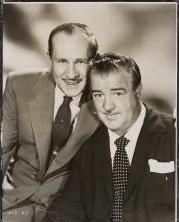
I have always loved Abbott and Costello (pictured right, and below), and I especially enjoy their old burlesque routines. The films and television shows of Abbott and Costello have preserved those precious comedy routines. Unless we had those films and shows most of those routines would have been lost forever. That is why Jerry Seinfeld has rightly said that Abbott and Costello ‘are the only ones who preserved an entire era of American entertainment’ – namely, burlesque. In the words of Seinfeld, A&C were 'giants of their time, who truly immortalized burlesque forever,' and, as Abbott and Costello Quarterly has written, the showbiz team of A&C was 'the greatest comedy team to ever come out of burlesque.'

I also love Zen, and although I prize reason and logic above almost everything else I will readily admit that truth – that is, reality – cannot be grasped by rational analysis. Truth, and the experience of truth, are entirely a matter of direct experience. Once you start analysing truth, you are in the realm of ideas and opinions – you have ceased to be in direct contact with truth itself!

Now, back to A&C. I don’t want to make the boys out to be more cerebral or learned than they were – or weren’t – but their old burlesque routines have a Zen-like quality to them. That’s undeniable. Take Bud Abbott. He would lay out before Lou Costello a set of propositions that seemed logical – I say, ‘seemed’ logical ... in an illogical sort of way. Of course, on close examination and analysis – indeed, often at first glance – these propositions were demonstrably and self-evidently fallacious, even foolish ... just like Zen kōans.

These comedic kōans of A&C – just like their Zen counterparts – are not to be subjected to rational analysis. Those who find A&C unfunny tend to do just that. They listen to, say, ‘Who's on First?’ and say, ‘That’s silly!’ ‘Indeed,’ I retort, ‘but you miss the point.’


Take, for example, this brief portion of an old A&C burlesque routine:

BA: I bet you ten dollars you’re not here.
LC: Huh? Prove it!
BA: Well, are you in New York?
LC: No.
BA: Are you in Boston?
LC: No.
BA: Are you in Philadelphia?
LC: No.
BA: Well, if you are not in New York ... and you're not in Boston ... and you're not in Philadelphia ... then you must be some place else. Right?
LC: Right!
BA: So, if you are some place else, you can't be here!

That’s very reminiscent of the old Buddhist story, ‘You are on the other side.’ I did a previous blog on that one.

Then there’s this A&C old chestnut:

BA: Now I am going to ask you one more question. Say you’re in the Grand Central depot [sic] in New York City. You buy a ticket. Where are you going?
LC: I’m not going anywhere.
BA: Then what are you buying a ticket for?
LC: I’m not buying any ticket!
BA: Then why are you in the depot?
LC: You put me in there!

After a few more frustrating moments, the routine continues along these lines ...

BA: You’re in the depot. Where are you going?
LC: [in exasperation] I’m going away.
BA: Where? Where? Where are you going?
LC: Over that way.
BA: What’s over that way? ... Answer my question please! You’re in the depot. Where are you going?
LC: [saying anything] I’m going bye-bye ... I’m going to Paterson, New Jersey!
BA: What’s wrong with Philadelphia?

Then there's the 'Hole in the Wall' routine---written and copyrighted by the boys themselves---part of which goes like this:


BA: Take a good look at this wall. Suppose, you walk over there and for no reason at all, you bore a hole in that wall.

LC: Alright, I'll go over there and I'll bore a hole in that wall.
BA: Why should you go over and bore a hole in that wall?
LC: I'm not boring a hole in the wall. You said suppose I go over there and bore a hole in the wall.
BA: That's not the argument. What I want to know is, why should you go over there and bore a hole in that wall?
...

You can almost hear Zen Master Abbott say, 'And while you're at it, show me your original face before you were born.'


Silly? Yes. Corny? Yes, that too. But I still think they are very clever ... and very funny. Like Zen kōans these old comedy routines have a way of breaking through everyday consciousness. In defying both logic and rational analysis, they afford a new insight into ... truth!


Never forget this. Truth defies both logic and rational analysis. Truth just is ... and we are in direct contact with it at all times. It’s just that all too often we are mindlessly unaware of that fact. So, don’t be like Lou Costello. Stop struggling. Stop trying to understand. There is nothing to understand. Just be choicelessly aware of whatever unfolds from one moment to the next. You can do no better than that!

In June 1955 Bud Abbott and Lou Costello toured Australia (program cover pictured above left)---for their first and only time---performing in stadiums in Newcastle and Sydney, New South Wales and Brisbane, Queensland, and at the beautiful Palais Theatre in St Kilda, Melbourne, Victoria. (I've read that a man---most likely the legendary American-born promoter Lee Gordon---had turned up in the office of A&C's manager with $100,000 in cash tucked in a briefcase, which was the boys if they'd agree to doing 5 shows down under. Now, how could the boys refuse paying Australia a visit? I've also read that the boys supposedly lost the equivalent of their entire tour fee as a result of paying poker with the equally legendary radio personality Jack Davey. So wrote Max Moore, Gordon's sometime business associate, and the tour manager, in his 2003 autobiography Some Days are Diamonds.)


The boys arriving at the airport in Sydney, Australia in 1955


I wish my parents had taken me to see the boys perform at the old Sydney Stadium at Rushcutters Bay, but as I was then only 3 months old, I guess my parents knew best. The well-known Australian actor, comedian, writer and director Grahame Bond AM has written in his autobiography Jack of All Trades: Mistress of One about his fond memories of his parents taking him (at age 11) to see A&C perform at the old Sydney Stadium:


Even today I can visualise them standing on that tatty old stage with two microphones and no props, performing one of the most exquisitely written routines of all time, 'Who’s on First?'


(Clive James has different memories of A&C performing in Sydney. Each to his own.)

Earlier this year The Courier Mail ran a story on the team's adventures in Brisbane and dragged some old photos out of the archives which they presented, with narration, in this video format:


Not only did ragging students give the boys a bad time in Brisbane, forcing them to have to cancel some engagements to give themselves a chance to recover, but they also made headlines offstage in Sydney as well, when the car in which they were passengers hit a concrete-mixing truck on Sydney's Pyrmont Bridge. A&C were only slightly injured. Here's another small piece of memorabilia trivia from the boys' 1955 down under tour. When they were just about to board a flight back for the States at Sydney Airport some Aussie presented them with a real, live baby kangaroo to take home with them. Naturally, the boys were unable to do so, and they were quite disappointed.

The boys' two Brisbane Stadium shows each had an audience of 3,000-plus, which was very good for those days. Their shows at the Sydney Stadium were less successful. The Newcastle show---a tryout, so to speak, for the capital city shows---went well and has been labelled a hit. Melbourne was okay, all things considered. The bottom line---the boys' Australian tour was not a great financial success for promoter Lee Gordon, who also lost money that year bringing out to Australia other American entertainers including Betty Hutton and Bob Hope. One of the main reasons for A&C not drawing really big crowds related to timing---and demographics. It would not be until after television came to Australia---that happened in September the following year---that a whole new generation of fans (mainly kids) would discover A&C. By 1955 the boys' more mature (and largely young adult) fan base was more interested in setting up home in suburbia and starting a family. Still, A&C did manage to attract a large amount of media attention when they were in Australia, and a number of major newspapers ran feature stories on the boys and their careers.


As I see it, A&C were comedic Zen masters. Take this famous routine, '
You're 40, She's 10', which has all the paradoxical elements of the best Zen kōan:


BA: You’re 40 years-old and you’re in love with this little girl that’s 10 years-old. You’re four times as old as that girl and you couldn’t marry her, could you?

LC: Not unless I come from the mountains.

BA: All right----you’re 40 years-old, you’re four times as old as this girl, and you can’t marry her, so you wait five years. By that time the little girl’s 15 and you’re 45. You’re only three times as old as that little girl. So you wait 15 years and when the girl is 30, you’re at 60. You’re only twice as old as that little girl.

LC: She’s catching up.

BA: Yes, yes. Now here’s the question. How long do you have to wait until you and that little girl are the same age?

LC: Now what kinda question is that? That’s ridiculous!

BA: Ridiculous or not, answer the question.

LC: If I wait for that girl she’ll pass me up. She’ll wind up older than I am.

BA: What are you talking about?

LC: She’ll have to wait for me!

BA: Why should she wait for you?

LC: I was nice enough to wait for her!


Now, if you’re still with me, here are A&C performing their most famous routine, '
Who's on First?’ – a routine which in 1999 was declared by Time magazine to be not only the '20th Century's Best Comedy Routine' but also the 'Routine of the Millennium', and which has been translated into nearly 30 languages, some of them even done and recorded by A&C themselves:


RELATED POSTS


Grateful Acknowledgments
Acknowledgments are made to the Estates of the Late Bud Abbott and the Late Lou Costello in respect of copyrighted, trademarked and other controlled material of the Estates. All rights reserved. The licensable images of Abbott and Costello, the routine ‘Who's on First’ and other routines and materials of and by Abbott and Costello are controlled material of the above mentioned Estates. The video clip (courtesy YouTube) and the excerpted routines as presented in this blog are for entertainment, nonprofit and non-commercial purposes only. There is no intention to infringe copyright or any other controlled material. This blog, and the blog site itself, are solely for informational and educational purposes that are entirely nonprofit and non-commercial in nature, intent and actuality.