No, I am not talking about a so-called spirit guide, but a 'spiritual guide' ... that is, a guide which makes reference to certain 'spiritual' [see below] principles.
The meaning of the word ‘spirituality’
First, what do I mean by the word ‘spirituality’?
The English word ‘spirit’ comes from the Latin spiritus meaning, among other things, breath, breathing, air, inspiration, character, spirit, life, vigour, and courage.
Spirituality does not require nor depend upon any notions of ‘supernaturalism’ but refers to non-physical and non-transient things such as faith, hope and charity as well as states of affairs or human consciousness which, going ‘beyond words’, are only partially (if at all) graspable by human concepts ... things that cannot be seen but which are otherwise capable of being apprehended, if not fully understood.

Spirituality is thus a composite word referring to the ‘domain where mind, personality, purpose, ideals, values and meanings dwell’ (Rabbi Mordecai Kaplan). In a similar vein, Father Joe Martin (pictured left), an acknowledged authority on spirituality and addictive disease, would always make it clear that spirituality, in the first instance, had little or nothing to do with God, but everything to do with the development of the mind, the emotions and the will.
Similarly, another Catholic priest, the Redemptorist Father Gerard H Chylko, wrote that spirituality is ‘made up of all those qualities of mind and character that make us who we are: our values, our desires, our feelings, and our dreams’.
All of the above makes perfect good sense to me.
Finally (at least on this point), Quaker writer Parker J Palmer has described spirituality as a ‘longing to be connected with the largeness of life’, that is, to something larger than one’s ego or 'self' (that is, some ‘power-not-oneself’). I like that.

Perhaps the main difference between spirituality and religion is that the former gives one complete freedom to choose one’s own individual path towards wholeness, recovery and ‘enlightenment’. Religion is the institutionalised, organised formal practice of a particular spiritual tradition's beliefs (ugh!), ethics, and rituals, whereas spirituality, doesn’t necessarily entail any adherence to a religious tradition.
Seven principles for mindful living
I have referred to these working ‘principles’ in many different blogs but I thought it might be helpful to bring them altogether ... for present purposes and otherwise.
These ‘principles’ are NOT articles of faith. They are NOT beliefs. I will have more to say about ‘beliefs’ shortly. At best, these principles are to be ‘accepted’ as working hypotheses ... and as guideposts to mindful living. They have served me well.
First principle: Life is one

First, a single logic applies to all things and how they are related. All things exist in the same order or level of reality ... and on the same ‘plane’ of observability. If that were not the case, it would be impossible for us to be attentive to, and otherwise aware of, what happens from one moment to the next. Just think about that for a few seconds, and it will be obvious to you that such is the case.
Secondly, nothing is simple, indeed all things are complex, have internal differentiation, and interact with other things ... but, once again, all on the same level or order of reality and observability. Yes, all things are constituent members of wider systems and exchanges of things. The forms of things are constantly being transmuted.
 Call it the ‘interconnectedness of all life’ or, if you like, ‘InterBeing’ (the latter wonderful term comes from Thich Nhat Hanh [pictured right]; see also the 'InterBeing' calligraphy, above left). In that sense, there is only one life manifesting itself in all things and as all things.

You don’t have to be a monist to know, intuitively, that life forever ‘gives’ of itself to itself in order to perpetuate itself. In that sense, we can rightly say that the ‘One [referring to ‘life’ itself, not some supposed transcendent Being] becomes the many.’
Also, when we look around us, what do we see? Living things, all living out their livingness, in and as themselves.
I also think it is self-evident and intuitively obvious that the ‘life’ flowing through your veins – and through and in all other living things as well – is, in a metaphysical (if not also in a physical) sense the same ‘life’ flowing through me. That’s as strong as I can put it without plunging into subjective idealism or monism.
Second principle: There is nothing ‘supernatural’
This second principle flows logically from the first.
As I have said many times, how can we conceive of there being any existence, or other order or level of reality, other than our ordinary ‘natural’ existence, that is, the way in which ordinary things exist in space and time. Any notion of there being different orders or levels of reality or truth is contrary to the very nature and possibility of discourse ... that is, unspeakable ... not to mention meaningless.
In short, we can have no conception of any such existence, nor any conception of what it might possibly be like.
Further, as already mentioned, if there were 'higher' and 'lower' orders or levels of reality, it would be impossible for us to be attentive to, and otherwise aware of, what happens from one moment to the next. The 'observer', the thing 'observed', and the 'act of observing' itself, must all be located on the one order of level of reality.

'In a universe of LAW there can be no supernatural. There may be the super-physical, or super-normal, but there can be no super-natural. You cannot transcend Natural law, nor suspend it.' [Original emphasis]
So, if someone says to you, ‘There is a supernatural dimension to life, I’ve experienced it, but the reason you haven't experienced it is because you don't believe like me,’ just smile benignly, and say, ‘Have a cup of tea.’ (That's pure Zen. See the other piece of calligraphy, below, which reads, 'Go and have some tea.')
Having said all of the above, if you choose to believe [see below] in the 'supernatural', that does not prevent you from practising mindfulness. You see, mindfulness doesn't require any beliefs at all, nor will any beliefs prevent mindfulness from 'working' ... except, perhaps, a negative belief pertaining to the nature of mindfulness itself (eg that it is 'demonic' or something similarly silly). Further, as mindfulness, being entirely naturalistic, operates on the one so-called 'ordinary' order or level of reality in which all things live and move and have their being, mindfulness can and will work irrespective of the existence or non-existence of other supposed orders or levels of reality.
Third principle: Reject the unobservable as the cause of the observable
This third principle flows logically from both the first and the second principles.

One of the reasons I like Buddhism, and am a Buddhist, is that Buddhism, at least in its simplest and most ‘uncluttered’ forms, is almost entirely empirically-based. (Not so with most other religions, especially the monotheistic ones which, at their fundamentalist irrational worst, become quite toxic.)
Now, whether you are a Buddhist or not, it pays to be an empiricist. Buddha Shakyamuni was one ... indeed, one of the greatest empirical philosophers of all times. He refused to affirm that which was unobservable. He relied solely on the observable. Not a bad way to proceed. The 'answer' to any problem can only be found on the same order or level of reality as the 'problem.' Obvious, isn't it?
Unfortunately, many people still seek 'answers' to their problems from 'outside' or otherwise 'beyond' this spatiotemporal world, and they even believe [sic] that they receive answers. It's only a matter of time before this sort of problem is categorised by the American Psychiatric Association or some similar body as a 'mental illness.' Indeed, as belief in the so-called 'supernatural' wanes – particularly in Western societies – then it will no longer be able to be asserted by religionists of the kind in question that their false and fixed, and otherwise irrational, belief [sic] is one 'normally held by others of the same culture or subculture.' At that point in time, belief in the so-called supernatural will be seen to be what, in truth, it really is – a clinical delusion. Even at this point in time, it's a very fine line, for as the noted psychiatrist Dr Thomas Szasz has said, 'If you talk to God, you are praying; if God talks to you, you have schizophrenia.' It's not funny. It's serious.
Nothing – I repeat nothing – is more important than, or superior to, facts ... that is, occurrences in space and time. Nothing! Indeed, there are only facts.
So, discard forever the idea that there are entities beyond space and time which yet work out their supposed purposes within space and time. Both science and logic compel us to reject the unobservable as the cause of the observable.

So, if some person says to you, ‘You will never understand God [or Super-person X or whoever] unless you get beyond or abandon reason,’ again, just smile benignly, and say, ‘Have a cup of tea.’ (More Zen! The only sensible response to people of that kind. If they mention so-called 'revelation', tell them that reason is the only form of 'revelation', for the reasons previously given.)
Once again, there is only one order or level of reality. That is why we speak of the practice of mindfulness in terms of the presence of bare and curious attention to, and choiceless and non-judgmental awareness of, the action of the present moment ... from one moment to the next.
Fourth principle: Don’t ‘believe’
People ordinarily believe when they don't know or understand something. There is no need to believe anything ... and nothing to believe. Strange as it may seem, there is also no need to disbelieve anything ... and nothing to disbelieve. Whether or not something is the case does not depend upon belief or disbelief. That is why Buddha Skakyamuni said, 'Do not believe, for if you believe, you will never know. If you really want to know, don't believe.'
 So, forget about belief-systems. Beliefs are for ‘spiritual cripples’ ... for those who can’t, or won’t, think for themselves. Beliefs, by their very nature, take the form of prejudices, or biases, of various kinds. The Buddha referred to beliefs as being in the nature of thought coverings or veils (āvarnas).
Choose a religion or, if you don’t like religion, a philosophy or a ‘way of life’ that doesn’t require you to believe or disbelieve anything. Life is Truth, and life is forever open-ended. We, as part of life's self-expression, are always in direct 'contact' with, and can always be choicelessly aware of, Truth. No doctrine or dogma, and no priest, guru or saviour, is needed for you to know and experience Truth. Beliefs actually get in the way of things. They are a barrier to Truth. In the words of Krishnamurti, 'Truth is a pathless land.' He also said, 'To find truth, or God, there must be neither belief nor disbelief. ... To seek God without understanding oneself has very little meaning.'
So, that is another reason I like Buddhism. Buddhists don’t ‘believe’. They know (well, obviously not everything, or even most things, but some things at least) ... and they try to understand.
Avoid, like the plague, those who say things like, ‘Super-person X is the only way to God,’ or ‘You must believe this [or "Super-person X"] in order to be saved.’ As I have said many times, if people are rewarded for believing such things, then I wouldn't want to believe [sic] in or worship such a god.
We, in the West, live in an age of crass materialism. Is it because most Westerners have given up on so-called 'orthodox' Christianity? The mainstream Christian churches would have you believe [sic] that is the cause of Western materialism ... that, along with human greed. No, I tend to agree with Bishop Burt (referred to and quoted above), who, after accusing the Christian Church of having 'lost the chart of man's spiritual origin and destiny,' went on to say:
 'Western materialism is the product of certain orthodox Church doctrines which have been the substance of Christian thought for centuries. If modern civilisation is to be saved from the suicidal doom to which it is drifting, materialistic doctrines, even though invested with a halo of sanctity, must be expunged from Christian teaching.'
'Orthodox Christianity has lost its appeal to thoughtful people because its primitive doctrines are divorced from reason, from logic and commonsense.'
Those words were spoken in Sydney, Australia, over 70 years ago. Ever since then, Australians and most other Westerners – who, like me, are not prepared to believe that which offends against one's sensibilities or which is otherwise contrary to reason – have been leaving the churches in droves. For the most part, I don't blame them.
So, dear friends, whatever you do ... don't 'believe'.
We, in the West, live in an age of crass materialism. Is it because most Westerners have given up on so-called 'orthodox' Christianity? The mainstream Christian churches would have you believe [sic] that is the cause of Western materialism ... that, along with human greed. No, I tend to agree with Bishop Burt (referred to and quoted above), who, after accusing the Christian Church of having 'lost the chart of man's spiritual origin and destiny,' went on to say:
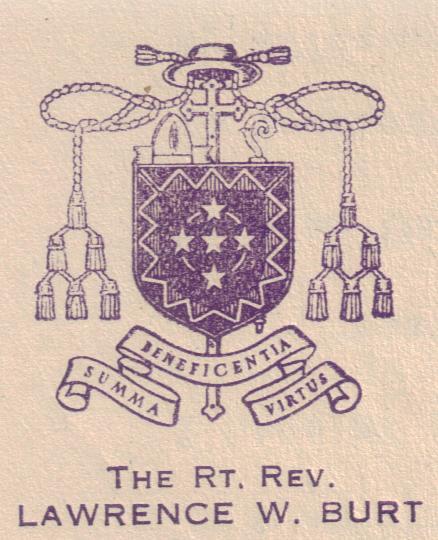
'Orthodox Christianity has lost its appeal to thoughtful people because its primitive doctrines are divorced from reason, from logic and commonsense.'
Those words were spoken in Sydney, Australia, over 70 years ago. Ever since then, Australians and most other Westerners – who, like me, are not prepared to believe that which offends against one's sensibilities or which is otherwise contrary to reason – have been leaving the churches in droves. For the most part, I don't blame them.
So, dear friends, whatever you do ... don't 'believe'.
Fifth principle: There is no ‘self’

If you stop and think about it for a moment, there is something intrinsically wrong with the notion of the ‘self’. So-called ‘consciousness’ – for there really is no such thing (except in a ‘relational’ sense) – is neither a fixed quantity or quality nor of fixed duration, but simply ‘something’ quite intermittent in nature that undergoes change moment by moment.
The truth is our ‘stream of consciousness’ (awareness-ing) goes through continuous fluctuations from moment to moment. As such, there is nothing to constitute, let alone sustain, a separate, transcendent ’I’ structure or entity. Yes, we have a sense of continuity of ‘self’, but it is really an illusion. It has no ‘substance’ in psychological reality. It is simply a mental construct composed of a continuous ever-changing process or confluence of impermanent components (‘I-moments’) which are cleverly synthesized by the mind in a way which appears to give them a singularity and a separate and independent existence and life of their own.
Sixth principle: Obey the ‘law of indirectness’

The ‘law’ says this – don't attempt to put a negative or otherwise troublesome thought or problem out of one's mind directly but rather let the thought or problem slip from the sphere of conscious analysis.
That is the ‘right’ ... indeed, the only ... way to proceed.
Don't try ... instead, let.
That is the ‘right’ ... indeed, the only ... way to proceed.
Don't try ... instead, let.
Seventh principle: Resist not!

There is another metaphysical or spiritual ‘law’ which is very closely related to the one mentioned above – the ‘law of non-resistance.’
Put simply, this ‘law’ says, ‘Whatever you resist, persists.’
Even Jesus is reported to have told his followers, 'Resist not evil' (Mt 5:39). The American spiritual teacher Vernon Howard, whose writings and lectures have had a big impact on my life, said this: 'Resistance to the disturbance is the disturbance.' Get the picture?
Even Jesus is reported to have told his followers, 'Resist not evil' (Mt 5:39). The American spiritual teacher Vernon Howard, whose writings and lectures have had a big impact on my life, said this: 'Resistance to the disturbance is the disturbance.' Get the picture?
So, when it comes to your mindfulness practice, don’t try to actively bring thoughts or feelings up to the surface. Instead, be with the moment. Indeed, remain embodied in the moment. Whenever a body sensation, sense perception, thought, feeling, emotion, image, plan, memory, reflection or commentary arises, do not resist it or try to expel, drive it away or change it. Simply observe and notice, with passive detachment, and without attitude, comment or judgment.
RELATED POSTS
IS MINDFULNESS A RELIGION?
DALAI LAMA SAYS 'MINDFULNESS IS NOT RELIGIOUS'
MINDFULNESS IN THE BIBLE
THE MINDFUL ART OF KNOWING ONESELF
RATIONAL HUMANENESS IS THE ANSWER
DALAI LAMA SAYS 'MINDFULNESS IS NOT RELIGIOUS'
MINDFULNESS IN THE BIBLE
THE MINDFUL ART OF KNOWING ONESELF
RATIONAL HUMANENESS IS THE ANSWER


